
Best Restaurants in Bologna: One Star, Three Legal Documents
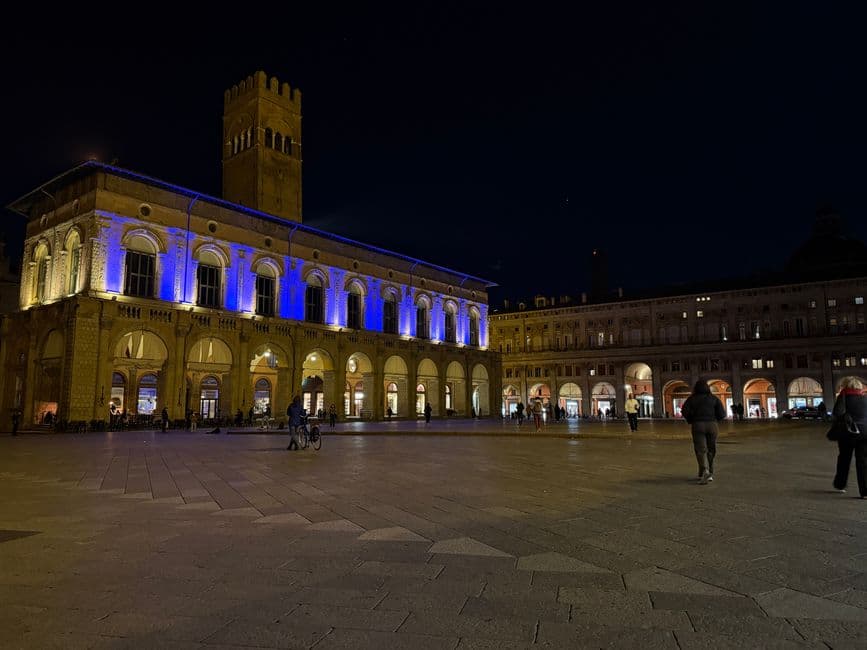
Bologna has one Michelin star inside the city walls. Modena, thirty minutes away on a regional train, has a restaurant with three. If you rank Italian food cities by stars you will put Bologna somewhere near the bottom, which is how you end up eating badly in the one place in Italy that has written down what good is supposed to taste like.
Because that is the thing about this city. The correct width of a tagliatella is not a matter of opinion here. It is a document, notarized and filed, and there is a gold one in a frame at the Chamber of Commerce to settle arguments. Bologna does not compete on invention. It competes on fidelity, and fidelity is the one quality a star rating was never designed to measure.
Below: the single starred room and the four more in the province, the three recipes that are legally on file and what they tell you to order, the trattorie that actually make them, the closing days that will ruin your trip if you ignore them, and the 561 year old osteria that will not sell you food at all.
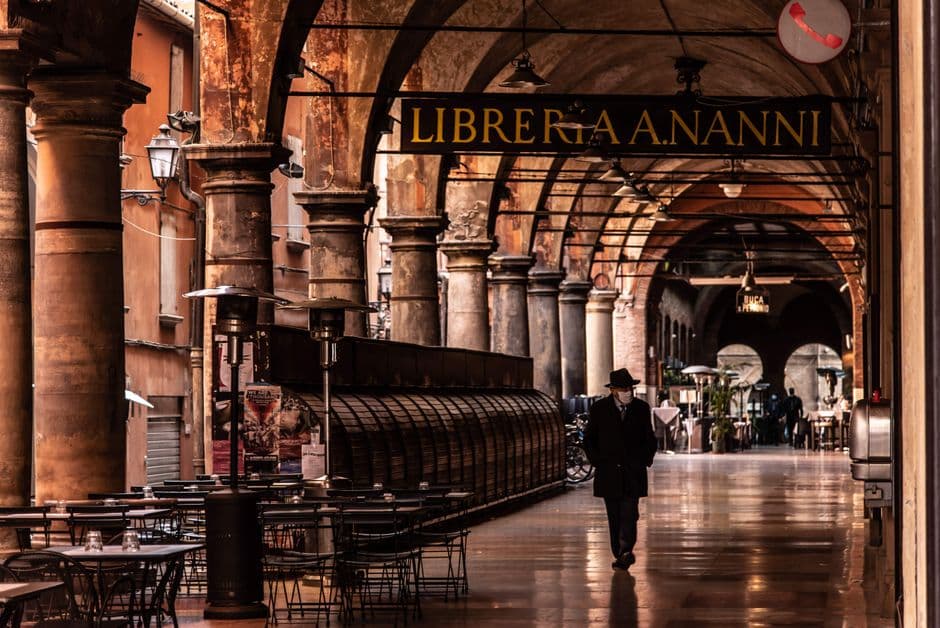
Michelin star restaurants in Bologna: one in the city, four more in the province
One. That is the whole answer for the comune of Bologna, and it has been the answer for years. I Portici on Via dell’Indipendenza holds one star in the MICHELIN Guide Italy 2026, with Nicola Annunziata cooking. The dining room is the old Eden Theater, a cafe chantant of 1899, and the Liberty frescoes were restored rather than replaced. It is a genuinely good restaurant and it is not the reason to come to Bologna.
Widen the circle to the province and the count goes up, which is where most guides quietly get their numbers from without saying so.
| Restaurant | Stars | Where | Getting there |
|---|---|---|---|
| I Portici | One | Bologna, Via dell'Indipendenza 69 | In the city, walkable |
| San Domenico | Two | Imola | About 40 minutes by car or 30 by train |
| Casa Mazzucchelli | One | Sasso Marconi | About 25 minutes by car |
| Trattoria Amerigo | One | Savigno | About 40 minutes by car |
| Ristorante Iacobucci | One | Castel Maggiore | Just north of the city |
| Osteria Francescana | Three | Modena, a different province | About 30 minutes by train |
The last line is the one people mean when they talk about eating in Bologna and then describe a meal in Modena. Osteria Francescana is not a Bologna restaurant. It is Massimo Bottura’s three star room in another city in the same region, and building a Bologna trip around it is a fine idea that has nothing to do with Bologna. Treat it as a day out, the way you would treat Imola.
The honest way to read that table is this: the province is decorated and the city is not, and the city is still where you should eat. If you want the case for stars as a ranking system, we made it at length in our piece on which city has the most Michelin stars. Bologna is the counterexample that piece needed.
The only city in Italy where the recipe is a legal document
On 16 April 1972 the Italian Academy of Cuisine registered the official measurement of a tagliatella with the Bologna Chamber of Commerce. Eight millimeters wide when cooked, between six and a half and seven when you cut it. The notarized deed says any other size makes it lose its character, which is a sentence written by people who had been arguing for a while.
Eight millimeters is not a round number chosen for tidiness. It is the 12,270th part of the height of the Torre degli Asinelli, the taller of the two leaning towers in the middle of town. There is a tagliatella made of gold, mounted and framed, in the Chamber of Commerce, so the standard has a physical reference sample. Most cities have a patron saint. This one has a unit of length.
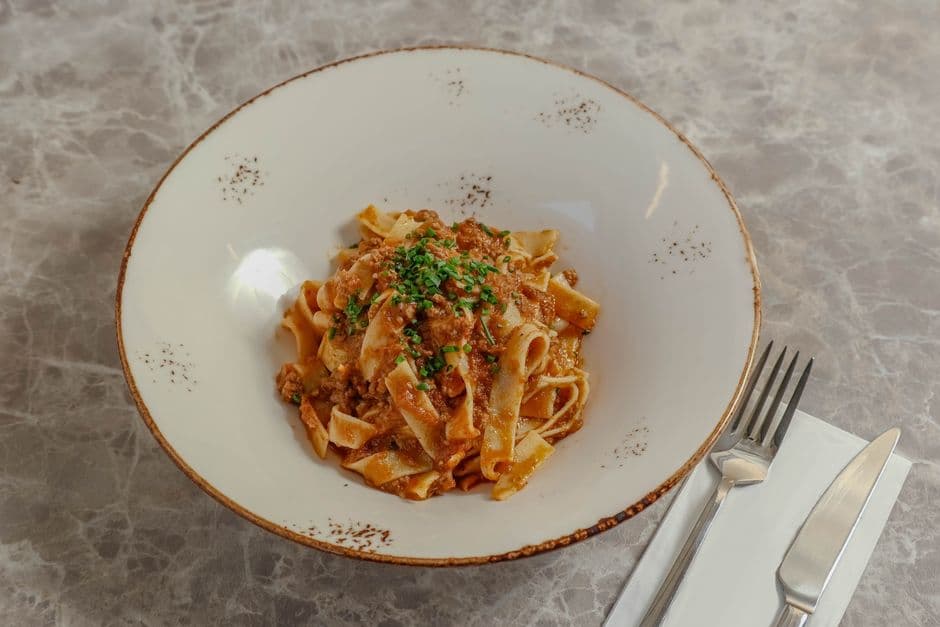
The sauce got the same treatment ten years later. The Bologna delegation of the same academy deposited the recipe for ragu classico alla bolognese with a notary at the Chamber of Commerce on 17 October 1982, and registered an updated version on 20 April 2023. Forty one years is a reasonable interval between revisions to a national argument.
And in between the two came the third document, which is the one nobody mentions. On 7 December 1974 the Learned Brotherhood of the Tortellino and the same academy registered the filling of a Bolognese tortellino before a notary, and re-registered it at the Chamber of Commerce on 15 April 2008. Pork loin, prosciutto, genuine Bologna mortadella, parmigiano, egg, nutmeg, in fixed proportions. The deed goes further than the filling and specifies the broth: it must be made from a farmyard capon, and the tortellini must be eaten in it rather than in cream.
Three consequences follow, and all three are useful at the table.
- Spaghetti bolognese is not a Bologna dish. The registered pairing is ribbon pasta, because a wide flat noodle carries a heavy meat sauce and a round one does not. Ordering spaghetti with ragu here is not a crime, it is just a request for something worse than the thing next to it on the menu. If a restaurant offers it prominently, that restaurant has read the market rather than the deed.
- Tortellini in cream is a translation error. The registered version is small parcels in capon broth and the deed says so in as many words. Every other treatment is a later invention aimed at a market that found broth insufficiently rich. Order it in brodo at least once and judge the cream version afterwards, in that order.
- A benchmark makes comparison possible. In Rome you argue about whose carbonara is best and there is no referee. In Bologna there is a filed document, so a trattoria that departs from it is making a choice you can notice. This is why the good places here taste so similar to each other, and why the difference between good and great is smaller and harder won than it is in Rome or Florence.
The best restaurants in Bologna, sorted by what you came to eat
Bologna’s historic center is small and almost entirely covered by porticoes, which means the whole list below is walkable and you will not get wet doing it. Sort by dish rather than by rank, because the city does.
| If you want | Go to | Area |
|---|---|---|
| The benchmark tagliatelle al ragu | Trattoria di Via Serra | Bolognina |
| Sfoglia rolled by hand in front of you | Sfoglia Rina | Centro Storico |
| Tortellini in brodo done properly | Trattoria Gianni | Centro Storico |
| A sfoglina who has been at it since 1986 | Trattoria Anna Maria | Centro Storico |
| Salumi and ragu outside the walls | Osteria Bottega | Saragozza |
| No printed menu, just the day's dishes | Drogheria della Rosa | Centro Storico |
| A grand 1909 room and a trolley of bolliti | Ristorante Diana | Centro Storico |
| Family cooking, unbroken since 1955 | Da Cesari | Centro Storico |
| Lunch on a square with two basilicas | Cesarina | Santo Stefano |
| A break from ragu, Adriatic seafood | Osteria Bartolini | Centro Storico |
| Cheap, loud, student, excellent | Osteria dell'Orsa | University quarter |
| The one Michelin star | I Portici | Centro Storico |
Three of those need a note, because they are the ones people get wrong.
Trattoria di Via Serra is the one that keeps winning the ragu argument, and it is not in the tourist center. It is in Bolognina, on the far side of the railway station, about five minutes on foot from the platforms. It is small, it is a Slow Food room, and you will not get a table by walking in. Book it before you book your flight and you have solved the important meal of the trip.
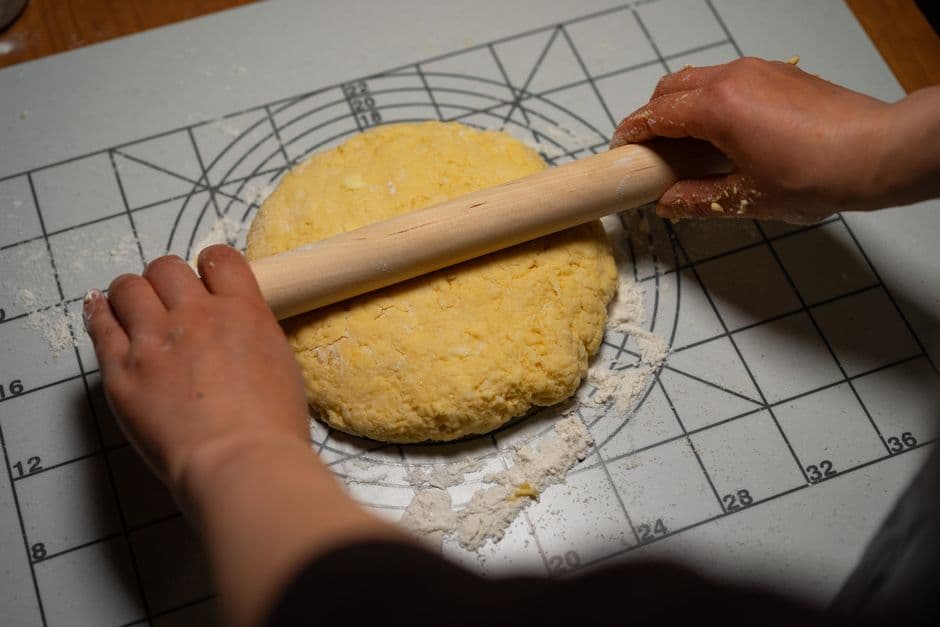
Sfoglia Rina and Trattoria Anna Maria are the two places to watch the sfoglina work. A sfoglina is a woman who rolls egg pasta by hand with a long wooden pin, and it is a real trade here rather than a demonstration staged for a camera. Anna Maria Monari has been doing it in her own dining room since 1986. Rina Poletti’s bottega puts the rolling table in the window. Both are better lunches than dinners.
Osteria dell’Orsa is in the university quarter near Via Zamboni, it is full of students, it takes no reservations, and it serves a plate of tagliatelle that costs less than a coffee and a pastry in most European capitals. It is the single best value meal in the city and the correct answer to anyone who says Bologna has become expensive.
The best food in Bologna, Italy: what to order and in what order
Six things. Order them roughly in this sequence over two or three days and you will have eaten the city properly.
- Tagliatelle al ragu. The headline. Eight millimeters, and a sauce with no garlic and no herbs in it at all, which surprises people. What does belong in it, and surprises people in the other direction, is half a glass of whole milk, added at the end to take the edge off the tomato. If your plate arrives buried under chopped parsley, someone is decorating.
- Tortellini in brodo. Small filled parcels in capon broth, and a winter dish rather than a summer one. Pork loin, prosciutto, mortadella and parmigiano inside, per the 1974 deed. In broth, not in cream, and not under a sauce.
- Tortelloni. The larger cousin, filled with ricotta and parsley, and usually dressed with butter and sage. This is the one to order if you do not eat meat, and it is not a consolation prize.
- Mortadella. Not the pink circles you know. Ask for it cut thick at a counter in the Quadrilatero and eat it standing up with a glass of pignoletto. Bologna gave this product its name and then watched the rest of the world make a worse version.
- Cotoletta alla bolognese. Veal, breaded, then topped with prosciutto and parmigiano and finished in the oven. Heavy, regional, and almost never on a menu outside Emilia.
- Crescentine and tigelle. Small warm breads split open and filled with cured meat and squacquerone, a soft fresh cheese that does not travel. This is the aperitivo, and it is enough of a meal that you should plan for it rather than around it.
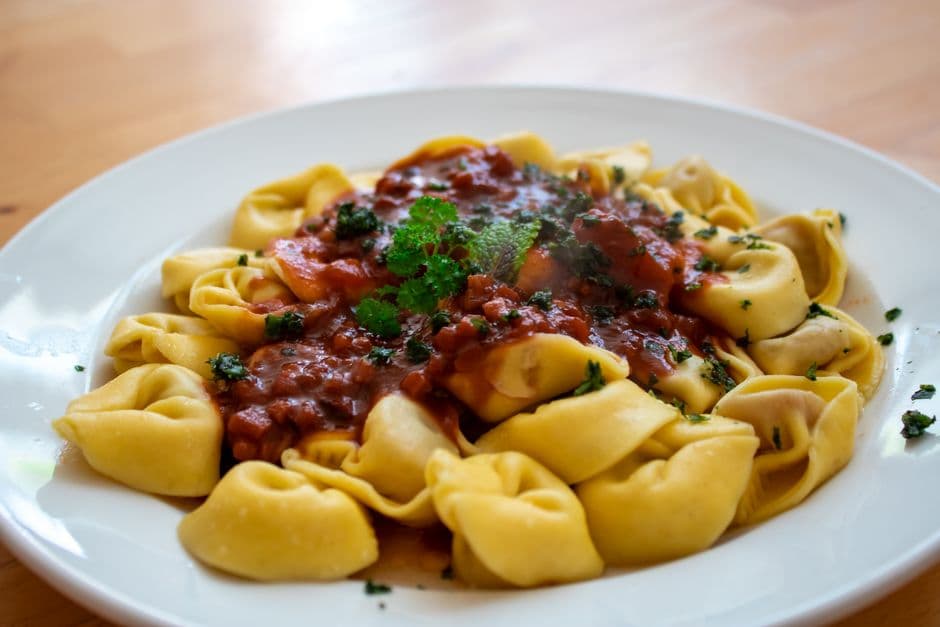
One omission is deliberate. There is no pizza on that list. Bologna makes pizza and some of it is fine, and eating it here is a waste of a stomach you could have spent on something the city is actually the world authority on. Naples is two hours away by train and does that job.
Where to eat in Bologna by area, and why the walls matter
The center fits inside the line of the old walls, which is now a ring road, and you can cross it end to end in about half an hour on foot. Five areas do almost all the work.
- The Quadrilatero. The medieval grid of food shops just east of Piazza Maggiore, on Via Pescherie Vecchie and Via Drapperie. This is where you buy rather than sit: salumi counters, fishmongers, cheese shops. Best between ten and one.
- Centro Storico. Everything inside the ring, and where most of the table list above sits. Dense, porticoed, and small enough that choosing by proximity is a legitimate strategy.
- Santo Stefano. The quieter southeast, built around the piazza with the basilica complex. Better for a long lunch than a late dinner.
- Saragozza. West, toward the portico that climbs to the San Luca sanctuary. Fewer visitors per square meter and the prices show it.
- Bolognina. North of the station and across the tracks, working class and changing fast. Home to Via Serra. Ten years ago no guide sent you here.
The porticoes are not scenery. There are about 42 kilometers of them in the historic center and more than 62 across the wider city, twelve stretches went onto the UNESCO World Heritage list in 2021, and the practical effect is that weather is not a factor in where you eat. Cities where rain changes the dinner plan need a different guide. This one does not.
The closing day rule that will ruin a short trip
Here is the single most useful sentence in this guide. A large share of the good restaurants in Bologna close on Sunday, Monday, or both, and the better the room the more likely it is.
The starred one is a clean example. I Portici serves dinner Tuesday to Saturday, with lunch on Friday and Saturday only. That is five dinner services a week and two lunches. Da Cesari and Al Sangiovese both close Sundays. L’Arcimboldo and Osteria Angolo degli Orefici both close Mondays. Osteria del Sole is open Monday to Saturday and shut on Sunday.
So if you are here for a weekend, the arithmetic is unforgiving. A Friday to Sunday trip gives you two good dinners and a Sunday you have to plan around. Arrive on a Sunday for three nights and you have burned the first one before you unpack.
- Come Tuesday to Saturday if you can choose. Every restaurant in this guide is open on a Wednesday. Very few are open on every day of a weekend.
- Book before you arrive, not on the day. The rooms worth eating in are small. Via Serra has a couple of dozen covers. Walking in is a strategy for the university quarter and nowhere else.
- Eat late enough. Dinner starts after eight and kitchens in the center generally take last orders around half past nine. A seven o’clock table means eating alone in a room set for people who have not arrived.
- Expect a coperto. A cover charge, usually two to three euro a head, appears on the bill. It is normal, it is not a tip, and tipping on top is not expected.
The 561 year old osteria that refuses to sell you food
Down Vicolo dei Ranocchi, a lane so narrow you will walk past it, there is a room that has been open since 1465 and does not have a kitchen. Osteria del Sole sells wine and beer. That is the entire offer, and its own website says so: no soft drinks, nothing without alcohol, only beer and wine.
What it does have is long wooden tables and a standing invitation to bring your own food. You buy mortadella and squacquerone and bread from the Quadrilatero counters two minutes away, carry it in, sit down among strangers, and pay only for what you drink. It runs Monday to Saturday from eleven in the morning to half past nine at night, and it closes on Sunday like everything else.
It is worth doing on your first afternoon rather than saving, for two reasons. It forces you into the food shops early, which is where the city keeps its best raw material. And it demonstrates the point of the whole trip faster than any restaurant will: in Bologna the ingredient is the achievement, and the cooking is a service performed on something that was already excellent when it arrived.
Book Via Serra now, keep a Tuesday free for I Portici if you want the star, buy your lunch in the Quadrilatero and eat it under someone else’s roof, and measure at least one plate of tagliatelle against eight millimeters before you decide the city is overrated.
Eating your way across more than one Italian city? The rest are on our destinations page, and the full Bologna restaurants list is the one to start with here.
Common questions
- What are the best restaurants in Bologna?
- Sort by dish rather than by rank, because the city does. Trattoria di Via Serra in Bolognina is the benchmark for tagliatelle al ragu and needs booking well ahead. Trattoria Gianni is the one for tortellini in brodo. Sfoglia Rina and Trattoria Anna Maria are where you watch a sfoglina roll egg pasta by hand. Osteria Bottega in Saragozza, Da Cesari, Drogheria della Rosa and Ristorante Diana cover the classic Bolognese table, Osteria Bartolini does Adriatic seafood when you need a break from ragu, and Osteria dell'Orsa in the university quarter is the best cheap meal in the city. I Portici is the one Michelin starred room.
- How many Michelin star restaurants are there in Bologna?
- One inside the city itself. I Portici on Via dell'Indipendenza holds one star in the MICHELIN Guide Italy 2026, with Nicola Annunziata cooking in the restored Eden Theater of 1899. The province adds four more: San Domenico in Imola with two stars, and one star each at Casa Mazzucchelli in Sasso Marconi, Trattoria Amerigo in Savigno and Ristorante Iacobucci in Castel Maggiore.
- Is Osteria Francescana in Bologna?
- No. Massimo Bottura's three star restaurant is in Modena, a different city in the same region, about thirty minutes from Bologna by train. It gets folded into Bologna guides constantly. Treat it as a day out rather than as part of a Bologna list.
- What is the best food in Bologna, Italy?
- Six things, in roughly this order over a few days: tagliatelle al ragu, tortellini in brodo, tortelloni with butter and sage if you do not eat meat, mortadella cut thick at a Quadrilatero counter, cotoletta alla bolognese, and crescentine or tigelle with squacquerone at aperitivo time. Pizza is not on the list. Bologna makes it and it is beside the point.
- Is spaghetti bolognese a real dish in Bologna?
- Not in the way the name suggests. The recipe registered at the Bologna Chamber of Commerce pairs ragu with flat ribbon pasta, because a wide noodle carries a heavy meat sauce and a round one does not. Spaghetti with ragu is not forbidden, it is just a worse version of the plate next to it on the menu.
- How wide should tagliatelle from Bologna be?
- Eight millimeters when cooked, and between six and a half and seven millimeters when you cut the dough. The Italian Academy of Cuisine registered that measurement with the Bologna Chamber of Commerce on 16 April 1972, and eight millimeters is the 12,270th part of the height of the Torre degli Asinelli. A gold tagliatella is kept framed at the Chamber of Commerce as the reference sample.
- Are restaurants in Bologna closed on Sunday and Monday?
- Many of the good ones are, and the better the restaurant the more likely it is. I Portici serves dinner Tuesday to Saturday with lunch only on Friday and Saturday. Da Cesari and Al Sangiovese close Sundays. L'Arcimboldo and Osteria Angolo degli Orefici close Mondays. Osteria del Sole runs Monday to Saturday and shuts on Sunday. If you can choose your dates, come Tuesday to Saturday.
- Do you need to book restaurants in Bologna?
- For anything worth eating in, yes, and before you arrive rather than on the day. The rooms are small. Trattoria di Via Serra has a couple of dozen covers and is close to impossible to walk into. Turning up unannounced is a workable plan in the university quarter around Via Zamboni and almost nowhere else.
- What is Osteria del Sole in Bologna?
- A tavern on Vicolo dei Ranocchi that has been open since 1465 and has no kitchen. It sells only wine and beer, by its own account nothing without alcohol, and invites you to bring your own food to eat at its long communal tables. Buy mortadella, cheese and bread from the Quadrilatero shops two minutes away. It opens Monday to Saturday from 11am to 9.30pm and closes on Sunday.
- How long do you need in Bologna to eat well?
- Three nights, arriving on a Tuesday or Wednesday. The historic center is small and almost entirely porticoed, so distance is never the constraint. Closing days are: a Friday to Sunday trip gives you two usable dinners, and arriving on a Sunday burns the first night before you unpack.