
The Best City for Food in America: Only One City Makes Both Top Fives

Ask what the best city for food in America is and you get a confident answer, then a different confident answer from the next person, and both of them are holding a 2026 ranking. One puts Miami first. The other puts New York first. The first one puts New York 26th. (Out of 182. We checked it twice, because that is the sort of number you assume you have misread.)
Three 2026 rankings, three different winners, and one city that survives all of it
There is no single best city for food in America this year, because the two rankings that people actually cite are measuring two different things and they barely overlap. Here is where they land.
- Food & Wine, Global Tastemakers 2026 puts New York first. This is the trade’s answer: nominated by more than 400 chefs, wine professionals and food and travel writers, then ranked by a Global Advisory Board of 25 travel experts.
- WalletHub, Best Foodie Cities in America 2026 puts Miami first, with a score of 73.58. This is the spreadsheet’s answer: 182 US cities scored on 28 metrics.
- WalletHub’s own affordability component, pulled out and read on its own, puts Garland, Texas first, ahead of Wilmington, Delaware and Grand Rapids, Michigan. Not one of those three appears anywhere near either top ten.
Three instruments, three winners, and no two of them agree on the gold medal. Which is roughly what happens when you ask “where is the food best” without saying whether you mean the food, the price of the food, or the reputation of the people cooking it.
So we put the two headline lists side by side and looked for anything that held up under both. Exactly one city does: San Francisco is the only US city in the top five of both 2026 rankings, third on WalletHub and fifth on Food & Wine. Miami tops one list and finishes tenth on the other. New York tops one and finishes 26th on the other. San Francisco is the only name that neither instrument can find a reason to demote.
That is the answer if you want one name and no argument. The rest of this piece is the more useful version, which is what the gap between the two lists tells you about where to actually go.
Twenty five people against twenty eight metrics
Most coverage of these lists describes them as “experts versus data,” which is close but lazy. The real contrast is sharper, and it is worth getting right before you trust either one.
| Food & Wine Global Tastemakers 2026 | WalletHub Best Foodie Cities 2026 | |
|---|---|---|
| Who decides | An advisory board of 25 travel experts, drawing on nominations from 400+ chefs, wine pros and writers | 28 metrics applied to 182 cities |
| What it rewards | Reputation, as judged by the trade | 30% affordability, 70% diversity, accessibility and quality |
| Data vintage | 2026 edition, the fourth | Collected as of 1 September 2025 |
| Puts New York | 1st | 26th of 182, score 59.30 |
Twenty five people against twenty eight metrics. That is the whole fight, and neither side is being unreasonable. A board of 25 can walk into a room and know instantly whether the cooking is any good. A spreadsheet cannot do that, but it can count how many restaurants are within reach of a person who does not have a reservation, which the board is not really trying to do.
One thing worth flagging before anyone quotes a WalletHub number in an argument: the 2026 ranking states on its own methodology page that the data behind it were collected as of 1 September 2025. It is a 2025 dataset wearing a 2026 badge. That is normal for annual indexes and it is not a scandal, but if you are using it to plan a trip, you are using last year’s restaurant counts.
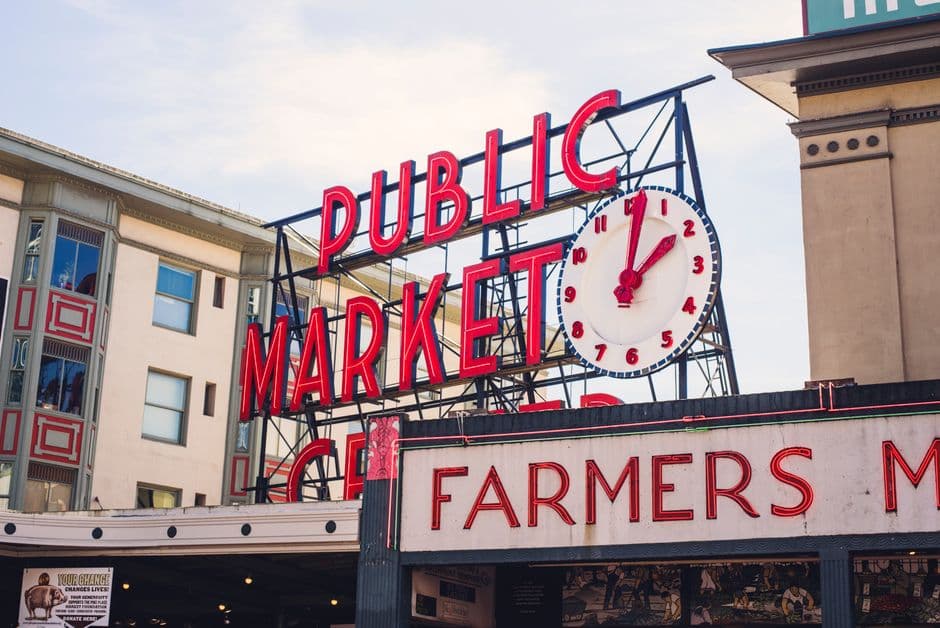
Seattle is the clean illustration of what the metrics actually reward. It finishes 4th overall on WalletHub and 3rd in the country on the diversity, accessibility and quality component. It also finishes 166th of 182 on affordability. Whatever that list is measuring, cheapness is not doing much of the work.
The best food cities in the US, sorted by how far apart the two lists put them
Plenty of people have written about the two rankings. Nobody seems to have sorted the cities by the size of the disagreement, which is the part that is actually useful, because the gap tells you what kind of eating a city is set up for.
Here is every city in Food & Wine’s US top ten, with where WalletHub put the same city out of 182.
| City | Food & Wine | WalletHub (of 182) | Gap |
|---|---|---|---|
| New Orleans | 4th | 78th | 74 places |
| Charleston | 9th | 65th | 56 places |
| New York | 1st | 26th | 25 places |
| Philadelphia | 8th | 32nd | 24 places |
| Chicago | 2nd | 23rd | 21 places |
| Los Angeles | 3rd | 16th | 13 places |
| Houston | 6th | 15th | 9 places |
| Miami | 10th | 1st | 9 places |
| San Francisco | 5th | 3rd | 2 places |
| Austin | 7th | 6th | 1 place |
And running it the other way, these are the cities WalletHub puts in its top ten that the Food & Wine board does not rank at all: Portland, Oregon (2nd), Seattle (4th), Orlando (5th), Tampa (7th), Las Vegas (8th), Sacramento (9th) and San Diego (10th).
Twenty slots across two lists, seventeen distinct cities, three names in common. The two instruments are not producing slightly different versions of the same answer. They are producing mostly different answers, and the size of each city’s gap is a decent proxy for the question “is this a place with a few extraordinary restaurants, or a place where it is hard to eat badly.”
The biggest gap in America belongs to New Orleans, not New York
Every article about these two lists is about New York. New York is not the interesting one. New Orleans is fourth in America according to the Food & Wine board and 78th of 182 according to WalletHub, a gap of 74 places. That is three times New York’s gap, and nobody has written about it.

The tempting explanation is the same one everyone reaches for with New York: the index punishes expensive cities and New Orleans is expensive. Check it and the explanation falls over. New Orleans ranks 176th of 182 on affordability, and New York ranks 179th. On the money question the two cities are effectively tied, three places apart at the bottom of the same barrel.
The difference is on the other component. On diversity, accessibility and quality, New York is 14th and New Orleans is 41st. That, not price, is the entire reason one sits at 26th and the other at 78th.
Which is a genuinely interesting thing to know about New Orleans rather than a knock on it. A board of 25 experts rating the best eating in the country puts it fourth. A spreadsheet counting how much food there is, of how many kinds, within reach of how many people, puts it 41st on that same measure. Both can be true at once, and if you have eaten there you already know which one matches your week. You did not go to New Orleans for the breadth of its Korean food. You went for about nine specific things, and they were excellent.
Charleston is the same shape, 9th on the expert list and 65th on the metric one, 174th on affordability and 35th on quality. Small famous food towns get graded generously by people who know what to order and harshly by anything counting per capita.
The affordability weighting is not what keeps New York out of the top ten
Here is the received wisdom, repeated by Forbes, Parade, Time Out and most of the coverage since: New York finishes 26th because WalletHub weights affordability at 30 percent, and New York is not affordable. It sounds airtight. It is wrong, or at least it is nowhere near the whole story, and you can check it in about a minute.

Take affordability out entirely. Score New York on nothing but the 70 percent component, the diversity, accessibility and quality measure that is supposed to be its home turf. New York comes 14th. Thirteen American cities beat it on WalletHub’s own quality measure, before a single dollar sign is considered. Delete the affordability weighting from the index altogether and New York still misses the top ten.
The reason the popular explanation feels right is that WalletHub’s top ten is also full of expensive cities, which nobody mentions. San Francisco is 178th of 182 on affordability and finishes 3rd. Seattle is 166th and finishes 4th. Miami is 156th and finishes 1st. The affordability component is barely reordering anything, because the cities that actually win it, Garland and Wilmington and Fort Wayne, are not in contention on the other 70 percent.
Line up WalletHub’s top ten against their quality ranks and the point is hard to miss: 2nd, 4th, 1st, 3rd, 5th, 8th, 6th, 11th, 9th, 10th. The overall ranking is very nearly just the quality ranking with the numbers shuffled a little. So the honest sentence about New York is not “the index punished it for being expensive.” It is “the index measures density and range and reach, and on that measure thirteen cities beat New York.” You are free to think the index is wrong about that. It is not the affordability weighting doing it.
None of which stops New York being first on the list compiled by people who eat for a living, or from being the city we have the longest hand checked restaurant list for. Two instruments, two answers, and the disagreement is the information.
There are two Portlands in this argument and they are in different states
This one has caught real publications, so it is worth slowing down for. Portland, Oregon is 2nd in America on WalletHub’s main list. Portland, Maine is 1st on Food & Wine’s separate Top 10 Small US Cities for Food and Drink list. Same publishers, same year, two Portlands, two coasts, one of them a first place finish.

So “Food and Wine’s experts do not rank Portland” is a sentence that is instantly, embarrassingly falsifiable, and we nearly wrote it. Half the listicles on this topic list an unqualified “Portland” at number five and leave you to guess. One of them lists both, at 9 and 10, without ever mentioning they are 3,100 miles apart.
Portland, Oregon is also the one genuine exception to everything in the section above. It finishes 2nd overall and 34th of 182 on affordability, which is the second-best affordability rank in the entire top ten behind Austin at 30th. It is 4th on quality. It is, on this year’s numbers, close to the only large American city that is both very good and not punishingly expensive to eat in.
And it manages this while being invisible to the other kind of gatekeeper entirely. Portland, Oregon has no Michelin stars, because Michelin has never covered Oregon and skipped it again when it opened its 2026 Southwest edition. We went through that in detail in our piece on which city has the most Michelin star restaurants. Second-best food city in America on one 2026 index, structurally ineligible for a star on another. If you want a single fact that explains why these lists never agree, it is that one.
The three cities both lists rank, and the one that wins outright
Across twenty slots, three cities appear on both lists: Miami, San Francisco and Austin. Fifteen percent agreement between two lists claiming to answer the same question, which should tell you how much weight to put on any single ranking, including the ones we write.
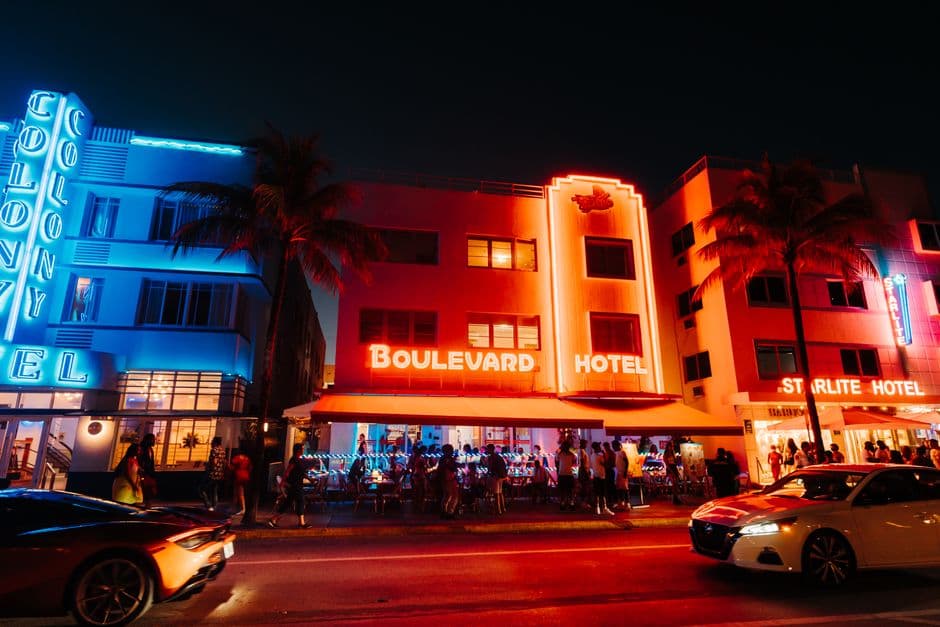
- San Francisco: 3rd and 5th. The only city in the top five of both, and 1st in the country on WalletHub’s quality component. It is also 178th of 182 on affordability, so bring the good card.
- Miami: 1st and 10th. Wins one outright, scrapes into the other. 2nd nationally on quality, 156th on affordability.
- Austin: 6th and 7th. The most consistent city on the board, one place apart on two instruments that agree on almost nothing else, and 30th of 182 on affordability, the best in either top ten.
If you want the defensible pick, it is San Francisco, because it is the only name that clears a high bar on both. If you want the one that is good on every measure at once including the bill, it is Austin, which no ranking puts first and both rankings put near the top. That second one is usually the more useful kind of answer, and it is never the headline, because “consistently sixth” does not sell a magazine cover.
How to pick the best US city for food for the trip you are actually taking
The gap column is the practical part of this whole exercise. Once you know which direction a city leans, you know how to plan it.
If the city leans expert (a big positive gap)
New Orleans, Charleston, New York, Philadelphia and Chicago. These reward a list. The great eating is real and specific and often concentrated in a small number of rooms that people who eat for a living have already named. Turning up hungry with no plan in Charleston is how you end up eating a perfectly fine sandwich four hundred yards from something you will hear about later for years.
If the city leans metric (it is high on WalletHub only)
Portland Oregon, Seattle, Orlando, Tampa, Las Vegas, Sacramento, San Diego. These reward wandering. High density, wide range, easy access, and a good chance the unremarkable-looking place on the corner is decent. This is the profile where you can improvise dinner and be fine.
If the city is on both lists
San Francisco, Miami, Austin. Both approaches work, which is the whole point of clearing both bars.
One caution worth carrying, and we have made this argument at length elsewhere: how good the food is and how easy the food is to measure are two different variables, and they frequently move in opposite directions. That is the same trap that sits underneath every ranking of the best street food cities, where the cities with the best eating are often the hardest to score. The American lists have the same problem with a different accent, and it shows up here as a 74 place gap next to New Orleans. The global version of this exact standoff is in our piece on the best food cities in the world.
What we checked, and where the numbers still disagree
Every WalletHub figure here, including the component ranks that most coverage skips, was read off WalletHub’s own 2026 table rather than taken from press coverage, because press coverage of this ranking has been recycling a 2025 edition all year.
The Food & Wine US top ten is a slightly weaker source and we would rather say so than pretend otherwise. The Global Tastemakers page itself would not load for us, so the order here is triangulated across three independent secondary reports that agree with each other and are internally consistent. Treat the membership of that top ten as solid and the exact ordering as very likely.
We are also deliberately not publishing a total for how many places Global Tastemakers covers, because the sources give 210 in one place and 165 in another and we could not reconcile them. A number you cannot check twice is not a number, it is a vibe with a decimal point.
And the gaps in the big table are calculated across two scales that are not the same size, ten slots against 182. That is fine for ordering the disagreements, which is all we use it for, and it would not be fine for anything more precise. If a city is 4th on one list and 78th on the other, the direction is not in doubt.
So: the best city for food in America is San Francisco if you want the one name both instruments respect, Miami if you trust the metrics, New York if you trust the chefs, Austin if you want to be right and solvent, and Garland, Texas if you have taken the affordability column extremely literally. Pick your instrument, then pick your city, and try to remember that both lists were assembled by people who were not going to be eating dinner with you.
Common questions
- What is the best city for food in America?
- It depends which 2026 ranking you use, and the two big ones barely agree. Food and Wine's Global Tastemakers 2026, ranked by an advisory board of 25 travel experts from a pool nominated by more than 400 food professionals, puts New York first. WalletHub's Best Foodie Cities in America 2026, which scores 182 cities on 28 metrics, puts Miami first and New York 26th. The only city in the top five of both lists is San Francisco, third on WalletHub and fifth on Food and Wine, which makes it the most defensible single answer.
- Why is New York not in WalletHub's top ten foodie cities?
- The usual explanation is that WalletHub weights affordability at 30 percent and New York is expensive, but the numbers do not really support that. New York ranks 14th in the country on WalletHub's diversity, accessibility and quality component alone, which carries the other 70 percent. Remove affordability from the index entirely and New York still finishes outside the top ten, because thirteen cities beat it on the quality measure. Several cities that do make the top ten are also very expensive: San Francisco is 178th of 182 on affordability and finishes 3rd.
- Which American cities do both 2026 rankings agree on?
- Three, out of twenty available slots: Miami, San Francisco and Austin. Miami is 1st on WalletHub and 10th on Food and Wine. San Francisco is 3rd and 5th. Austin is 6th and 7th, making it the most consistent city on either board. The other seventeen cities appear on one list and not the other.
- Which Portland is the best food city, Oregon or Maine?
- Both, on different lists, which is why this trips people up. Portland, Oregon is 2nd in America on WalletHub's main 2026 list, helped by an affordability rank of 34th out of 182 that is the second best in the entire top ten. Portland, Maine is 1st on Food and Wine's separate Top 10 Small US Cities for Food and Drink list. Always write the state, because a sentence about one is usually wrong about the other.
- What is the cheapest city in America to eat out in?
- By WalletHub's affordability component taken on its own, the top five for 2026 are Garland, Texas, then Wilmington, Delaware, Grand Rapids, Michigan, Dover, Delaware and Fort Wayne, Indiana. None of them appears in the overall top ten, which is a good illustration of how little the 30 percent affordability weighting moves the final ranking. Of the genuinely well regarded food cities, Austin at 30th and Portland, Oregon at 34th are the strongest combinations of quality and price.
- How does WalletHub rank the best foodie cities in America?
- It scores 182 US cities across 28 metrics, weighted 30 percent to affordability and 70 percent to diversity, accessibility and quality, drawing on Census, C2ER, County Health Rankings, Numbeo, TripAdvisor, Yelp and Wikipedia data. One thing worth knowing before quoting it: the methodology page states that the data behind the 2026 ranking were collected as of 1 September 2025, so it is a 2025 dataset published under a 2026 label.
- Which US city has the biggest gap between the two rankings?
- New Orleans. It is 4th in America according to the Food and Wine board and 78th of 182 according to WalletHub, a gap of 74 places, which is three times New York's. It is not a price effect: New Orleans is 176th on affordability and New York is 179th, so the two are effectively tied there. The difference is the quality and accessibility component, where New York is 14th and New Orleans is 41st. Charleston has the same shape, 9th against 65th.