
Best Food Cities in the World: What the 2026 Rankings Measure
Two rankings decide most arguments about the best food cities in the world, and for 2026 they barely agree. Time Out put Lima first. TasteAtlas put Naples first. Their top twenties share four cities out of forty slots. Neither list is wrong, and neither is a marketing stunt: they are answering two different questions, and which one you care about decides where you should go.
This guide puts both rankings side by side, explains the two mechanisms that produce a thirty-six-city gap (one is what each ranking averages, the other is a rule buried in a methodology note), and ends with a way to choose a city that does not require trusting either of them.
The two 2026 rankings, side by side
Time Out’s Best Cities for Food 2026 was published on 8 June 2026 with Intrepid Travel. It surveyed 24,000 local residents across 150 cities and combined that with the votes of more than 100 Time Out editors and food experts. The final score is weighted 70 percent local sentiment and 30 percent expert evaluation. Residents were asked about the overall quality of the food where they live, how affordable it is to eat out, and what their city does best.
The TasteAtlas Awards 25/26 ranking of the 100 best food cities was published in December 2025. It ranks a city by the average rating of the regional and national dishes most commonly served there, drawn from 590,228 valid food ratings covering 18,912 foods across 18,828 cities. There is no survey and no panel. It is an audience score, aggregated.
Both are current, both are transparent about their method, and both are quoted as though they answer the same question. Here they are next to each other, top twenty against top twenty. Cities in bold appear on both.
| Rank | Time Out 2026 (residents) | TasteAtlas 25/26 (dish ratings) |
|---|---|---|
| 1 | Lima | Naples |
| 2 | Bangkok | Milan |
| 3 | Mexico City | Bologna |
| 4 | London | Florence |
| 5 | Barcelona | Mumbai |
| 6 | Ho Chi Minh City | Genoa |
| 7 | Melbourne | Paris |
| 8 | Beijing | Vienna |
| 9 | Athens | Rome |
| 10 | Lisbon | Lima |
| 11 | Cape Town | Osaka |
| 12 | Osaka | Madrid |
| 13 | Bengaluru | Nice |
| 14 | Naples | Kyoto |
| 15 | New York | New Orleans |
| 16 | Hong Kong | Venice |
| 17 | Buenos Aires | Gaziantep |
| 18 | Marseille | Ferrara |
| 19 | Copenhagen | New York |
| 20 | Medellin | Singapore |
Forty slots. Thirty-six different cities. The winner of each list sits in the other list’s bottom half or misses it entirely, and eleven of Time Out’s twenty appear nowhere in the TasteAtlas hundred’s upper reaches at all.
The four cities both rankings agree on
| City | TasteAtlas 25/26 | Time Out 2026 | Places apart |
|---|---|---|---|
| Naples | 1st | 14th | 13 |
| Lima | 10th | 1st | 9 |
| Osaka | 11th | 12th | 1 |
| New York | 19th | 15th | 4 |
Read the last column. Naples is the best food city in the world by one method and the fourteenth by the other. Lima is the reverse. New York is close enough to call stable. And Osaka, eleventh and twelfth, is the only city on the planet that a crowd rating dishes and a survey of residents place in the same spot.
That is worth more than it looks. Agreement between two methods that share no data, no respondents and no definition of the word “food” is the closest thing to an independent confirmation this subject offers. If you want one city where both the canon and the daily eating are unarguable, the two rankings have quietly nominated it, and it is not the city either of them put first.
TasteAtlas rates dishes, and the city inherits the score
The TasteAtlas ranking is not a vote for cities. It is a vote for dishes, aggregated upward. A city’s position comes from the average rating of the regional and national dishes associated with it. That single design choice explains most of the list.
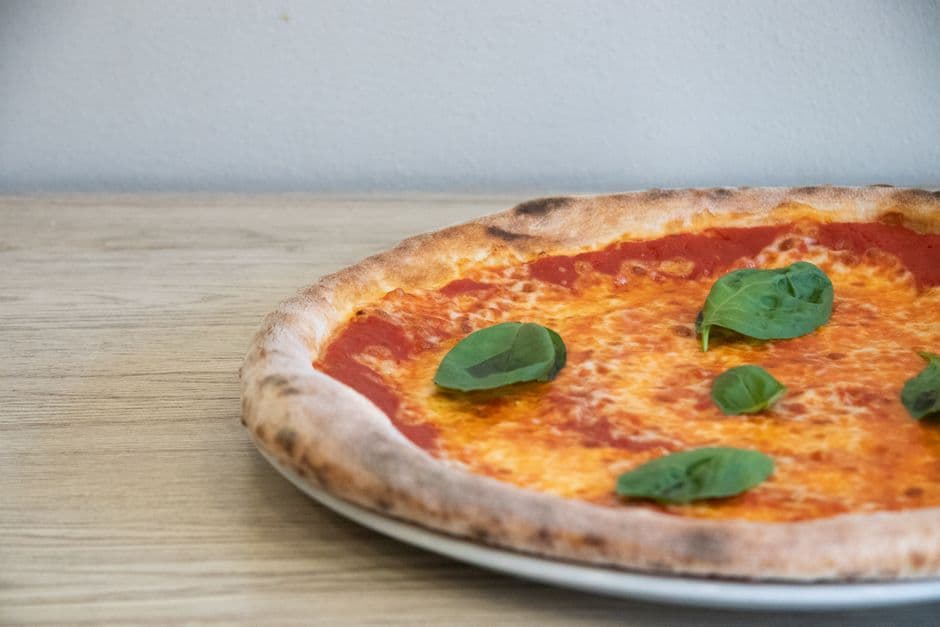
Naples wins because its canon is small, ancient, precisely defined and almost universally liked: pizza margherita, pizza fritta, ragu napoletano, sfogliatella, babà. Every one of those is rated highly by people who have eaten it, and there are not many mediocre dishes filed under Naples to drag the average down. The city is scored on a short list of things it is famous for doing perfectly.
Now apply the same arithmetic to a city with a huge and uneven repertoire. London’s food is genuinely one of the world’s great collections, and precisely because it contains everything, the average rating of everything filed under it is ordinary. Bangkok has hundreds of dishes, not five. Under an averaging system, breadth is not a strength. It is a tax.
Culinary diversity is a penalty in the TasteAtlas method and a scored criterion in the Time Out one. The two rankings are not merely different. On this one variable they run in opposite directions, which is why cities near the top of one tend to be absent from the other rather than a few places lower.
It also explains the shape of the list. Italy takes eight of the TasteAtlas top twenty: Naples, Milan, Bologna, Florence, Genoa, Rome, Venice and Ferrara. Italian regional cooking is the most finely subdivided and most consistently documented cuisine on earth, so its cities each own a distinct, well-rated, tightly bounded canon. Ferrara, a city of 130,000, ranks eighteenth in the world on the strength of cappellacci di zucca and salama da sugo. That is not a glitch. It is the method working exactly as designed.
Time Out asks residents, and allows one city per country
The obvious comparison to draw from the table above is that Time Out does not rate Italy. Italy has one entry, Naples, at fourteenth. TasteAtlas has eight. It looks like a hard disagreement about Italian food.
It is mostly a rule. Time Out’s own methodology states that only the highest-scoring city in each country was included in the final ranking, to keep the list globally representative. Italy could not have had two entries no matter how its cities scored. Neither could Japan, Spain, France or the United States.
Once you know that, the list reads very differently. Time Out’s French entry is Marseille, not Paris, and Paris is seventh on the TasteAtlas list. Its Spanish entry is Barcelona, and Madrid, twelfth on TasteAtlas, was structurally ineligible. Its Japanese entry is Osaka, which means Kyoto, fourteenth on TasteAtlas, never had a slot. Comparing the two lists city by city is invalid, because one of them is a list of countries wearing city names.
The second thing the survey does is put affordability in the score. It asked residents how affordable it is to eat out where they live, and that reweights everything. Lima, Bangkok, Mexico City, Ho Chi Minh City and Medellin are all cities where eating out well is a normal daily expense rather than an occasion. New York, which by restaurant count and Michelin count belongs near the top of any list, lands at fifteenth, and affordability is the reason. The survey is measuring how well a city feeds the people who live in it.
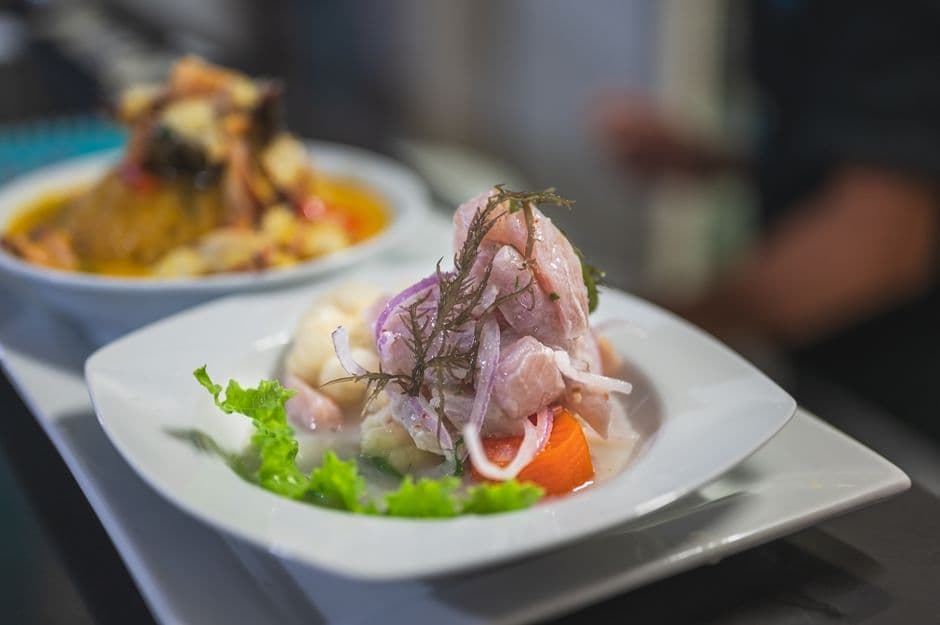
Neither of these is a flaw. A ranking that averages dish ratings is a fair measure of how celebrated a city’s food is. A resident survey capped at one city per country is a fair measure of where daily eating is best, spread across the map. What neither one is, and neither one claims to be, is a recommendation for a five-day trip.
The edition you are reading matters more than you would expect
Both rankings are annual, and both move a great deal between editions. This is the part that almost never survives into the articles that quote them, and it changes how much weight any single list deserves.
Time Out’s 2025 ranking, published in March 2025 from a survey of more than 18,500 people, was topped by New Orleans, with Bangkok second, Medellin third, Cape Town fourth and Madrid fifth. Fifteen months later the 2026 edition put Lima first, and New Orleans does not appear in the 2026 top twenty at all. The United States’ single slot went to New York instead. Madrid, the 2025 runner-up-by-two, is likewise gone, because Spain’s slot went to Barcelona.
Neither city got worse at food in a year. This is the country cap again, and it is the clearest demonstration of it available: a ranking where the defending champion can vanish without being outscored by anyone in its own city’s league is a ranking with a structural rule doing at least as much work as the survey. Only Bangkok held its position across both years, second in 2025 and second in 2026, which is the strongest single result on the resident side of this whole subject.
TasteAtlas moves too, though less violently. Its 2024/25 edition drew on 477,287 ratings across 15,478 dishes and 17,073 cities and had Rome sixth and Turin ninth. The 25/26 edition used here grew to 590,228 ratings across 18,912 foods and 18,828 cities, and now has Genoa sixth and Rome ninth, with Turin out of the top ten. The Italian top four have not moved. Everything behind them has.
The practical rule: check which edition a “best food cities” article is quoting before you plan around it, because the previous edition is usually still the better-indexed one. Every number in this guide is from Time Out’s June 2026 ranking and the TasteAtlas 25/26 awards.
Canon cities and scene cities are two different holidays
The two mechanisms sort the world into two useful categories. This is the part that survives when both rankings are out of date.
Canon cities
High on dish ratings, often absent from resident surveys. You travel for a short list of specific, named dishes in the one place that makes them properly. The trip is a checklist and the checklist is short. Research pays enormous dividends, because the difference between the right pizzeria in Naples and the wrong one is larger than the difference between two cities. Naples, Bologna, Florence, Kyoto, San Sebastian, New Orleans.
Scene cities
High on resident surveys, often absent from dish ratings. You travel to eat well constantly, cheaply, and without a plan. There is no canonical list to work through, and there does not need to be: the median meal is the attraction. A weekend with no bookings goes better here than it does anywhere in the first category. Bangkok, Mexico City, Ho Chi Minh City, Lisbon, Medellin, Bengaluru.
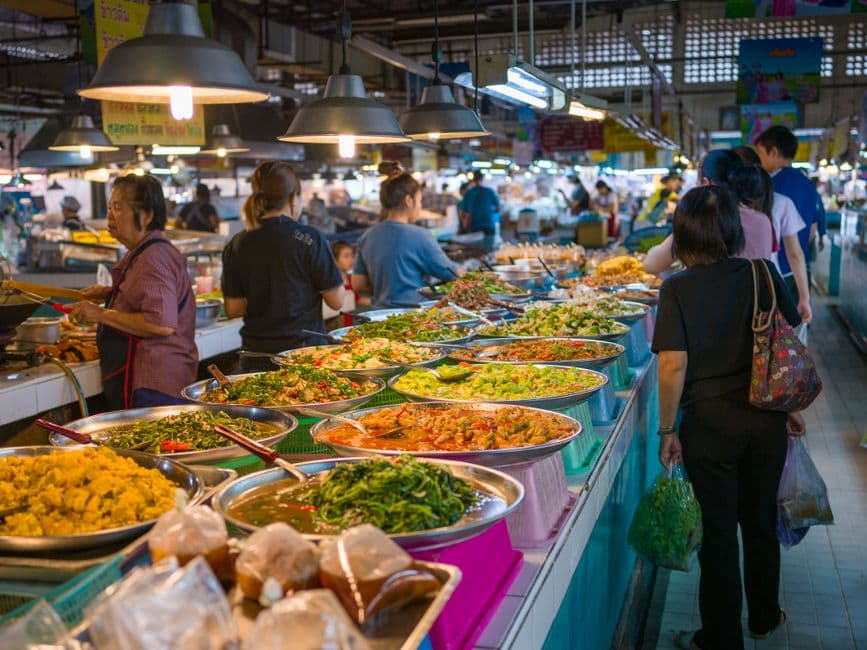
Six of the cities in this article, sorted, with what each one asks of you:
| City | Type | Where it ranks | What the trip requires |
|---|---|---|---|
| Naples | Canon | TasteAtlas 1st, Time Out 14th | A short list of the right addresses, and the discipline to eat the same dish twice |
| Bologna | Canon | TasteAtlas 3rd, not on Time Out | Bookings, and knowing that tagliatelle al ragu is the local dish and spaghetti bolognese is not |
| Lima | Both | Time Out 1st, TasteAtlas 10th | One or two reservations at the top end, then cevicherias at lunchtime and nothing planned |
| Osaka | Both | TasteAtlas 11th, Time Out 12th | Almost nothing. This is the one city both methods endorse |
| Bangkok | Scene | Time Out 2nd, not on TasteAtlas | A willingness to eat where there is no menu in English and no listing to check |
| New York | Both | Time Out 15th, TasteAtlas 19th | A budget, or the neighborhoods where a budget is not needed |
Bologna is the clearest illustration of the whole problem. It is the third best food city in the world on one ranking and does not exist on the other, and the reason is not that residents of Bologna eat badly. It is that Italy already used its slot.
How to choose a food city without trusting either ranking
Four questions, in the order that matters. They work on any city, including the thirty-six that appear on only one of these lists and the hundreds that appear on neither.
- How long are you there? Under four days, pick a scene city. A canon city rewards a week and punishes a weekend, because the dishes are in specific places and the specific places are closed on Mondays.
- Can you name three dishes the city is known for? If yes, it is a canon city and you should plan. If no, and it still has a reputation for eating, it is a scene city and planning will get in the way.
- What does a normal lunch cost against a local wage? This is the affordability variable that decides Time Out’s list, and it predicts your experience better than any score. Where eating out is what residents do daily, the median restaurant has to be good again tomorrow. Where it is an occasion, the median restaurant is graded by people with nothing to compare it against.
- Does the good food have addresses? A city where the eating is concentrated in nameable markets and streets can be done cold, on the evening you land. A city where it is scattered across forty suburbs needs a list made in advance. This is the same test that decides the best street food cities, and it is the one most rankings cannot see at all.
Notice that none of the four asks which city is best. That question has two defensible answers this year, Lima and Naples, and the disagreement between them is not going to be settled by a third list.
The useful conclusion is not a winner. It is that “best food city in the world” is two questions in one phrase: where is the food most celebrated, and where is it best to eat every day. Time Out answers the second, TasteAtlas answers the first, and the four cities that clear both bars are worth more attention than the two that top one list each.
Best food cities in the world: common questions
- What is the best food city in the world?
- There are two defensible answers for 2026 and they come from two different methods. Time Out's Best Cities for Food 2026, based on a survey of 24,000 residents across 150 cities plus an expert panel, named Lima first. The TasteAtlas Awards 25/26 ranking of the 100 best food cities, based on 590,228 audience ratings of individual dishes, named Naples first. Their top twenties share only four cities: Naples, Lima, Osaka and New York. If you want the single city both methods place in roughly the same position, it is Osaka, eleventh on one list and twelfth on the other.
- Why do best food city rankings disagree so much?
- Two mechanisms, and both are visible in the published methodologies. First, TasteAtlas ranks a city on the average rating of the dishes associated with it, so a city with a small famous canon scores high and a city with a huge uneven repertoire is diluted by its own breadth. Culinary diversity is a penalty there and a scored criterion in a resident survey. Second, Time Out includes only the highest-scoring city per country, so Italy could only ever have one entry no matter how its cities scored. Comparing the two lists city by city is therefore not a fair comparison.
- Why is Naples first on one list and fourteenth on the other?
- Naples has a short, ancient, precisely defined canon (pizza margherita, pizza fritta, ragu napoletano, sfogliatella) that rates extremely well, which is what the TasteAtlas method rewards. Time Out's survey asks residents about quality, affordability and what their city does best, and then keeps only the top city per country, so Naples is carrying all of Italy in a scoring system that is not about dish fame. Both placements are consistent with their own methods.
- What is the best food city in Europe?
- It depends which question you are asking. On dish ratings the answer is Naples, followed by Milan, Bologna and Florence, with Italy taking eight of the TasteAtlas top twenty. On resident satisfaction and affordability the answer is London, then Barcelona, Athens and Lisbon. Note that the resident survey allows only one city per country, which is why Paris, seventh worldwide on dish ratings, does not appear on it and Marseille does.
- What is the best food city in Asia?
- Bangkok ranks second in the world on Time Out's 2026 resident survey, the highest of any Asian city. On the TasteAtlas dish ratings the highest Asian entry is Mumbai at fifth, followed by Osaka at eleventh, Kyoto at fourteenth and Singapore at twentieth. Osaka is the only Asian city near the top of both, which makes it the safest single pick if you do not want to choose between the two methods.
- Should I pick a food city by its ranking?
- Only after deciding what kind of trip you are taking. Cities that rank high on dish ratings tend to be canon cities: you go for a short list of specific dishes in the place that makes them properly, and planning pays. Cities that rank high on resident surveys tend to be scene cities: the median meal is the attraction, and a weekend with no bookings works well. A short trip suits a scene city. A canon city rewards a week and punishes a weekend, because the dishes are in specific places and those places keep their own hours.