
The Best Street Food Cities, and Why No Two Rankings Agree
In the last week of July 2026, two organizations published rankings of the best street food cities in the world. Their top tens share exactly one city. Not one city in the same position: one city at all, out of twenty slots. Nineteen different places, and two confident lists.
The obvious reading is that one of them is wrong. The obvious reading is also lazy. Both studies are competent, both are transparent about their methods, and both are measuring something real. They disagree because street food is unusually hard to count, and the way each one solved that problem decided the answer before a single city was scored.
That is worth ten minutes, because once you see what the counting problem is, you stop needing anybody’s ranking. You can look at a city and tell.
Two rankings, two days apart, one city in common
Time Out’s 2026 ranking came from a survey of 24,000 city residents, who were asked to rate the affordability and quality of the food where they live. Its top ten: Ho Chi Minh City (63 percent), Kuala Lumpur (62), Jakarta (59), Taipei (59), Mexico City (58), Manila (58), Hanoi (57), Johannesburg (56), Bangkok (56), Mumbai (55).
Two days earlier, the luggage-storage company Radical Storage published an analysis of 6,897 street food vendors across the hundred most-visited cities on earth, scored on vendor density, price, ratings and variety. Its top ten: Paris (7.2 out of 10), Athens (6.9), Thessaloniki (6.1), Barcelona, London, Rhodes, Rome, Hanoi, Budapest, Amsterdam.
Hanoi is the only city on both lists. Ho Chi Minh City, the winner of one, does not appear in the other’s top ten. Paris, the winner of the other, does not appear anywhere near the first. Nine of the ten cities in the first list are in Asia, Africa or Latin America. Nine of the ten in the second are in Europe.
The point: these are not two attempts at the same question that produced different answers. They are two different questions, and the word in common is “street food”.
Neither study measured street food quality, and neither claimed to
Time Out asked locals how they feel about eating in their own city. That is a satisfaction score, and satisfaction is measured against local expectations and local wages. A Ho Chi Minh City resident rating their food scene 63 percent is answering a question about a place where a full lunch is a routine street purchase. A Zurich resident answering the same question is not.
The survey therefore rewards cities where eating out is the normal way to eat, not the expensive way. That is a genuinely useful signal, and it is not a quality ranking. It is a ranking of how well a city feeds the people who live in it.
The Radical Storage study weights vendor density per square kilometer at 30 percent, the share of budget-friendly options at 20 percent, and then star ratings, cuisine variety, and vegetarian, vegan and gluten-free availability at 10 percent each. Every one of those inputs requires the vendor to exist in a database first. Paris won on 401 listed eateries, 69.1 percent of them rated four stars or better, at 3.82 vendors per square kilometer.
Four hundred and one. That is the entire street food population of Paris as the study can see it. Bangkok has more food carts than that on a good night in one district. The number is not wrong; it is the count of businesses that are listed, mapped and reviewed. Paris did not win on food. Paris won on paperwork.
The better a city’s street food, the worse it counts
Here is what most advice misses. Street food quality and street food measurability run in opposite directions, and the mechanism is not complicated.
A great street food culture is one where the barrier to selling food is almost nothing. One dish, one cart, one family, thirty years, no sign, no phone number, no website, no fixed hours beyond “until it runs out”. Specialization that extreme is what produces the quality: a woman who has made one noodle soup every morning since 1994 will beat a kitchen that makes forty things. And every property that makes her good makes her invisible to a scraper. No listing, no star rating, no cuisine tag, no vegan filter.
Meanwhile a crepe stand near the Louvre has a registered business name, a fixed pitch, a card reader, a Google listing and four hundred reviews from tourists who were pleased to find a crepe. It counts perfectly. It is fine.
So the two studies are each catching one end of a real trade-off. Formality makes street food countable, safer, and easier to arrive at cold. Informality makes it cheap, specialized and extraordinary. No ranking can hold both, which is why no two rankings agree.
Three tests that beat any best street food cities list
Stop asking which city is best. Ask whether a city passes these three, because they are what actually decide whether you eat well in the four days you are there.
1. Does the street food have an address?
Not a neighborhood. An address. Yaowarat in Bangkok, Gwangjang Market in Seoul, Jemaa el-Fnaa in Marrakesh, Dotonbori in Osaka, Mercado 20 de Noviembre in Oaxaca. A city where street food has a postcode is a city you can eat in on the evening you land, with no research, at random, and do well. A city where the good stalls are scattered across forty suburbs is a city that rewards a month and punishes a weekend.
2. Is it cheaper than cooking at home?
This is the one that separates a street food city from a city with street food. Where a bowl costs less than the ingredients and the gas, people eat out daily, and daily custom is what enforces quality: a stall that has to satisfy the same commuters every morning cannot coast. Where street food costs the same as a restaurant, it is a novelty, and novelties are graded by tourists who have nothing to compare against.
3. Is it protected or is it tolerated?
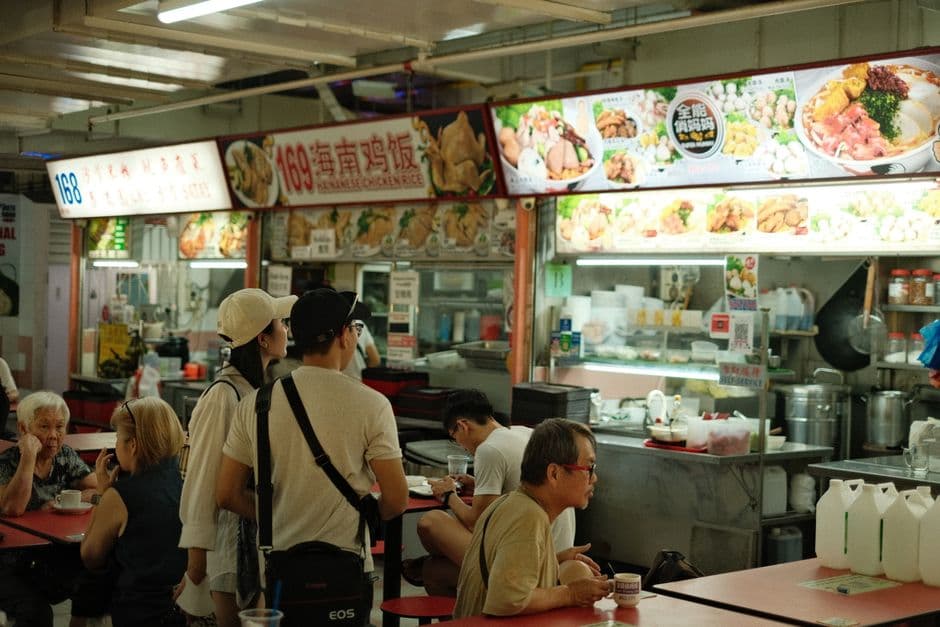
Singapore built the extreme version of protection: the National Environment Agency runs roughly 124 hawker centres, permanent covered halls with licensed stalls, and in December 2020 UNESCO added hawker culture in Singapore to its list of intangible cultural heritage. In 2016, two hawker stalls became the first street food vendors anywhere to be awarded a Michelin star. That is what happens when a city decides street food is infrastructure rather than an obstruction.
The opposite policy, periodic sidewalk clearances, does not kill a food culture but it does make it move, which is why the vendor you read about last year is not where the article says.
The street food cities that pass all three tests
We build hand-checked Google Maps lists for 54 cities, which means we have spent a lot of time working out where the eating actually is in each of them. Run the three tests and the same names keep clearing all three.
| City | Where it ranked | The address | What a plate costs |
|---|---|---|---|
| Bangkok | Time Out 9th | Yaowarat after dark, Or Tor Kor market by day | Under 2 USD, routinely |
| Ho Chi Minh City | Time Out 1st | District 1 alleys, Ben Thanh’s surrounding streets | 1 to 3 USD |
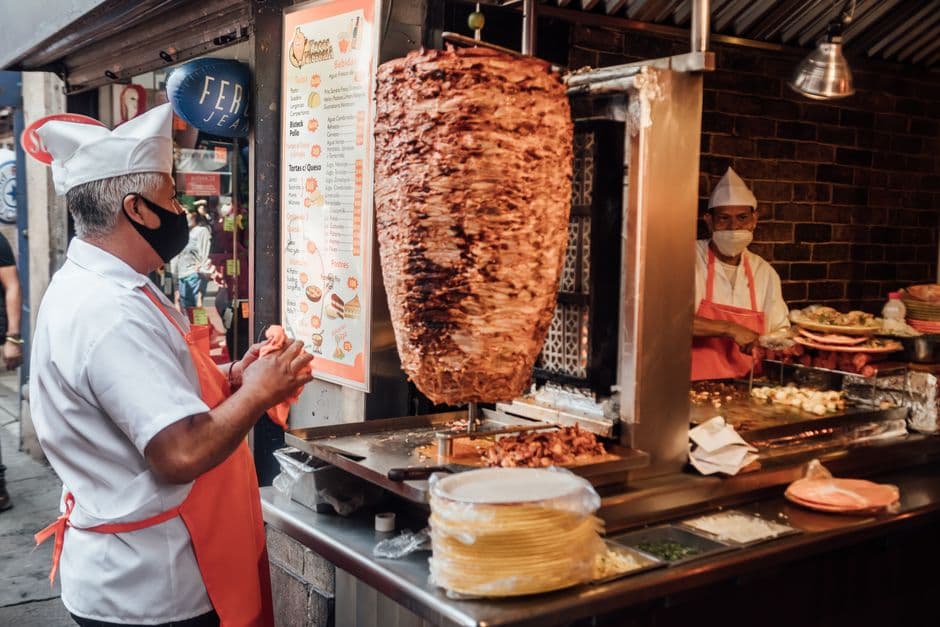
| Mexico City | Time Out 5th | Any corner with a vertical spit after 9pm | Under 1 USD per taco |
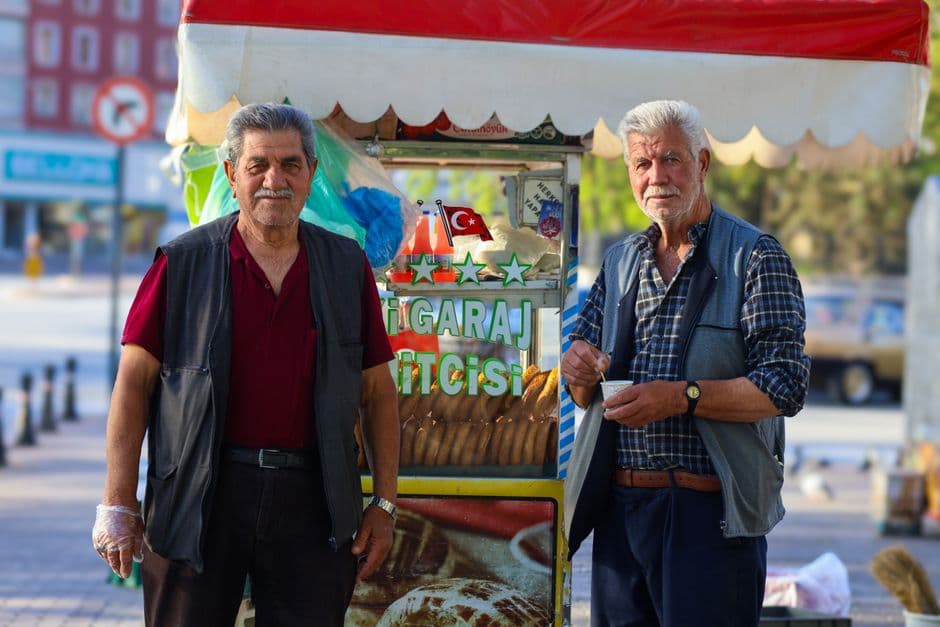
| Istanbul | Neither top ten | Eminonu waterfront, Karakoy, Kadikoy market | 1 to 4 USD |
| Osaka | Neither top ten | Dotonbori and Shinsekai | 3 to 6 USD |
Notice which two cities in that table appear in neither top ten. Istanbul and Osaka are, by any test that involves eating, obviously street food cities. Istanbul’s fish sandwiches at Eminonu, stuffed mussels sold by hand along the Bosphorus, the entire Kadikoy market: none of it is a database row. Osaka has a word for eating yourself into ruin, kuidaore, and takoyaki counters where the queue is the menu. Both are missing for the same reason, and the reason is not the food.
The lesson: absence from a ranking is evidence about the ranking, not about the city.
Europe keeps winning these rankings, and it is not a fluke
It would be easy to end here with a line about how the European results are an artifact and Asia really wins. That is half right and it is worth being fair about the other half.
Athens deserves its second place. Souvlaki, koulouri and bougatsa are genuine everyday street food at everyday prices, and Greece is one of the few places in western Europe where that is still true: the study found 77.1 percent of Thessaloniki’s street food options budget friendly. Rhodes was the highest rated in the whole dataset, at 82 percent of vendors above four stars. London’s 39 distinct food types is a real number and a real achievement, and it is the strongest argument that immigration, not climate or tradition, is what makes a street food city.
Paris at number one is still the artifact. A city wins a density contest at 3.82 vendors per square kilometer only if the denominator of the competition is “vendors we could find in a database”, and Paris is very good at being in databases.
How to eat street food in a city you landed in this morning
Five rules, in order of how much they are worth. They work in every city in this article and they do not require you to have read anything in advance.
- Go where the queue is local and moving. A long slow queue of tourists means a stall that went viral. A short fast queue of people in work clothes means a stall that has to be good again tomorrow.
- Eat what the stall is named after. A cart selling one dish has been making that dish for years. A cart selling nine is reheating eight of them.
- Eat at the hours locals eat. High turnover is the real food safety mechanism: at the peak hour the food has been sitting for minutes, not hours. This matters more than any appearance of cleanliness.
- Take the second-best-looking stall on the busy street. The best-looking one is priced for people who chose it by looking.
- Ask the person next to you what they ordered, and order that. Nobody has ever been annoyed by this question. It is the highest-return sentence in travel.
No ranking can tell you where the best street food is, because the best street food is the part that does not get written down. What a ranking can tell you is what it decided to count. Read that part instead, and then go stand in the shorter queue.
Best street food cities: common questions
- What is the best street food city in the world?
- It depends entirely on what is being counted. Time Out’s 2026 survey of 24,000 residents put Ho Chi Minh City first; a vendor-density analysis published two days earlier put Paris first. The two top tens share only Hanoi. If you want one answer for a first trip, Bangkok and Ho Chi Minh City are the safest picks, because both have dense street food you can reach on foot on your first evening.
- Which country has the best street food?
- Thailand, Vietnam and Mexico take the most top-ten slots across the major rankings, and all three pass the practical test: street food there is cheaper than cooking, so locals eat it daily and the quality floor stays high. Malaysia, Indonesia and Taiwan are close behind and are underrated by English-language lists.
- What are the best street food markets in the world?
- The ones worth planning a day around are Yaowarat in Bangkok, Gwangjang Market in Seoul, Jemaa el-Fnaa in Marrakesh, Mercado 20 de Noviembre in Oaxaca, Kadikoy market in Istanbul, and any of Singapore’s roughly 124 hawker centres. Each concentrates a whole city’s street food into a few walkable blocks, which is exactly what you want on a short trip.
- Is Paris really the best street food city?
- Paris won one 2026 study on a metric that weighted vendor density per square kilometer at 30 percent, counting 401 listed eateries. That measures how thoroughly a city’s food businesses are registered and reviewed, not how good the food is. Paris has excellent food. It is not the street food capital of the world, and no resident of Bangkok or Mexico City would recognize the claim.
- Is street food safe to eat?
- Turnover is the real safety mechanism, not appearance. Eat at the hours locals eat, at stalls where the queue is moving, and the food you are handed has been cooked in the last few minutes. A quiet stall at an odd hour is the risk, however clean it looks. Cooked-to-order and served hot beats anything sitting in a tray.
- How much should street food cost?
- In Bangkok, Ho Chi Minh City and Mexico City, a real plate is one to three US dollars and a taco is often under a dollar. In Istanbul expect one to four, in Osaka three to six. If street food costs the same as a sit-down restaurant meal in that city, you are buying a novelty aimed at visitors rather than the everyday version.
- Why do street food rankings disagree so much?
- Because the best street food is the hardest to record. A one-dish cart with no sign, no listing and no reviews is exactly the kind of vendor that produces great food and exactly the kind a dataset cannot see. Surveys of residents and counts of listed vendors therefore pick up opposite ends of the same trade-off, which is how you get nineteen different cities across two top tens.