
Restaurants in Berlin, Germany: 25 MICHELIN Stars, a 1930 Sausage Stand and Where to Actually Eat
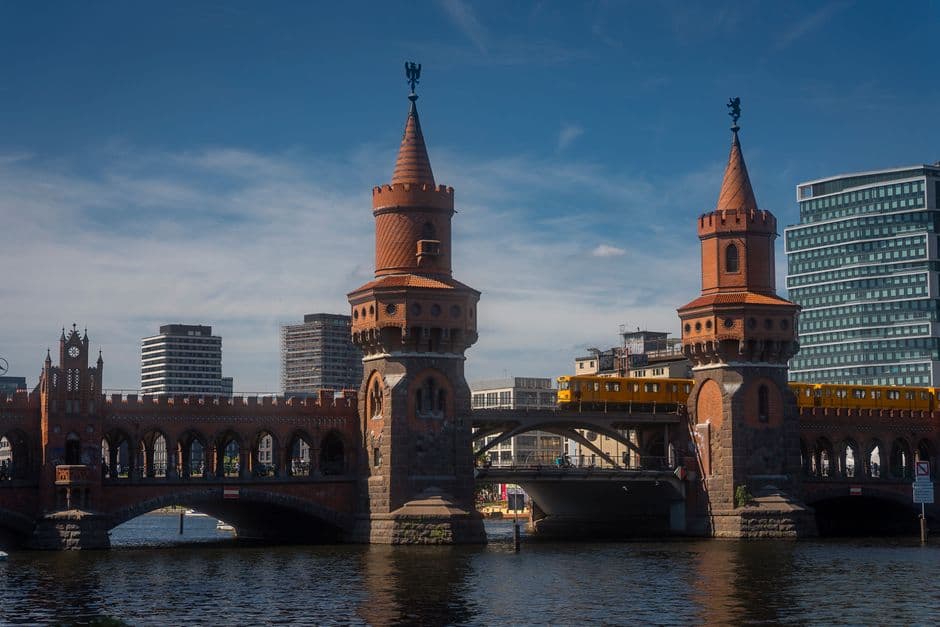
Berlin has 19 MICHELIN-starred restaurants and one burger stand in a former public toilet, and a Berliner will send you to the toilet first. This is not an insult to the starred restaurants. It is simply how the city ranks things. The most famous meal in the German capital is a sliced sausage eaten standing up, under a railway bridge, with a fork the size of a toothpick.
The short answer, for anyone who is already hungry. For the big night, Rutz in Mitte, the only three-star restaurant in the city. For the meal you cannot get anywhere else, CODA in Neukölln, which holds two stars and serves nothing but dessert. For the meal Berliners actually eat, a currywurst at Konnopke's, which has stood under the same U-Bahn viaduct since 1930, followed by a döner, followed (I speak from experience) by a short lie down. Everything else in this guide is the part in between, and in Berlin that part is enormous.
MICHELIN-starred restaurants in Berlin, Germany
The 2026 MICHELIN Guide lists 19 starred restaurants in Berlin: one with three stars, four with two and fourteen with one. That is 25 stars in a single city, more than some countries manage. It is also three restaurants fewer than last year. According to Berlin Food Stories, which tracks the guide closely, Berlin went from 22 starred restaurants to 19 in the 2026 edition, announced in June. Bieberbau and Skykitchen lost their stars, Prism had already closed, and no Berlin restaurant won a new one.
So if a guide tells you Berlin has 20, 21 or 22 starred restaurants, it is not lying. It is just old. Here is the list as it stands now.
| Restaurant | Stars | Area |
|---|---|---|
| Rutz | 3 | Mitte |
| CODA Dessert Dining | 2 | Neukölln |
| FACIL | 2 | Mitte (Potsdamer Platz) |
| Horváth | 2 | Kreuzberg |
| Tim Raue | 2 | Kreuzberg |
| Bandol sur mer | 1 | Mitte |
| Bonvivant | 1 | Schöneberg |
| Bricole | 1 | Prenzlauer Berg |
| Cookies Cream | 1 | Mitte |
| GOLVET | 1 | Mitte |
| hallmann & klee | 1 | Neukölln |
| Hugos | 1 | Mitte |
| Irma la Douce | 1 | Mitte |
| Lorenz Adlon Esszimmer | 1 | Mitte |
| Loumi | 1 | Kreuzberg |
| Matthias | 1 | Prenzlauer Berg |
| Nobelhart & Schmutzig | 1 | Kreuzberg |
| pars | 1 | Charlottenburg |
| tulus lotrek | 1 | Kreuzberg |
A note on that last column. Mitte is both a neighborhood and a much larger borough, and several of these restaurants sit in the borough rather than in the postcard middle of town. The lower-case names are not typos either. Berlin fine dining has a policy on capital letters, and the policy is no.
Rutz is the one at the top. It sits on Chausseestrasse in the northern part of Mitte, and in 2020 it became the first restaurant in Berlin ever to hold three stars. The climb took a while: one star in 2007, two in 2016, three in 2020, all under chef Marco Müller, who has run the kitchen since 2003. If you are going to book one expensive dinner in Berlin, this is the uncontroversial choice, and you should book it well before you book the flight.
The four two-star restaurants are more varied than the number suggests. Tim Raue, on Rudi-Dutschke-Strasse a short walk from Checkpoint Charlie, is the most famous restaurant in the city abroad and cooks Asian-inspired food with a heavy hand on the chili. Horváth, on the canal in Kreuzberg, is chef Sebastian Frank's modern take on Austrian cooking. FACIL hides inside a hotel at Potsdamer Platz. And CODA in Neukölln is the one to tell people about afterwards: a dessert restaurant, widely described as the first of its kind to win a MICHELIN star, where the whole tasting menu is built by a pastry chef. It is the only two-star dinner I know of where skipping straight to dessert is the house rule and not a character flaw.
One correction, because the internet has not caught up. Lorenz Adlon Esszimmer, the dining room of the Hotel Adlon beside the Brandenburg Gate, is still described all over the web as a two-star restaurant. It is not. It lost its second star in the 2025 guide and holds one star today. Even the Wikipedia table of Berlin's starred restaurants was still showing two when we checked in October 2026. It remains a very grand place to eat. It is just one star less grand than your search results think.
Among the one-star restaurants, two are worth knowing by character rather than by ranking. Nobelhart & Schmutzig, on Friedrichstrasse, cooks under the motto brutally local, which means the ingredients come from Berlin and the surrounding region and nowhere else. If it does not grow nearby, it is not on the plate, and there is no negotiation. Cookies Cream in Mitte holds a star for vegetarian cooking and is reached through a service alley, which is the most Berlin sentence in this guide. Bonvivant in Schöneberg is listed by MICHELIN as vegan. In most cities a starred vegetarian restaurant is a novelty. Berlin has a choice of them.
If you collect this sort of thing, we counted which city has the most MICHELIN stars in a separate post. Berlin is not the answer, but it is closer than a city famous for sausage in a paper tray has any right to be.
Currywurst, döner and the food Berlin actually runs on
Most restaurants in Berlin, Germany, do not have a star, a tasting menu or, in several important cases, chairs. The city's two signature dishes are both street food, both were popularized here within living memory, and both cost about as much as the bus ticket you bought to reach them.
Currywurst first. It is a pork sausage, fried, sliced into coins and buried under a sauce of ketchup and curry powder, then dusted with more curry powder in case you missed the point. According to the dish's well-documented history, it was invented in 1949 by Herta Heuwer, who sold it from a stand in West Berlin and patented her sauce in 1951 under the name Chillup. The Deutsches Currywurst Museum once estimated that Germans eat 800 million of them a year, 70 million in Berlin alone. The museum itself closed in December 2018, which tells you that Berliners would rather eat a currywurst than look at one behind glass. Fair.
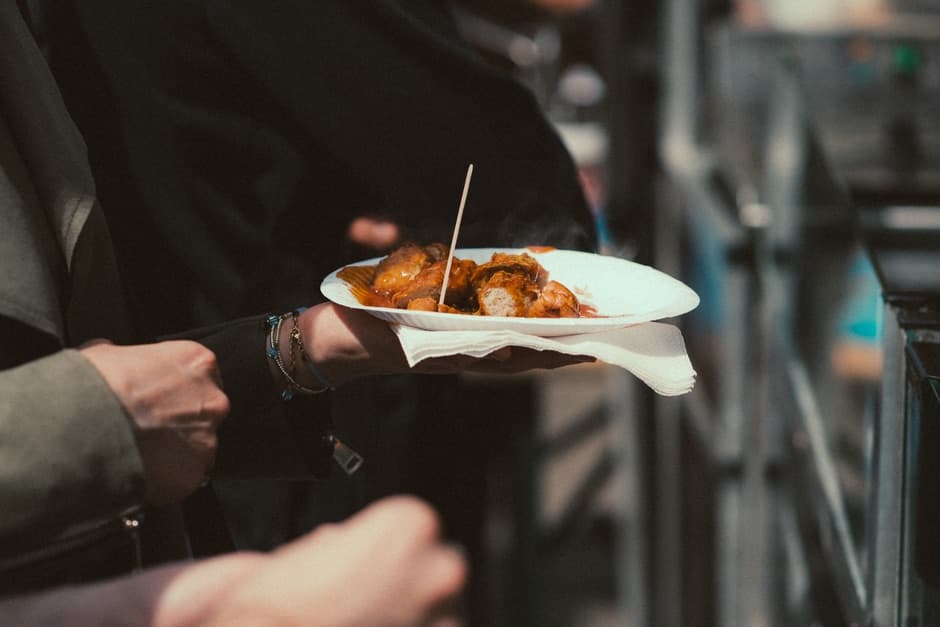
Two stands matter more than the rest. Konnopke's Imbiss has been selling sausages under the U-Bahn viaduct at Eberswalder Strasse in Prenzlauer Berg since 1930, and in 1960 it became the first stand in East Berlin to serve currywurst. It is still a family business. Curry 36, at Mehringdamm 36 in Kreuzberg, is the West Berlin answer: the same corner since 1981, open deep into the night, with a line that moves faster than it looks. You order, you stand at a high table, you eat with the tiny fork. Nobody has ever looked dignified doing this and nobody has ever minded.
One thing to know at the counter. In Berlin you will be asked whether you want the sausage with or without its skin, mit Darm or ohne Darm. Without is the classic Berlin style and the softer of the two. There is no wrong answer, although the person behind you would appreciate it if you picked one.
Döner kebab is the other pillar, and Berlin has a real claim on it. The meat on a vertical spit is Turkish and much older. The sandwich, meat shaved into a wedge of toasted flatbread with salad and sauce, is the Berlin contribution. The Association of Turkish Döner Producers in Europe credits its spread to Kadir Nurman, a Turkish guest worker who sold it from a stand at West Berlin's Zoo Station in 1972. Others claim the idea came earlier, including a father and son selling kebab in Reutlingen in 1969, and the truth is that a good idea involving bread usually has several parents. What is not disputed is the scale. By 2011 Germany had more than 16,000 döner shops, and the country produces over 400 tonnes of döner meat a day.
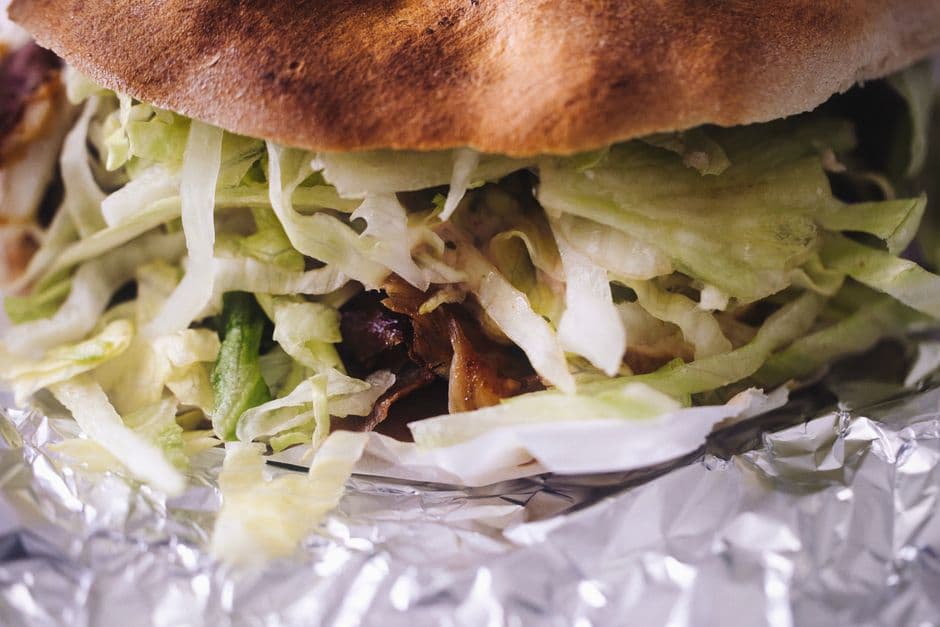
The famous one is Mustafa's Gemüse Kebap on Mehringdamm, a few steps from Curry 36, where the döner comes piled with grilled vegetables, feta and herbs and the line is a permanent feature of the street. Is it worth a long wait on your vacation? It is very good. It is also a sandwich. The practical move is to send one person to Mustafa's, one to Curry 36, and meet in the middle with both, which is the closest thing Berlin has to a tasting menu for under twenty euros.
Which brings us to the toilet. Burgermeister sits under the U1 viaduct at Schlesisches Tor in Kreuzberg, inside a public restroom building that predates the burger by most of a century. According to the city's tourism board, the founders spent three years getting a license before the first burgers were served in the listed toilet block in 2006. Yes, listed. The restroom is a protected monument. The burgers are properly good, the trains rattle overhead, and you will never again be able to say you have not eaten in a lavatory. Berlin is generous like that.
German restaurants in Berlin, Germany: the traditional ones
Visitors often arrive expecting beer halls, pretzels the size of a steering wheel and waiters in leather shorts. That is Bavaria, which is about 300 miles to the south, and Berliners will thank you not to confuse the two. Berlin's own cooking is plainer, heavier and more northern. It is food designed by people who had a long winter ahead of them and knew it.
The dishes to look for on a traditional menu:
- Eisbein. A cured, boiled pork knuckle, served with sauerkraut and mushy peas. It arrives looking like something a medieval king would point at. Share it.
- Buletten. Pan-fried meat patties, somewhere between a meatball and a hamburger with no bun, eaten hot with mashed potatoes or cold with mustard at a bar. The Berlin snack that predates all the others.
- Königsberger Klopse. Meatballs in a white caper sauce. Gentler than it sounds and on the menu at most traditional places.
- Berliner Weisse. A sour, cloudy wheat beer, drunk with a shot of raspberry or woodruff syrup that turns it red or bright green. It looks like a dare and tastes like lemonade with a job.
The place to eat all of it is Zur letzten Instanz, on Waisenstrasse in Mitte, a few minutes from Alexanderplatz. It calls itself the oldest restaurant in Berlin and dates itself to 1621, when a former servant of the elector opened a tavern on the spot. The name means the court of last resort, after the courthouse nearby whose visitors came in to celebrate or recover. The house legend is that Napoleon once warmed himself at its tiled stove. The building was badly damaged in the Second World War and the restaurant reopened in 1963, so the walls are younger than the claim, but the pork knuckle is the real thing. At the time of writing it opens for dinner from Monday to Thursday, from noon on Friday and Saturday, and is closed on Sunday. Book ahead, because every other guide sends people here too. This is the rare case where every other guide is right.
If your trip continues south, the schnitzel question belongs to a different city, and we cover it in our guide to the best restaurants in Vienna, where the law has opinions about what may be called a Wiener Schnitzel.
Where to eat in Berlin, by neighborhood
Berlin is more than eight times the size of Paris by area and has no single downtown, which is a polite way of saying that a restaurant across town is forty minutes away. Pick the neighborhood first and the restaurant second. The city is really a set of villages that were merged into one in 1920 and have not fully accepted it.
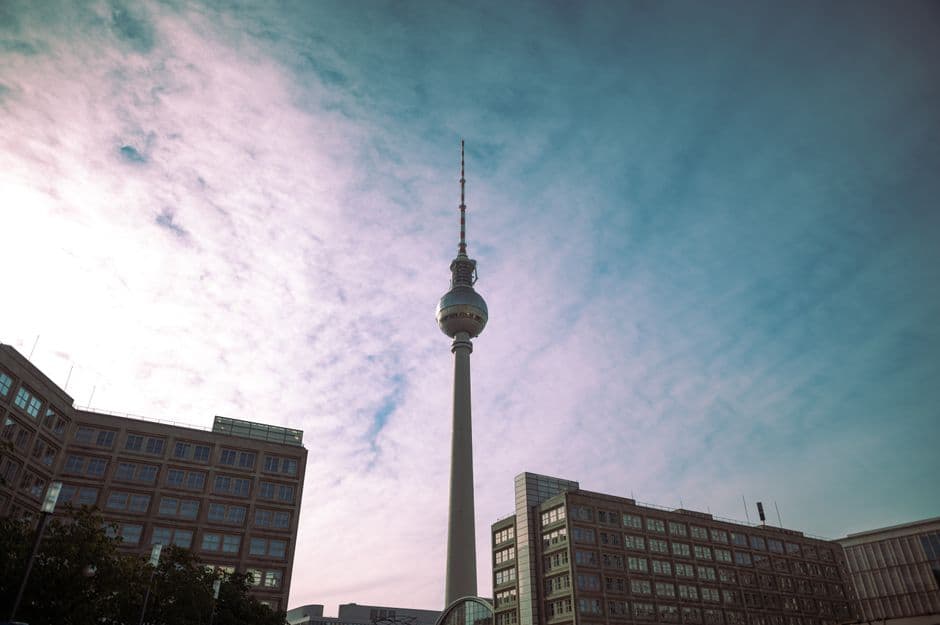
- Mitte. The historic middle, where the TV Tower is, and the densest cluster of serious restaurants: Rutz, Bandol sur mer and Cookies Cream are all here, with Zur letzten Instanz for the old-school night. It is also where the tourist menus live, mostly around Alexanderplatz and Checkpoint Charlie. Walk two streets away from any landmark before you sit down.
- Kreuzberg. If you only have time for one neighborhood, make it this one. It holds five starred restaurants (Tim Raue, Horváth, Loumi, Nobelhart & Schmutzig and tulus lotrek), the two famous stands on Mehringdamm, Burgermeister under the U1, and Markthalle Neun, the market hall that hosts the city's best-known street food night. You could eat here for a week and never use a tablecloth, or use one every night.
- Neukölln. South of Kreuzberg and where the younger restaurants open first. CODA and hallmann & klee both hold stars here, and the streets around them are full of wine bars and small kitchens that will be in next year's guides.
- Prenzlauer Berg. Leafy, well-off and full of strollers. Konnopke's is the anchor, and the neighborhood has two starred restaurants of its own, Matthias on Kollwitzstrasse and the eight-table Bricole. This is the easiest part of the city for a long, slow weekend breakfast, a meal Berlin takes more seriously than dinner.
- Charlottenburg. The old center of West Berlin, around Savignyplatz and the Kurfürstendamm. More white tablecloths, more regulars, fewer people filming their food. pars is the starred address. Come here when you want a proper restaurant with proper chairs and a waiter who has seen it all.
- Schöneberg. Quieter and residential, with Bonvivant for the starred vegan menu and a good Saturday market at Winterfeldtplatz.
Two places that are not Berlin, because people book dinner in them by accident. Potsdam, with the palaces, is a separate city and the capital of the neighboring state of Brandenburg, about half an hour away by train. And Berlin Brandenburg Airport is in Schönefeld, also in Brandenburg, outside the city limits. A restaurant listed as near the airport is not near your hotel, unless you have made some unusual choices.
How to eat out in Berlin
A few things work differently here, and knowing them in advance is the difference between a smooth week and a week of small defeats.
- Carry cash. Germany still loves it. Plenty of snack stands, bakeries and older restaurants take cash only, and the sign that says so is usually in German and usually behind the person serving you.
- Tip by rounding up. Service is included in the price. The custom is to add five to ten percent and to say the total you want to pay when you hand over the money or the card, not to leave coins on the table. Doing the arithmetic out loud in front of the waiter is the local sport.
- Book the starred restaurants early. Many serve dinner only and close two or three days a week, often Sunday and Monday. A three-night trip that includes a Sunday and a Monday has one real fine-dining night in it. Plan around that, not the other way round.
- Go to Markthalle Neun on a Thursday. The nineteenth-century market hall on Eisenbahnstrasse in Kreuzberg runs Street Food Thursday every week from 5 pm to 10 pm, and has done since 2013. The hall's own site has the practical details. Arrive hungry and early, since by eight it is shoulder to shoulder.
- Use the Bib Gourmand list. MICHELIN's good-value award currently covers nine Berlin restaurants, including Lucky Leek, Remi and November Brasserie. It is the cheapest way to eat from the guide without selling the return ticket.
- Know what a Späti is. Short for Spätkauf, a late shop. These corner stores sell cold beer and snacks long after the supermarkets close, and the bench outside one is a legitimate place to spend an evening. Supermarkets shut on Sundays, so the Späti is also your emergency pantry.
- Eat at German hours, or do not. Dinner is around seven or eight. But this is Berlin, and the currywurst stands and döner shops near the nightlife keep going long past midnight. You will not go hungry at 3 am. You may not go to bed either.
Coming from or heading to Scandinavia on the same trip? Our guide to the best restaurants in Copenhagen covers the next capital north, and every city we have mapped is on the destinations page.
Searching for restaurants in Berlin? Add Germany
Here is something we did not expect to find. A search for Berlin restaurants is, a surprising amount of the time, not about Berlin. There is a Berlin in Ohio, in the middle of Amish country. There is a New Berlin in Wisconsin. There is a Berlin in New Jersey, one in Maryland and one in Massachusetts, and a road in Connecticut called the Berlin Turnpike that is lined with places to eat. They are all lovely, I am sure. None of them has a three-star restaurant or a wall.
We counted by phrase. Of 57 common search phrases that combine Berlin with restaurants, worth about 31,000 searches a month between them, at least 20 phrases and around 43 percent of the volume are about somewhere other than the German capital. The single most searched phrase in the whole set is a farmhouse restaurant in Berlin, Ohio. Others point to an Italian restaurant in Berlin, New Jersey, a bar and grill in Berlin, Maryland, and German restaurants that are merely named after the city, in Florida, North Carolina and Anchorage, Alaska. That 43 percent is a floor, not an estimate. It counts only the phrases that are unambiguously about somewhere else, and leaves out every plain search for Berlin restaurants that could go either way.
Only four of the 57 phrases include the word Germany. So the fix is one word. Search for restaurants in Berlin, Germany, or search by neighborhood (Kreuzberg and Neukölln do not exist in Ohio), and the map stops offering you a very nice Amish buffet 4,000 miles from your hotel.
Restaurants in Berlin, Germany: common questions
What are the best restaurants in Berlin, Germany? For fine dining, three-star Rutz in Mitte, then the two-stars: Tim Raue and Horváth in Kreuzberg, FACIL at Potsdamer Platz and CODA in Neukölln. For traditional German food, Zur letzten Instanz. For the classics, a currywurst at Konnopke's or Curry 36 and a döner at Mustafa's Gemüse Kebap.
How many MICHELIN-starred restaurants are in Berlin? Nineteen in the 2026 guide: one with three stars, four with two and fourteen with one. The city had 22 a year earlier.
Does Lorenz Adlon Esszimmer have two MICHELIN stars? Not any more. It lost its second star in the 2025 guide and holds one today, although many websites still list it with two.
What food is Berlin known for? Currywurst and döner kebab above all, both street food. On a traditional menu, look for Eisbein (pork knuckle), Buletten (meat patties), Königsberger Klopse (meatballs in caper sauce) and Berliner Weisse, a sour wheat beer served with syrup.
Where was currywurst invented? In Berlin, in 1949, by Herta Heuwer, who sold it from a street stand in the western part of the city and patented her sauce in 1951. Hamburg has a rival claim, made famous by a novel, but it has never been proven.
What is the oldest restaurant in Berlin? Zur letzten Instanz in Mitte, which dates itself to 1621. The building was rebuilt after the Second World War and the restaurant reopened in 1963.
Is Berlin expensive for eating out? Not by the standards of other western European capitals. The street food is among the cheapest good meals on the continent, and even the starred restaurants tend to cost less than their equivalents in Paris or London. The expensive part of eating in Berlin is how often you will want to do it.
Book Rutz for the occasion, stand under the viaduct at Konnopke's for the story, and let the map remember the other eighty or so, which leaves you free to settle the only real question Berlin asks of a visitor: whether one more döner counts as dinner or as a second lunch. Here is the Berlin list.
Restaurants in Berlin, Germany: common questions
- What are the best restaurants in Berlin, Germany?
- For fine dining, three-star Rutz in Mitte, then the two-stars: Tim Raue and Horváth in Kreuzberg, FACIL at Potsdamer Platz and CODA in Neukölln. For traditional German food, Zur letzten Instanz. For the classics, a currywurst at Konnopke's or Curry 36 and a döner at Mustafa's Gemüse Kebap.
- How many Michelin star restaurants are in Berlin?
- Nineteen in the 2026 guide: one with three stars (Rutz), four with two stars and fourteen with one star. The city had 22 starred restaurants a year earlier.
- Does Lorenz Adlon Esszimmer have two Michelin stars?
- Not any more. Lorenz Adlon Esszimmer lost its second star in the 2025 guide and holds one star today, although many websites still list it with two.
- What food is Berlin known for?
- Currywurst and döner kebab above all, both street food. On a traditional menu, look for Eisbein (pork knuckle), Buletten (meat patties), Königsberger Klopse (meatballs in caper sauce) and Berliner Weisse, a sour wheat beer served with syrup.
- Where was currywurst invented?
- In Berlin, in 1949, by Herta Heuwer, who sold it from a street stand in the western part of the city and patented her sauce in 1951. Hamburg has a rival claim, but it has never been proven.
- What is the oldest restaurant in Berlin?
- Zur letzten Instanz in Mitte, which dates itself to 1621. The building was rebuilt after the Second World War and the restaurant reopened in 1963.
- Is Berlin expensive for eating out?
- Not by the standards of other western European capitals. The street food is among the cheapest good meals on the continent, and even the starred restaurants tend to cost less than their equivalents in Paris or London.