
Best Street Food in Bangkok: A Guide by the Hour
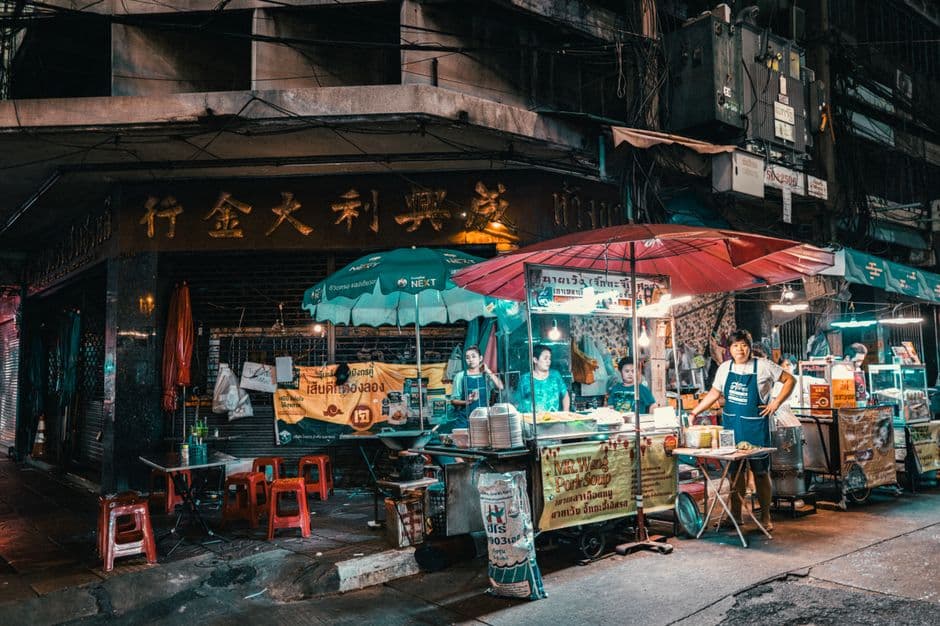
The best street food in Bangkok is not hidden. It is just not there yet, or it left an hour ago. This city serves its food in shifts, and the single most common way to have a disappointing eating day here is to arrive at the right address at the wrong time.
Every guide will send you to Chinatown. Almost none of them mention that if you show up on Yaowarat Road at two in the afternoon you will find a gold shop, a pharmacy, some traffic, and a strong sense that everyone lied to you. (They did not lie. They just left out the clock, which in Bangkok is half the address.)
Bangkok eats in two shifts, and the city just wrote that into a building
You do not have to take my word for the shift thing. In April 2026 the Bangkok Metropolitan Administration opened its first hawker center in the middle of the city, on Ratchadamri Road beside Lumpini Park, modeled on Singapore's. It was designed to hold 88 vendors per shift, in two shifts a day: 5am to 4pm, then 4pm to midnight. Same 2x2 meter stall, two completely different businesses, 176 vendor slots a day.
Read that again, because it is the whole guide. When Bangkok finally built street food a permanent, air-conditioned, water-and-electricity home, the thing it could not design away was the double day. The morning cook and the evening cook are not competitors. They are tenants of the same square of concrete, and they have never met.
That is how the streets work too. The noodle woman who owns a corner from 6am packs up before the grill guy who owns it from 6pm arrives. Nobody advertises this. Everyone who lives here knows it. So instead of giving you another list of 25 stalls sorted by how much the writer liked them, this guide is sorted by the hour on your phone.
5am to 10am is the best street food in Bangkok, and almost no visitor eats it
Bangkok's morning is its most underrated meal and its least crowded one, largely because it competes with your hotel breakfast buffet, which is a fight the buffet should not be winning.
The morning shift is soup and rice and fried things eaten fast on the way to work. Look for jok, the rice porridge that arrives with pork meatballs, ginger and a raw egg dropped in to cook in the heat of the bowl. Look for patongko, the little fried dough twins, sold by the bag with pandan custard for dipping. Look for khao tom, a clearer rice soup for people who find jok too rich at 6am, and there are such people, and they are wrong.
Bang Rak is the classic morning district for this. So is the run of streets around Sam Yan, and the lanes off Charoen Krung. The signal you want is a cart with a queue of people in office clothes and nobody taking photographs of the food.
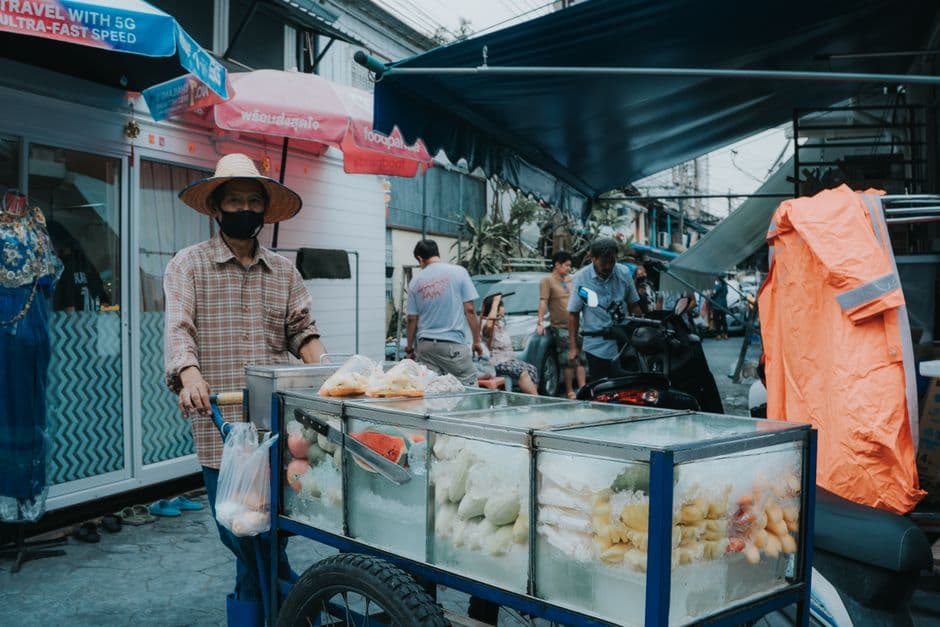
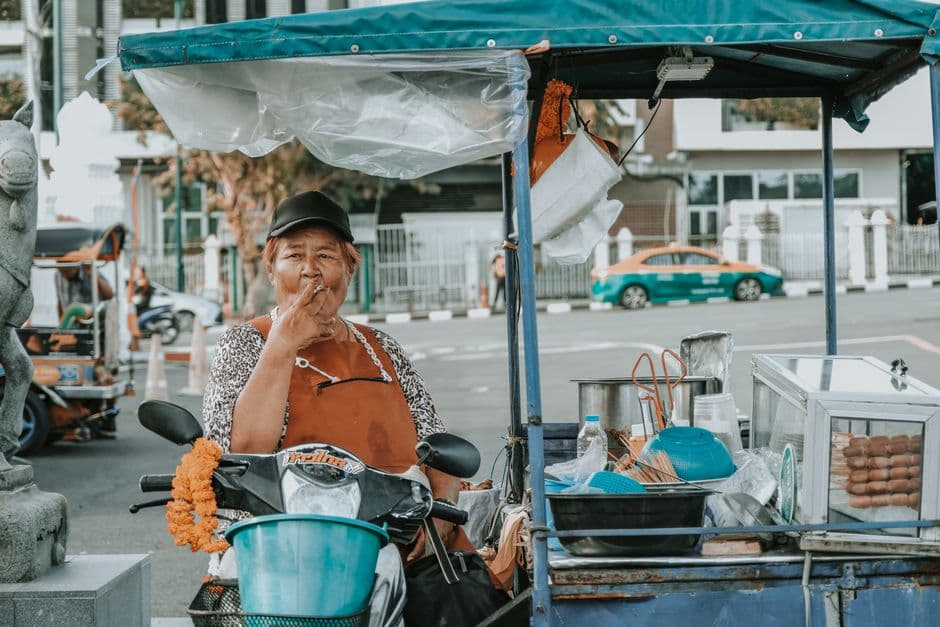
One practical note that will save you a morning: the fruit carts, those glass cases full of cut pineapple, guava and watermelon sitting on ice, are a genuinely great breakfast and cost about as much as nothing. They also start early and drift through the day, which makes them the one thing on this list that does not care what time it is.
10am to 3pm belongs to rice and curry, and it is the cheapest good meal in the city
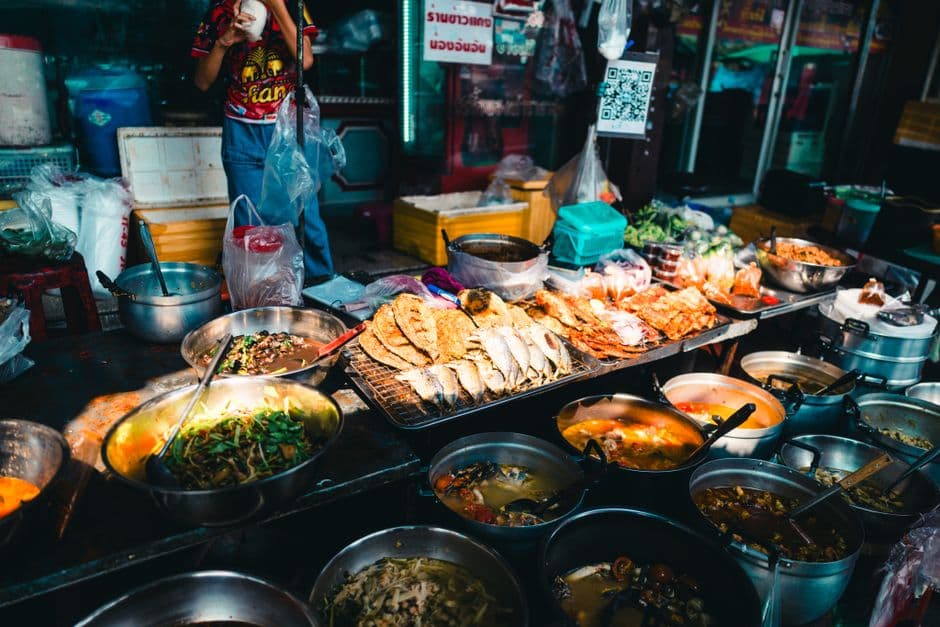
The midday shift is khao gaeng, which translates to rice and curry and undersells itself badly. It is a stall with fifteen to thirty trays of cooked dishes out on display: curries, stir-fried greens, stewed pork, omelettes, whole fried fish, things you cannot name and should point at anyway. You get rice, you point at two or three, you sit down, you pay somewhere between 50 and 80 baht.
This is the format that most rewards not speaking Thai. The menu is the food. You are looking at it. Point, nod, hold up two fingers, eat. I have had better lunches in Bangkok for a dollar and a half than I have had in cities where I read the menu fluently and understood every word of my disappointment.
Nang Loeng Market is the set piece for the daytime shift, an old covered market where the dessert and lunch stalls run roughly 8am to 3pm and a lot of vendors close once lunch is done. Or Tor Kor, up by Chatuchak, is the tidier, pricier version and worth it for the produce alone. Both are daytime animals. Turn up at 7pm and you will be looking at shutters.
The other midday specialist is boat noodles, tiny intense bowls of dark beefy or porky broth, sold at stalls where the local sport is stacking your empty bowls into a tower. Four bowls is normal. Nine is a personality.
3pm to 6pm is the handover, and it is the hour that ruins most trips
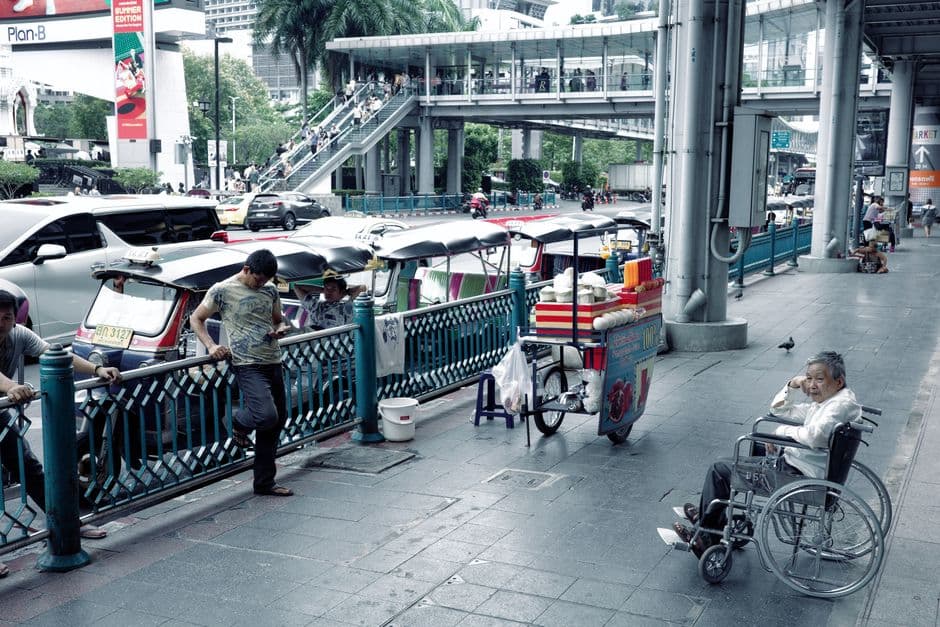
Here is the gap nobody warns you about. The lunch stalls have sold out and gone home. The night stalls have not set up. You are hungry, it is 35 degrees, and the internet's favorite noodle place is a locked cart chained to a lamppost.
This is when visitors give up and eat in a mall, which is not a tragedy (Bangkok's mall food courts are genuinely good and air-conditioned, and there is no shame in either of those things). But the afternoon has its own menu if you know to ask for it.
- Grilled pork skewers and sticky rice from the all-day carts, sold in bags, eaten walking.
- Thai iced tea and cha yen, orange, sweet, and structurally more dessert than drink.
- Mango sticky rice, in season roughly March to June, though somebody will sell it to you year round.
- Roti, the flattened fried pancake with condensed milk, which is the correct answer to almost any question asked at 4pm.
Or you use the gap properly and go do the non-eating thing you came for. The temples are open, the river boat costs about fifteen baht, and you will be significantly happier at 7pm for having been in the shade at 4.
6pm to midnight is Chinatown, and Monday is not the night for it
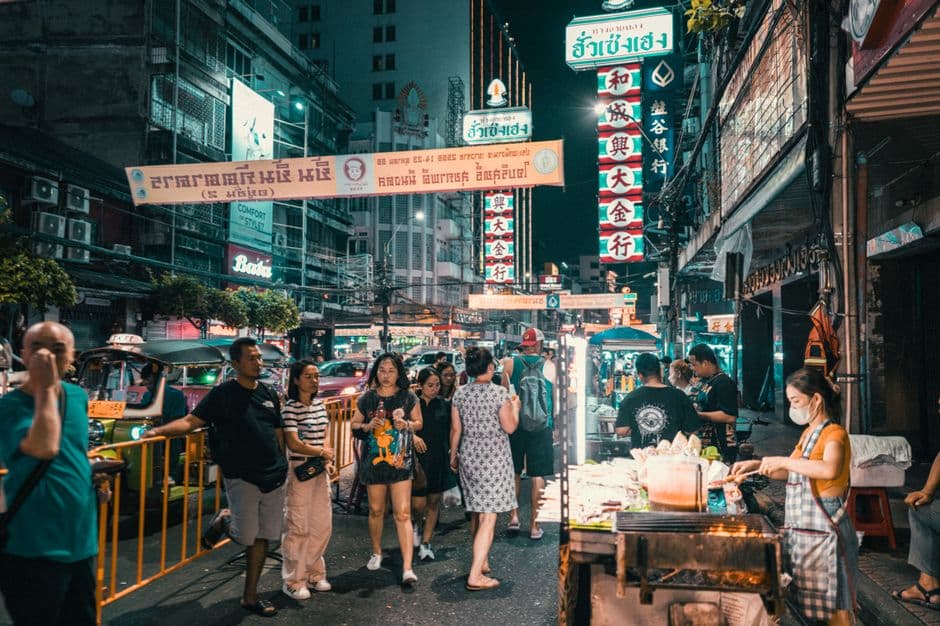
Yaowarat is the reason people book the flight. From around 5pm the carts come out onto the inner lane and the surrounding sois: the woks go on, the neon comes up, the plastic stools appear on pavement that was a motorbike parking space an hour earlier. Peak is roughly 8pm to 10pm. If you want the full scene without wearing it as a coat, get there between 6pm and 7pm.
Monday is cleaning day in Chinatown. A large share of stall owners spend it scrubbing and then take the rest of it off, so a Monday Yaowarat is the thinnest possible version of the thing you came to see. Tuesday through Sunday it runs at full strength. This one fact is worth more than any restaurant recommendation in this guide, and it is in approximately none of them.
What the night shift actually cooks:
- Hoi tod, the crisp-edged oyster or mussel omelette fried on a flat pan the size of a manhole cover.
- Kuay jab, peppery rolled rice noodles in broth with crackling pork belly, a Chinatown signature.
- Grilled seafood, prawns and squid over charcoal, usually priced by weight, usually worth confirming the price first.
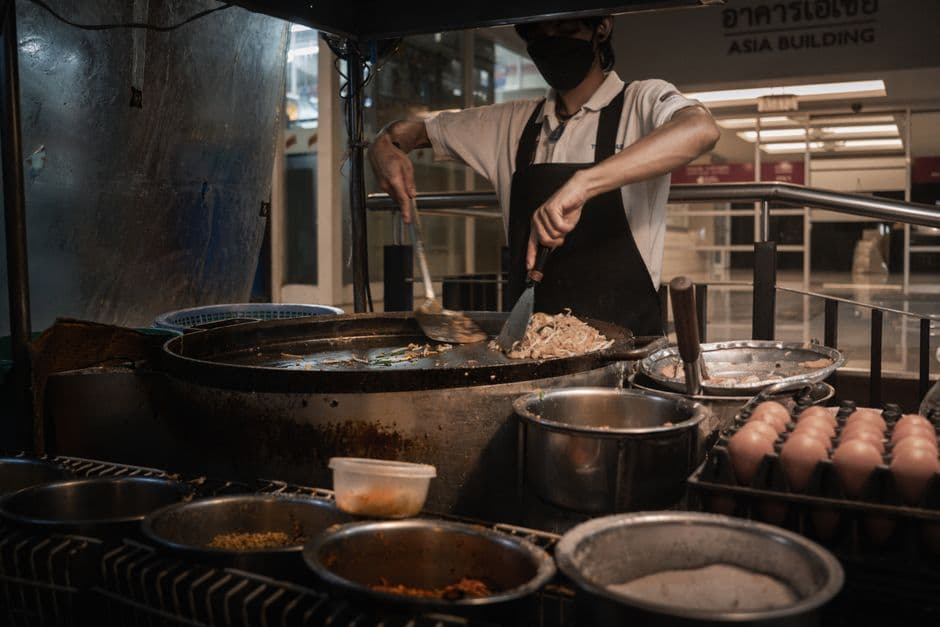
- Pad thai, done properly, from a cart with a wok that has never been cold. The famous version is served in a thin egg wrapper and opens like a present.
- Curry over rice from a stall with no tables at all, where you eat standing on the pavement and it is somehow better for it.
The evening also holds the one street stall people fly in for, the Old Town shophouse where the cook works a charcoal wok in ski goggles and the queue starts before she does. Go if you want to. Bring patience and a considerably larger budget than the rest of this page assumes.
Actual names, sorted by the shift they work
Structure is all very well, but at some point you want a name to type into a map. These are the stalls that turn up again and again across the Bangkok guides that bother to leave the hotel, grouped by when they are worth crossing town for.
Morning
- Jok Prince, Bang Rak, off Charoen Krung. Rice porridge with a faint smokiness from the pot, and the single most recommended breakfast in the city.
- Kimpo Khao Tom Pla, Bang Kho Laem. Fish rice soup, the gentler cousin of jok, for people who want breakfast to be broth.
- Sam Yan market stalls. Not one name but a cluster: breakfast, student prices, everything gone by mid morning.
Lunch
- Toy Kuay Teow Ruea, Ratchathewi. Boat noodles. Build the bowl tower. It is a competitive sport and you are already losing.
- Som Tam Jay So, Silom. Green papaya salad and grilled things, in a lane, at a volume of chili that respects you more than you may want to be respected.
- Kha Mu Charoensang, Silom. Stewed pork leg over rice, the lunch that ends the working day early for anyone who orders it.
- Neua Tun Nang Loeng, Nang Loeng Market. Stewed beef, inside the daytime market, gone by mid afternoon like everything else there.
Evening
- Nai Mong Hoi Tod, Chinatown. The oyster and mussel omelette, crisp at the edges, and the reason a flat pan the size of a manhole cover is a legitimate piece of equipment.
- Nai Ek Roll Noodle, Yaowarat. Kuay jab, the peppery rolled noodle soup, open late and busy the whole time.
- Jek Pui, Chinatown. Curry over rice from a stall with no tables. You eat standing up on the pavement. It has been like this for decades and nobody has asked for chairs.
- Thip Samai, Old Town. The pad thai in a thin egg wrapper, cooked over charcoal, opens in the evening and queues accordingly.
- Kor Panich, Old Town. Mango sticky rice done by a shop that has been doing only that for generations. Seasonal for the mango, worth timing a trip around.
- Somsak Pu Ob, Khlong San. Crab baked in a clay pot with glass noodles, across the river, worth the boat.
None of these are secrets, and that is the point. A stall that has cooked one dish on one corner for thirty years is not hiding from you. It is just closed at the hour you were going to walk past.
What to eat in Bangkok, and the hour each thing is actually good
If you take one thing from this page, take this table. It is the whole argument in one screen.
| Dish | Best hour | What it is | Rough price |
|---|---|---|---|
| Jok | 6am to 9am | Rice porridge, pork meatballs, ginger, raw egg stirred in | 40 to 60 baht |
| Patongko | 6am to 9am | Fried dough pairs, dipped in pandan custard | 20 to 40 baht |
| Khao gaeng | 10am to 2pm | Rice plus two or three curries you pick by pointing | 50 to 80 baht |
| Boat noodles | 11am to 4pm | Small bowls of dark beef or pork broth, ordered by the stack | 20 to 30 baht a bowl |
| Moo ping and sticky rice | All day | Grilled pork skewers with a bag of glutinous rice | 10 to 15 baht a skewer |
| Roti | 3pm to late | Fried flat pancake, banana and condensed milk optional but not really | 40 to 60 baht |
| Hoi tod | 6pm to midnight | Crisp oyster or mussel omelette off a flat pan | 100 to 200 baht |
| Kuay jab | 6pm to late | Peppery rolled noodle soup with crackling pork | 60 to 100 baht |
| Pad thai | 5pm to late | The one you already know, done on a wok that never cools | 60 to 150 baht |
| Grilled seafood | 7pm to midnight | Prawns and squid over charcoal, priced by weight | Ask first |
Prices are what a Thai customer pays at a normal street stall in 2026, not what a hotel concierge quotes. The famous stalls charge multiples of these and are still cheap by the standards of wherever you flew in from.
Where to eat in Bangkok by area, and when each one is awake
Pick the area to match the hour, not the other way around. This is the short version of a city that takes years to learn.
| Area | Awake | Go for |
|---|---|---|
| Yaowarat (Chinatown) | 5pm to midnight, weak on Mondays | The full night scene, seafood, noodles, Thai-Chinese cooking |
| Bang Rak | Morning and evening | Rice porridge, roast pork and duck, old shophouse kitchens |
| Nang Loeng | Roughly 8am to 3pm | Old covered market, Thai desserts, stewed beef, lunch |
| Sam Yan | Early morning to lunch | Student prices, breakfast stalls, fast turnover |
| Charoen Krung | All day, best at lunch | Rice and curry shops, the widest spread of khao gaeng |
| Soi Ari | Lunch and evening | Carts sitting next to good sit-down places, easy on a first trip |
| Victory Monument | Lunch to late | Boat noodles, commuter food, cheap and fast |
| Wang Lang | Daytime | Riverside market food, grilled everything, hospital-district prices |
If you only have one night, take Yaowarat. If you have one morning, take Bang Rak. If you have one lunch, take any khao gaeng shop on Charoen Krung and stop researching, because you are already at the good part.
Is Bangkok street food safe, and other things worth knowing before you sit down
Safety
Yes, with the same judgement you would use anywhere: eat where it is busy, where the turnover is fast, and where the cooking happens in front of you. A stall that sells out by 1pm has not had time to make you ill. Be more careful with things that sit at room temperature than with things that come out of a screaming wok.
Spice
Mai phet means not spicy and it is a negotiation, not a command. Thai mai phet and your mai phet may differ. The condiment caddy on the table, with chili flakes, chili in vinegar, fish sauce and sugar, exists so you can fix the dish to taste. Using it is not an insult. Not using it is the mistake.
Cash
Carry small notes. Many stalls now take Thai QR payment, which does you no good on a foreign card, and nobody at a 40 baht porridge cart wants to break a thousand.
Seating
A plastic stool is a table service contract. Sit down and someone will come. Standing at the front looking uncertain is how you wait fifteen minutes for food that was ready in four.
Hours change
Individual stalls move, close for a fortnight, or take a different day off. The shift pattern in this guide is stable. Any one cart is not. Check before you cross the city for a specific name.
The street food is moving indoors, and the numbers are not small
One honest note, because a guide that pretends the city is frozen is not much of a guide. There are meaningfully fewer street vendors in Bangkok than there were, and the trend is a policy, not an accident.
After 2014 the city ran a program called Return the Footpath to Pedestrians. By April 2017 officials said nearly two thirds of Bangkok's roughly 30,000 street vendors had been removed or relocated, with Yaowarat and Khao San named as targets, and the governor's chief adviser told TIME the aim was to clear vendors from all 50 districts. The world read the headlines as the death of Bangkok street food. It was not, quite. But it was not nothing either.
The current phase is quieter and more effective. Vending is being licensed into designated zones, and AFP reported in May 2026 that the number of mobile vendors has fallen by more than 60 percent since 2022, around 10,000 fewer carts. The Lumpini hawker center that opened in April 2026 is the constructive half of the same policy: a legal pitch on prime central land for about 60 baht a day, which is less than a plate of the food.
What this means for you is practical rather than mournful. The great stuff is still there, it is just less likely to be the cart that happens to be outside your hotel and more likely to be a market, a zoned street or a shophouse that has been in the same family for decades. Which, conveniently, is exactly what a saved map of Bangkok is for.
Two more Bangkok habits worth stealing
Eat the second bowl somewhere else. Portions here are small on purpose. Bangkok is built for grazing across four stalls, not committing to one. Order less than you want at the first place. This is the single hardest instruction in this guide to follow and the one that most improves the evening.
Follow the specialists. A stall that sells one dish has been making that dish since before you could walk. A cart with a laminated menu of forty items in three languages has different priorities. Bangkok rewards the narrow menu more reliably than almost any city I know, which is also why the best street food cities in the world tend to be the ones where vendors inherit a recipe rather than choose one.
If Bangkok gives you the taste for this, the two nearby cities that run the same playbook are Chiang Mai, which is slower and northern and heavy on khao soi, and Ho Chi Minh City, which is the only place in the region that argues with Bangkok about breakfast and occasionally wins. We keep a saved list for the best restaurants in Chiang Mai and one for Ho Chi Minh City too.
Best street food in Bangkok: common questions
- What is the best street food in Bangkok?
- It depends entirely on the hour. Before 10am the answer is jok, the rice porridge with pork meatballs and a raw egg stirred through, or patongko with pandan custard. Between 10am and 3pm it is khao gaeng, rice with two or three curries you choose by pointing, for 50 to 80 baht. After 6pm it is Chinatown food: hoi tod, the crisp oyster omelette, kuay jab rolled noodle soup with crackling pork, and grilled seafood over charcoal. The same street will give you all three and none of them at the wrong time.
- Where is the best street food in Bangkok?
- Yaowarat Road in Chinatown for the evening, and it is not close. For mornings, Bang Rak. For lunch, the rice and curry shops along Charoen Krung, or Nang Loeng Market, which runs roughly 8am to 3pm. Victory Monument is the boat noodle district. Soi Ari is the easiest area for a first trip because carts and good sit-down places sit next to each other.
- Is Bangkok street food safe to eat?
- Generally yes, with ordinary judgement. Eat where it is busy and the turnover is fast, and prefer food cooked to order in front of you over food that has been sitting at room temperature. A stall that sells out by early afternoon has not had time to make anyone ill. Carry small notes, because many stalls accept Thai QR payment that will not work on a foreign card.
- What time does street food start in Bangkok?
- There are two shifts. The morning shift runs from about 5am to mid afternoon, and the evening shift from about 4pm to midnight. Bangkok's own hawker center at Lumpini Park is built around exactly those two rotations, 5am to 4pm and 4pm to midnight. On Yaowarat the carts come out from around 5pm and peak between 8pm and 10pm.
- How much does street food cost in Bangkok?
- A plate of rice and curry runs 50 to 80 baht, a bowl of boat noodles 20 to 30 baht, grilled pork skewers 10 to 15 baht each, and a bowl of jok 40 to 60 baht. Chinatown evening dishes are higher, roughly 60 to 200 baht, and grilled seafood is usually priced by weight, so confirm the price before it goes on the charcoal. Famous stalls charge several times these numbers and are still inexpensive by most visitors' standards.
- Is Yaowarat open every day?
- Effectively no. Monday is cleaning day in Chinatown and a large share of stall owners take the rest of the day off, so a Monday visit gives you the thinnest version of the street. Tuesday through Sunday evenings run at full strength.
- Is Bangkok street food disappearing?
- It is shrinking and being reorganized rather than disappearing. AFP reported in May 2026 that the number of mobile vendors has fallen by more than 60 percent since 2022, about 10,000 fewer carts, as the city licenses vending into designated zones. The Bangkok Metropolitan Administration also opened its first central hawker center beside Lumpini Park in April 2026, offering legal pitches for around 60 baht a day. The food is still excellent; it is just increasingly found in markets, zoned streets and long-established shophouses rather than on any random pavement.
- What should I eat for breakfast in Bangkok?
- Skip the hotel buffet at least once. Jok, khao tom rice soup, and patongko dipped in pandan custard are the classic morning trio, sold from carts in Bang Rak, Sam Yan and the lanes off Charoen Krung. The glass-cased fruit carts selling cut pineapple, guava and watermelon on ice are the other great Bangkok breakfast, and they are among the few things on the street that keep going all day.