
Best Restaurants in Tel Aviv: The City Michelin Never Rated
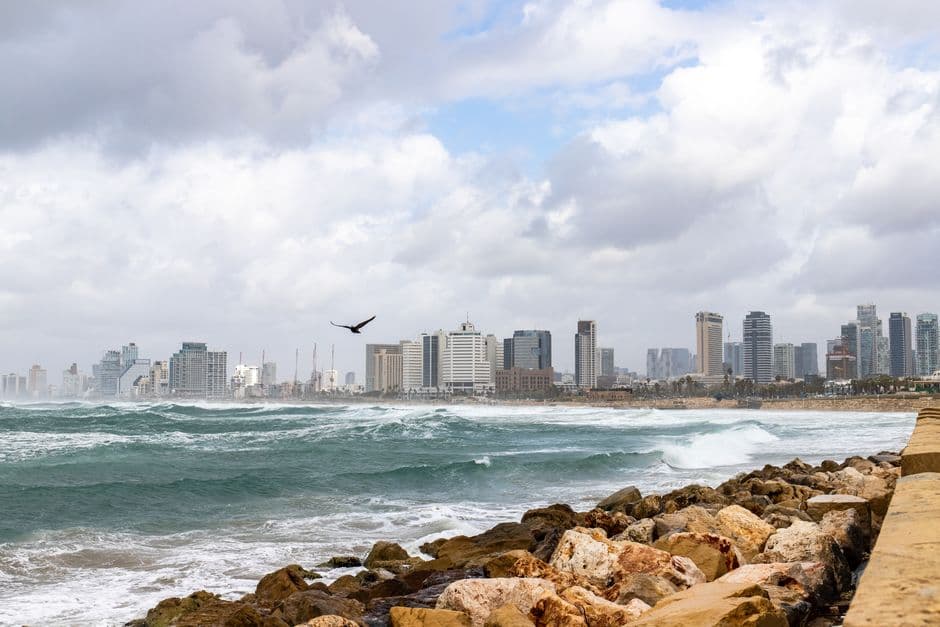
Tel Aviv has no Michelin-starred restaurants. Not one. It also has no one-star, no two-star and no Bib Gourmand, and it never has, because the MICHELIN Guide has never published a restaurant selection for Israel at all. If you assumed that was a comment on the cooking, we have some good news and one very strange invoice to show you.
This is a guide to the best restaurants in Tel Aviv, Israel, written the way we write all of these: real addresses, real neighborhoods, and a straight answer about who is actually qualified to rank the place. That last part turned out to be the interesting bit. Tel Aviv is one of only five cities in our entire 54-city list where a restaurant cannot be starred no matter how well it cooks, and the reason is a budget line rather than a verdict.
Tel Aviv has zero Michelin stars, and the food has nothing to do with it
Start with the thing that sounds like an insult and is not one. Michelin does not operate in Israel. There is no MICHELIN Guide Israel, no MICHELIN Guide Tel Aviv, and no Israeli restaurant holding a star anywhere in the system. This is not a low score. It is an absence of a scoreboard.
We checked this across all 54 cities we cover, and Tel Aviv is in a very small group. Five cities on our list have no restaurant selection at all: Lima, Marrakesh, Portland, Tbilisi and Tel Aviv. Every one of them has a structural score of zero and will keep it until a French tire company opens an office. We wrote about what that does to the whole genre in our piece on which city really has the most Michelin stars, and Tel Aviv is the cleanest example of the problem we found.
Here is the part that makes it funny rather than sad. Michelin will happily sell you a hotel room in Tel Aviv tonight. Its hotel arm runs a separate business from the restaurant guide, and as of August 2026 it lists and books Israeli properties: The Drisco, The Jaffa, Sam&Blondi, White Villa, Nordoy, Poli House and Lighthouse by Brown Hotels among them. So the company is commercially present in the city, takes bookings in the city, and has never once sent a restaurant inspector to eat in it. Michelin is its own counter-example and does not appear to have noticed.
The stars have a price list, and Israel was quoted 1.5 million euros
On 1 February 2023, Israel’s Tourism Ministry announced it had approved the entry of the MICHELIN Guide. The Times of Israel reported the terms: the deal “is said to cost Israel about 1.5 million euros ($1.6 million), which the Tourism Ministry will split with the municipality.” The municipality in question is Tel Aviv, because inspectors “currently see ‘feasibility’ only in evaluating Tel Aviv’s restaurant scene.”
Read that again, because it reframes the entire question. Whether a city gets stars is partly a matter of whether its tourism board writes a seven-figure check. That is not a scandal and Michelin has never hidden it, but almost nobody says it out loud in a restaurant guide, and it turns “does Tel Aviv have Michelin stars” into a procurement question.
As of August 2026, three and a half years after that announcement, no selection has been published. The check, so far as anyone outside the ministry can tell, has not cleared.
There is one older detail that complicates the story, and we are including it precisely because it cuts against the flattering version. In 2017 the Tourism Ministry commissioned a study from Michelin on Israel’s gastronomic standing. The findings were never published, but inspectors reportedly “did not find any eateries in the State of Israel worth ranking at the time.” That is a verdict, and it is nine years old, and it is the one line no Tel Aviv restaurant list ever quotes. We think the 2017 read is badly out of date. We also think a guide that only tells you the flattering half of a story is not a guide.
Who actually rates restaurants in Tel Aviv, Israel: seven names worth your evening
If the famous instrument is missing, use a working one. La Liste is a French meta-ranking that aggregates guides, critics and reviews into a single 0 to 100 score, and its methodology deliberately weights a Michelin score more heavily than an anonymous blog. Which produces a small joke at nobody’s expense: the ranking that respects Michelin most is the one currently doing Michelin’s job in Tel Aviv.
In the La Liste 2026 edition, published in November 2025, eight Israeli restaurants made the global list of the world’s best. Seven of the eight are in Tel Aviv. Only Chakra, at 76 points, is in Jerusalem.
| Restaurant | La Liste 2026 score | City |
|---|---|---|
| OCD TLV | 88.5 | Tel Aviv |
| Mashya | 83 | Tel Aviv |
| ALENA | 81.5 | Tel Aviv |
| Manta Ray | 77.5 | Tel Aviv |
| Claro | 77 | Tel Aviv |
| Pastel | 77 | Tel Aviv |
| Popina | 76 | Tel Aviv |
| Chakra | 76 | Jerusalem |
Seven of Israel’s eight globally ranked restaurants sit inside one city of roughly half a million people. That is the number that should have been the headline of every “top restaurants in Tel Aviv” article, and instead the genre spent its time implying stars that do not exist.
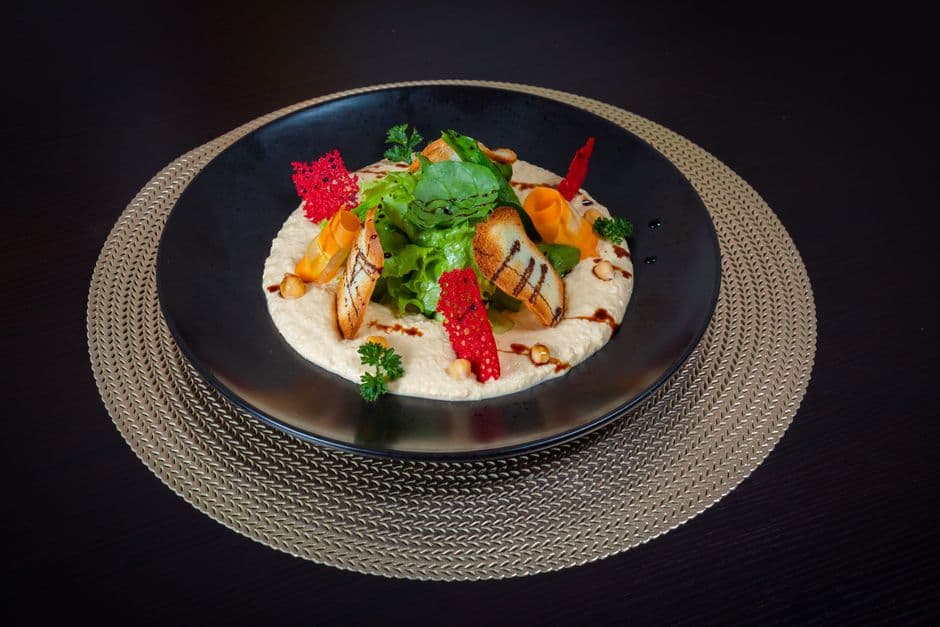
A note on what those seven are like, since scores are not menus. OCD TLV is chef Raz Rahav’s tasting-menu room, counter seating, a long sequence of courses, the most formal experience on the list. Mashya sits on the entrance level of the Mendeli Street Hotel and is the one most people mean when they say “a proper dinner in Tel Aviv.” Pastel is inside the Tel Aviv Museum of Art, run by Gal Ben Moshe, who previously held a Michelin star in Berlin. Which means Tel Aviv has a chef with star experience cooking in a city where the star is unavailable. He moved to a league that does not keep that particular table.
The most searched restaurant in the city is a small tavern by the spice market
We keep keyword data on every city we cover, and Tel Aviv produced the single strangest row in the whole set. The most searched restaurant name in the city, by an enormous margin, is Dalida. Not the tasting menus. Not the hotel dining rooms. A tavern on Zevulun Street, in Florentine, a short walk from Levinsky Market.
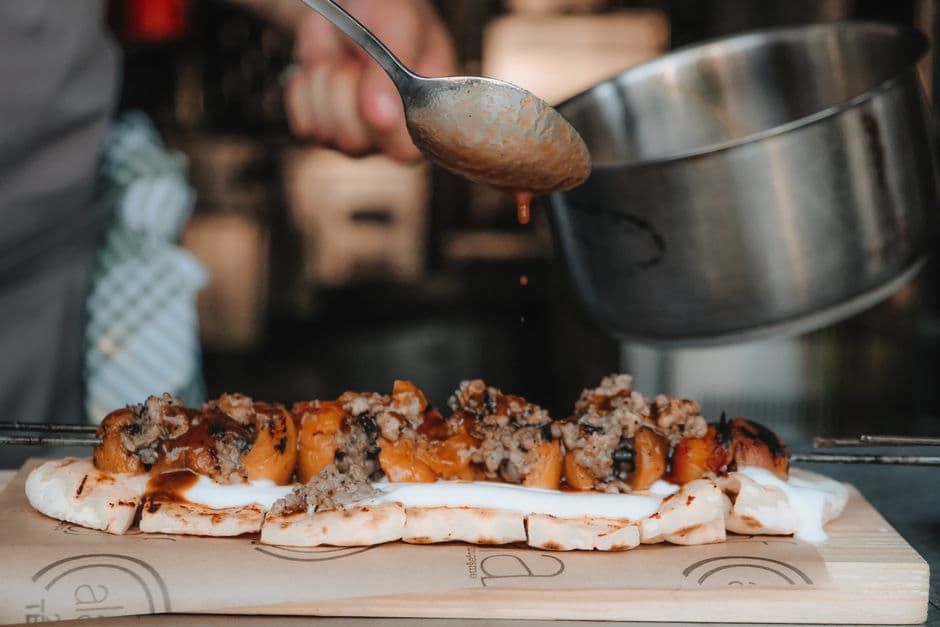
Dalida does Arab-European cooking in a small, loud room: caramelized feta, bone marrow with french toast, oxtail sambusak, good cocktails. It is named after Dalida the singer, the Egyptian-born Italian-French star who recorded in more than ten languages, which is a fairly exact description of the food as well. There is a happy hour from 6pm to 8pm Sunday through Thursday at half price on everything except dessert, which in a city this expensive is the closest thing to a public service.
Book it. The room is small and the reason it is the most searched restaurant in Tel Aviv is that everybody else has also read this paragraph somewhere.
Where to eat, by neighborhood, because Tel Aviv changes character every four blocks
Tel Aviv is small and dense and the food changes faster than the street names. Four areas do most of the work.
- Florentine and Levinsky Market. The spice market and its surroundings: bourekas, Yemenite cooking at Saluf and Sons, wine bars that appear after dark. Ouzeria does modern Mediterranean nearby. This is also where Dalida is, and it is the neighborhood we would send a first-time visitor to eat in.
- Neve Tzedek. The oldest quarter built outside Jaffa, low buildings, Shabazi Street running through it. Anita for ice cream, with three branches on one street, Dallal for a proper sit-down meal and Dallal Bakery for babka and coffee. Prettier and more expensive than Florentine.
- Jaffa. Technically the same municipality, functionally a different city. The flea market, the stone alleys, Abu Hassan for hummus. Covered separately below, because it deserves it.
- The center. Rothschild Boulevard, Ibn Gabirol, Ben Yehuda and Ha’Arbaa Street, where most of the ranked restaurants actually are, plus the Carmel Market for daytime eating.
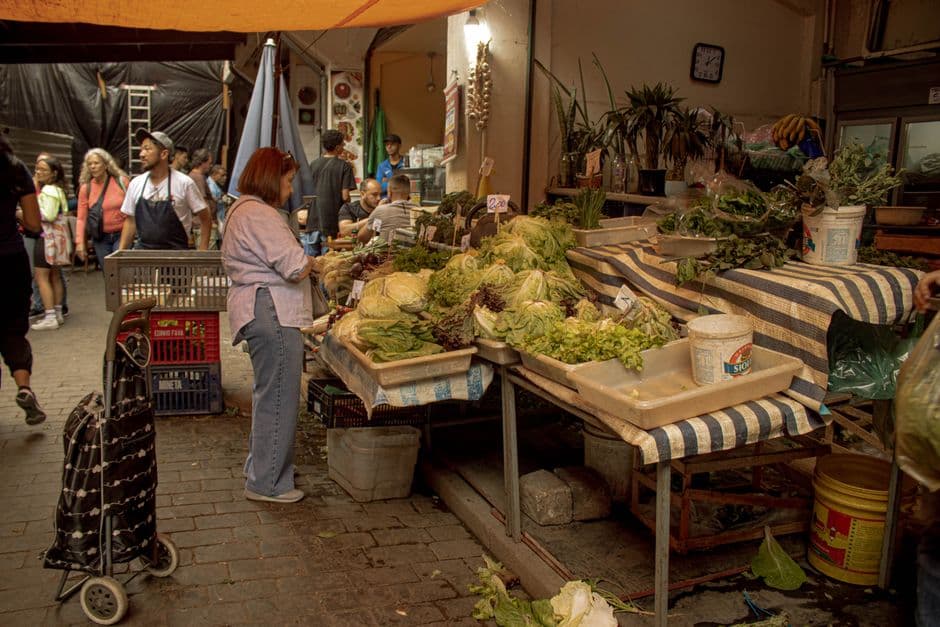
One practical note that no list ever mentions. The Mediterranean is never more than about a ten minute walk from anywhere you will be eating, which means every one of these neighborhoods has a viable “walk it off along the sea” option afterwards. We have tested this extensively and can confirm it works better than the alternative, which is lying down.
Jaffa shares a municipality with Tel Aviv and almost nothing else
The city’s legal name is Tel Aviv-Yafo, and people search for restaurants in Jaffa as a separate destination often enough that we treat it as one. They are right to. Jaffa is thousands of years older, built in stone rather than Bauhaus concrete, and its food is Arab and Mediterranean where central Tel Aviv leans international.
Abu Hassan, in Jaffa, is the hummus reference point for the entire country. It is a small place, it serves three things, it closes when the hummus runs out rather than at a scheduled hour, and there will be a queue. Do not go at 8pm expecting dinner. Go at 11am expecting lunch, which is the correct meal for hummus and always has been.
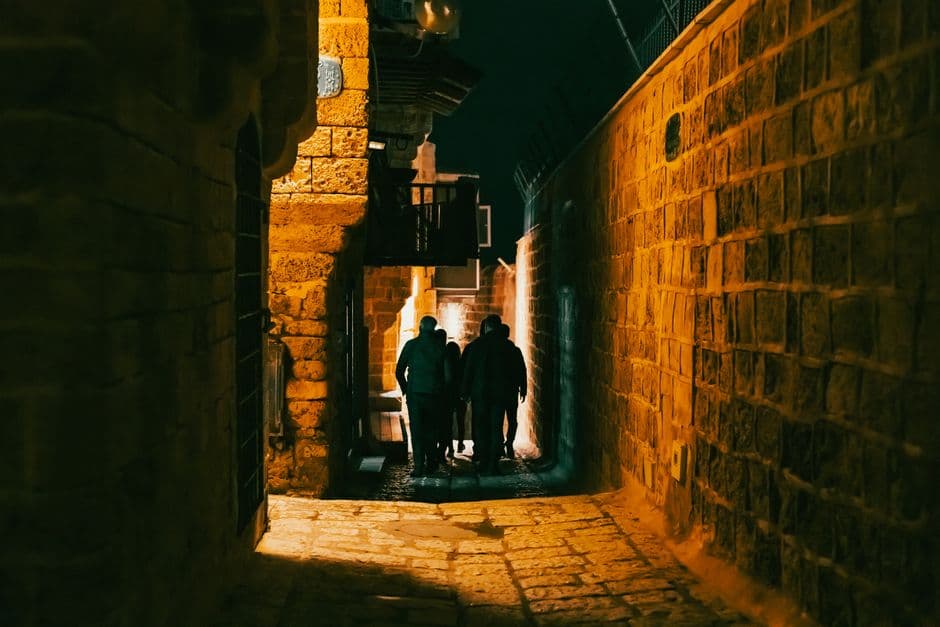
The flea market area around it has filled with bars and restaurants over the last decade, and it is now one of the better places in the city to eat outside on a warm evening, which in Tel Aviv is most evenings.
The old guard, and the two names you will keep seeing
Two restaurants show up in Tel Aviv searches far more than their fashionability would predict, and both are on the water.
Manta Ray sits on the beach between the city and Jaffa, does Mediterranean fish and a large mezze spread, and scored 77.5 on La Liste 2026, so it is not merely a view with a kitchen attached. The Old Man and the Sea, at the Jaffa port, is the other one: a fish restaurant famous for burying the table under a couple of dozen small salads before the fish arrives. It is not the best cooking in the city. It is one of the more purely enjoyable meals in it, and those are different categories.
Elsewhere in the frequently-searched pile: Taizu for Asian, Claro in the Sarona compound at 77 on La Liste, Goshen, North Abraxas and M25 near the Carmel Market, and Lumina. HaSalon, Eyal Shani’s room, runs on a schedule closer to a nightclub than a restaurant and is worth checking the current arrangement before you plan an evening around it.
What to eat, as opposed to where, which is a different question
Restaurant lists answer “where.” Nobody arrives hungry wanting a where. Five things are worth organizing a day around, and four of them cost less than a coffee does in the ranked rooms above.
Sabich is the one to try first, because it barely exists outside Israel. Pita, fried eggplant, hard-boiled egg, tahini, salad, amba. It came with Iraqi Jews and became a Tel Aviv breakfast and lunch staple. Sabich Tchernichovsky is the small famous one: you queue, you order, you eat it on a bench opposite, and that is the entire experience. It is also, incidentally, vegetarian, which nobody eating one appears to notice.
Hummus is a meal here and not a dip, which is the most common misunderstanding visitors bring with them. It arrives warm, in a shallow bowl, with a topping and bread, and it is eaten at lunch. See Jaffa, above, and adjust your expectations downward on seating and upward on everything else.
Shakshuka, eggs poached in a tomato and pepper sauce, arrived with Tunisian Jews. Doctor Shakshuka in Jaffa is the famous address for it. It is a breakfast that will hold you until evening, which is useful in a city where dinner starts late.
Bourekas from Levinsky Market for the walk, and malabi to finish: a milk pudding set with rice flour or cornstarch, scented with rosewater or orange blossom, topped with syrup and crushed pistachio. It is served in a plastic cup on the street and is better than most desserts you will be charged properly for indoors.
The vegan reputation is real, and the famous number behind it is not sourced
Tel Aviv is routinely called the vegan capital of the world, usually alongside a claim of more than 400 vegan eateries and the highest number of vegan restaurants per capita anywhere. We went looking for where those figures come from and could not find a primary source for either. They circulate between vegan travel guides, hotel blogs and tourism copy, each apparently citing the last one.
So here is the honest version, which is still a strong one. Tel Aviv has an unusually deep plant-based restaurant scene by any ordinary standard, it is easy to eat entirely vegan here without hunting for it, and most mainstream menus carry real vegan dishes rather than one apologetic salad. Two structural reasons help. A great deal of the local cooking is vegetable-first to begin with, and kosher rules separate meat from dairy, so kitchens here have been building dairy-free and meat-free versions of everything for a very long time, for reasons that had nothing whatsoever to do with veganism.
Treat “vegan capital of the world” as a well-earned reputation rather than a measured fact and you will not be disappointed in either direction.
Kosher restaurants in Tel Aviv, and the day the city partly closes
This is the section most Tel Aviv guides skip, and it is the one with the most people looking for it. Kosher dining and Shabbat between them drive more search traffic in this city than the phrase “best restaurants in Tel Aviv” does.
Two things are true at once and they get confused constantly. Tel Aviv is Israel’s secular capital, so a large number of restaurants, cafes and bars stay open on Friday night and Saturday, far more than in Jerusalem. And the vast majority of certified kosher restaurants close on Friday afternoon before sundown and reopen on Saturday evening once Shabbat ends. If you specifically want to eat kosher, you have roughly a day and a half a week when you cannot, and the two rules do not cancel out.
Saturday daytime is the awkward window. Plenty is open, but less than on a Thursday, and much of what does open starts around noon. Plan Saturday lunch rather than Saturday breakfast and you will not notice the problem.
We could not find a published figure for what share of Tel Aviv restaurants open on Shabbat, and we looked. Nobody appears to have counted. Rather than invent a percentage, we will say the honest thing: check the specific restaurant, because in this city the answer genuinely varies door to door.
If planning around closures is your situation generally, we did the arithmetic for the top of the profession in our count of which of the world’s best restaurants open on weekends. The short version is that the problem is not unique to Israel and Sunday is worse than you think.
If a page tells you Tel Aviv has 30 Michelin star restaurants, close the tab
Search for Michelin restaurants in Tel Aviv and you will find pages titled “30 Michelin star restaurants in Tel Aviv” and “The Best Michelin Star Restaurants in Tel Aviv.” They rank. They are answering a question about an award that cannot be held in that city.
We read one of them properly rather than assuming. The page titled “The Best Michelin Star Restaurants in Tel Aviv” names two restaurants, attaches no stars to either, and nowhere states that the MICHELIN Guide has never operated in Israel. The title makes a claim the body never makes and never retracts. That is not quite a lie and it is not remotely useful.
The tell is general and worth carrying to other cities. When a page promises a specific award and the body only gives you its own house score, the award is decoration. We ran into the same class of problem writing about the best restaurants in Budapest, where four local sites confidently labeled the Michelin selection with a year that did not exist.
Two more ways a search for Tel Aviv restaurants sends you somewhere else
We keep keyword data for every city we cover, which means we can see what people actually type, and Tel Aviv has two traps in it worth knowing about. Both are the kind of thing that quietly ruins a search result page.
The first is Tel Aviv Grill. It is one of the highest-volume restaurant searches attached to this city name, at roughly a thousand a month, and every result is in Los Angeles. Tel Aviv Grill is a kosher shawarma and falafel chain in the San Fernando Valley, with branches on Ventura Boulevard in Encino, on Burbank Boulevard in Valley Village and in Woodland Hills, trading since 2014. It is a perfectly good restaurant about 12,000 kilometers from the city on its sign. If you searched that phrase hoping for a grill in Israel, this is why your results looked strange.
The second is subtler and it is about word order. Searches for Tel Aviv restaurant Chicago sit in the same data as searches for restaurants in Tel Aviv, because a city name that is also a restaurant name generates both. The rule we use internally, and which works as a reader too: when a city name would make a plausible restaurant name, check whether the result is in the city or merely named after it. Tel Aviv, Bangkok, Stockholm and Florence all fail this test regularly.
None of which is Tel Aviv’s fault. It does mean that the raw popularity of a search phrase tells you very little about the city itself, which is worth remembering the next time a list claims to be ranked by demand.
How to actually book a good dinner here
A short and unglamorous list, which is usually what a trip actually needs.
- Book the ranked rooms ahead. OCD TLV, Mashya, ALENA and Pastel are small and the city is busy. A week is usually enough. A day is not.
- Aim for Wednesday and Thursday nights. Thursday is the start of the Israeli weekend and the biggest night out, while Friday evening is the most restricted.
- Do hummus at lunch, and do it in Jaffa. Abu Hassan closes when it sells out, not when the day ends.
- Use the happy hours. Dalida runs 6pm to 8pm Sunday to Thursday at half price, and it is not the only place in the city that does this.
- Check the individual restaurant for Shabbat rather than trusting any general rule about the city, including ours.
And if a guide tells you the city has no stars, now you know that is a fact about Michelin’s accounts payable and not about the fish. Go get the fish. We have already saved you the good ones, so you can spend the walk along the beach arguing about whether the hummus was worth the queue.
Browsing more than one city this trip? The rest are on our destinations page, and the full Tel Aviv restaurants list is the one to start with here.
Common questions
- Does Tel Aviv have any Michelin-starred restaurants?
- No. Tel Aviv has zero Michelin stars and never has had any, because the MICHELIN Guide has never published a restaurant selection for Israel. This is an absence of coverage rather than a low score: no Israeli restaurant can hold a star while the guide does not operate in the country. Michelin's separate hotel arm does list and book Tel Aviv hotels, including The Drisco, The Jaffa and Nordoy, as of August 2026.
- Why is there no MICHELIN Guide for Israel?
- It has not been bought and published. Israel's Tourism Ministry announced approval for the guide's entry on 1 February 2023, in a deal the Times of Israel reported as costing about 1.5 million euros, split between the ministry and the Tel Aviv municipality, with inspectors seeing feasibility only for Tel Aviv. As of August 2026 no selection has been published. An earlier 2017 Michelin study, whose findings were never released, reportedly concluded that no Israeli restaurants were worth ranking at the time.
- What are the best restaurants in Tel Aviv, Israel?
- By the most credible global ranking that does cover the city, La Liste 2026, the top Tel Aviv restaurants are OCD TLV (88.5), Mashya (83), ALENA (81.5), Manta Ray (77.5), Claro (77), Pastel (77) and Popina (76). Seven of the eight Israeli restaurants on that global list are in Tel Aviv. The eighth, Chakra at 76, is in Jerusalem.
- What is the most popular restaurant in Tel Aviv?
- By search volume it is Dalida, a small Arab-European tavern on Zevulun Street in Florentine, near Levinsky Market, by a very wide margin over any other named restaurant in the city. It serves dishes such as caramelized feta, bone marrow with french toast and oxtail sambusak, and runs a half-price happy hour from 6pm to 8pm Sunday through Thursday on everything except dessert. It is named after Dalida the singer.
- Are restaurants in Tel Aviv open on Shabbat?
- Many are, and many are not, and the two facts get confused. Tel Aviv is Israel's secular capital, so far more restaurants, cafes and bars stay open on Friday night and Saturday than in Jerusalem. But the large majority of certified kosher restaurants close on Friday afternoon before sundown and reopen after Shabbat ends on Saturday evening. Saturday openings often start around noon. No published figure exists for what share of the city opens on Shabbat, so check the specific restaurant.
- Where should I eat in Jaffa?
- Abu Hassan is the country's hummus reference point and is best visited at lunchtime, because it closes when the hummus sells out rather than at a set hour. The Old Man and the Sea at the Jaffa port is the classic fish meal, known for covering the table in small salads before the fish arrives. The flea market area around both has filled with bars and restaurants and is one of the better places in the city to eat outdoors.
- Which Tel Aviv neighborhood is best for food?
- Florentine, around Levinsky Market, is where we would send a first-time visitor: the spice market, bourekas, Yemenite cooking at Saluf and Sons, and Dalida. Neve Tzedek is prettier and more expensive, with Shabazi Street at its center. Jaffa is the oldest and the most distinct. The center, around Rothschild Boulevard and Ibn Gabirol, holds most of the globally ranked restaurants.
- Is Tel Aviv really the vegan capital of the world?
- It has a genuinely deep plant-based scene and is easy to eat vegan in without hunting for options, but the figures usually quoted alongside that title, more than 400 vegan eateries and the most vegan restaurants per capita in the world, do not trace back to a primary source we could find. They circulate between travel guides and tourism copy. Treat the reputation as well earned and the specific numbers as unverified.