
Best Restaurants in Soho, London: A Guide by Street
Every guide to the best restaurants in Soho recommends more or less the same restaurants. That sounds like a problem with the guides. It is actually the most useful fact about the neighborhood: the hard part of eating in Soho is not choosing, it is walking. The place is roughly ten minutes across, it holds several hundred kitchens, and not one of the big lists will tell you which of them are on the same street.
So this guide is organized the way you will actually use it. Not a ranking. A set of streets, what each one is for, and what to order once you are standing on it.
The Soho lists agree with each other, which almost never happens
Pull up the three guides that rank highest for this search and compare them properly. The Infatuation names 26 restaurants. Time Out names 50. At least 18 of the Infatuation’s 26 also appear on Time Out’s list. Two publications with different editors, different budgets and different house taste, and roughly seven in ten of the shorter list’s picks show up on the longer one.
That is a strange amount of agreement, and it is worth saying why it is strange. When we compared this kind of ranking at the level of whole cities, the two most-cited lists in the world shared only four cities across their top twenties. Zoom out and the experts disagree almost totally. Zoom in to a quarter of a square kilometer and they converge on the same two dozen rooms.
The practical consequence: stop optimizing which restaurant. The consensus picks are genuinely good, they are all within a few minutes of each other, and the difference between the seventh-best and the twelfth-best room in Soho is smaller than the difference between eating at 6pm and eating at 8:30pm. What is actually scarce here is a table, not a recommendation.
Nobody agrees where Soho ends, including the guides that map it
Soho has never been an administrative unit with formally defined boundaries. It is a name, not a jurisdiction. The convention, which almost everyone uses, is that Soho sits inside four roads: Oxford Street to the north, Regent Street to the west, Shaftesbury Avenue to the south and Charing Cross Road to the east.
Two of the three guides above quietly step outside that box. Olive Magazine’s Soho list includes Fonda, at 12 Heddon Street, which is on the far side of Regent Street and which the London restaurant trade files under Mayfair. Time Out’s Soho 50 includes Darjeeling Express, and Time Out’s own entry labels it Chinatown. Neither is a scandal. Both are evidence for the same thing: the boundary is soft, and a list is not a map.
While you are checking, check the size too. The figure that gets copied from page to page is that Soho is “about one square mile.” Hold that against the four roads it is printed next to. Oxford Street down to Shaftesbury Avenue is a walk of about 450 meters. Regent Street across to Charing Cross Road is about 800. That encloses something nearer a third of a square kilometer, which is roughly an eighth of a square mile. I am not going to hand you a replacement number to copy; walk the four roads and count for yourself. The number that matters is the one you can feel: ten minutes, corner to corner.
Which is the whole argument for organizing this by street. In a neighborhood that small, “which restaurant is best” is a much less useful question than “what is good within ninety seconds of here.”
Dean Street is the one to walk first, and the one to book
If you only learn one Soho street, learn this one. Dean Street runs north to south through the middle of the neighborhood and carries more of the consensus list than anywhere else.
Barrafina is the reason most people are here. Spanish, counter only, no bookings, and the best argument in London that you should eat sitting at a bar. You put your name down, you wait, you sit where you are put, and you order whatever the chef in front of you is already cooking. It is not a compromise version of a restaurant. It is the format working exactly as intended.
Quo Vadis, at 26 to 29 Dean Street, is the opposite proposition and the one to book. British cooking in a proper dining room, founded in 1926, and one of the very few Soho institutions that has stayed excellent rather than merely surviving. If you want one grown-up dinner in Soho with a tablecloth and a booking, it is this.
The French House is a pub with a history that most cities would build a museum around, and the correct use of it is a drink rather than dinner. Ducksoup and Sola are the neighborhood-restaurant end of the same street. Crunch is a sandwich shop and is on the consensus list on merit, which tells you something honest about how Soho eats at lunchtime.
One street west, on Denman Street, is The Devonshire, the Guinness-and-chops pub that took over Soho and is close to impossible to book. It is on our London map for a reason. Treat it the way you treat Barrafina: go early, expect to stand, and drink downstairs if the dining room upstairs is gone.
Frith Street and Greek Street are for Japanese, Sri Lankan and the oldest coffee in London
These two run parallel, one street apart, in the eastern half of Soho. Between them they hold the most interesting thirty minutes of walking in the neighborhood.
Koya, on Frith Street, does udon and does not take bookings. It is narrow, it is fast, and the breakfast udon is one of the few genuinely great cheap meals in central London. Hoppers, also on Frith Street, does Sri Lankan hoppers and kari, and is the more fun of the two if there are four of you.
Then there is Bar Italia, at 22 Frith Street, open since 1949 and run by the same family. Order a coffee standing at the bar and look up at the plaque, because the building you are in is where John Logie Baird gave the first public demonstration of television, on 26 January 1926. He had been working out of two attic rooms upstairs. About forty members of the Royal Institution turned up in evening dress to watch him transmit the head of a ventriloquist’s dummy across a room. English Heritage marks it with a blue plaque, and 2026 is the centenary, so there is now a second commemorative plaque on the same wall.
That makes two Soho institutions turning a hundred this year, because Quo Vadis opened in 1926 as well. It is a good year to eat on these streets and pay attention to the dates on the doors.
On Greek Street: Maison Bertaux, a patisserie that has been there since the 1870s and looks it; Noble Rot, which is a wine list with a very good restaurant attached; and Osteria Vibrato for Italian. One street east, on Romilly Street, Berenjak does Persian grilling and is the best-value proper dinner in this corner.
Brewer Street and Lexington Street are where Soho is currently at its best
If someone made me pick the single best two-street stretch in Soho for dinner, it would be this one, in the western half of the neighborhood.
Kiln, on Brewer Street, cooks Northern Thai over clay pots and live fire at a counter, walk-in only, and it is the most exciting cheap-ish meal in central London. Sit at the counter at the back where you can watch the fire. The clay pot glass noodles with crab are the thing everyone orders and they are right to. It is on our London list alongside the city’s Michelin rooms, which is the correct comparison rather than a generous one.
Lexington Street, one block over, carries three very different good ideas within about eighty meters: Bao for Taiwanese buns at a counter, Rita’s for American cooking, and Andrew Edmunds, a candlelit eighteenth-century room with a famously deep wine list that has been quietly running the same play for decades. Andrew Edmunds is the most romantic table in Soho and the hardest to get at short notice. Book it or forget it.
Nearby and worth knowing: Bocca di Lupo on Archer Street for regional Italian, Nanahoshi on Winnett Street for a tiny sushi counter, and Bubala on Poland Street, which is vegetarian and which nobody treats as a concession.
Kingly Street and Kingly Court are the easiest place to feed a group
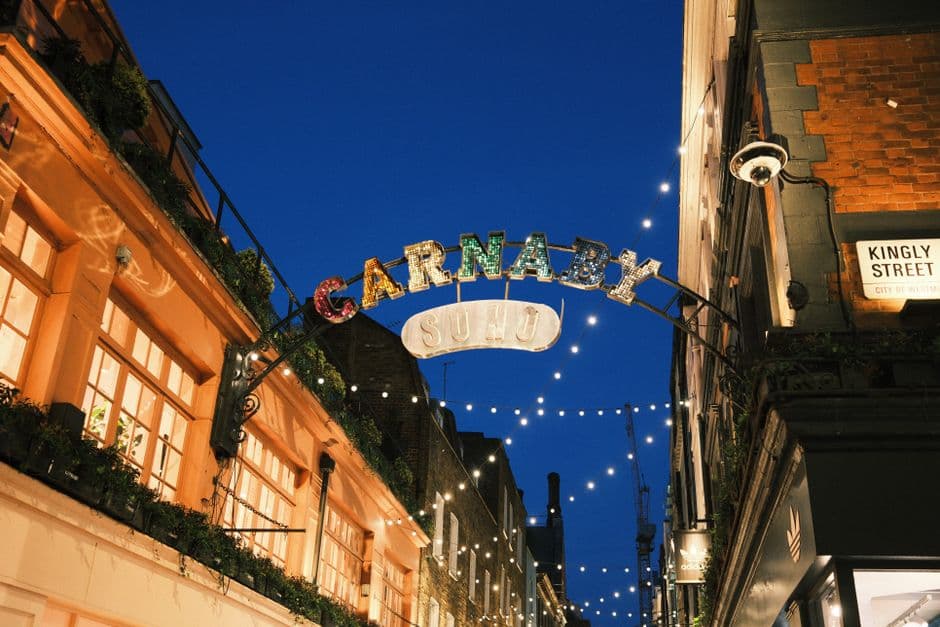
The western edge, under the Carnaby arch. This is the part of Soho that looks most like a shopping district and is therefore the part most people write off. Do not. It solves the hardest problem in the neighborhood, which is six people with different opinions and no booking.
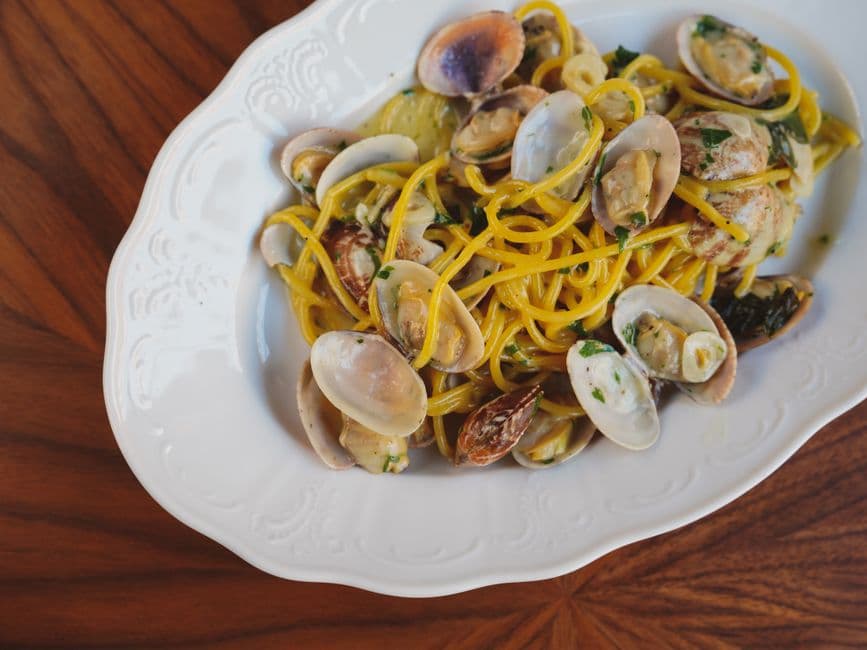
Padella opened at 2 Kingly Street in April 2026, which is the pasta counter from Borough Market finally arriving in the West End. Same short menu, same handmade pasta for under a tenner, same queue. Pastaio, around the corner on Ganton Street, does the same broad idea and is usually easier to get into, which on a Friday is the entire point.
Kingly Court itself is a three-story courtyard of restaurants off Carnaby Street, and it is the single most useful address in Soho for a group that has not booked. Alta does Northern Spanish, Imad’s Syrian Kitchen does Syrian home cooking, and Donia does Filipino. Three genuinely good, genuinely different kitchens stacked in one building with a courtyard to wait in.
What has actually changed in Soho in 2026
The three guides above were last updated in June and July of this year, which in Soho is long enough to be wrong. Three changes worth knowing about, because they move the map rather than just adding a name to a list.
Padella came to Soho in April 2026. The pasta counter that built its reputation on a queue outside Borough Market opened at 2 Kingly Street, which puts a very cheap, very good bowl of pasta inside the busiest few hundred meters of the West End. It has not made the queue shorter. It has made it a different queue.
Darjeeling Express moved again, to Rupert Street, in its fourth relocation. Worth checking before you walk anywhere, because the listings have not all caught up: some map data still has it at its old Kingly Court address, which is a five-minute walk in the wrong direction across the whole neighborhood.
Czer opens at 87 Brewer Street on 22 August 2026. It is a chicken Caesar wrap and essentially nothing else, it went viral out of the back of a Mayfair shop, and founders Mairi Livsey and Marius Baltaitis have taken the Soho site on an initial six-month lease to test whether the demand is real. Which is the most Soho thing in this entire guide: a six-month bet on one sandwich, fifty meters from a Thai counter that has been packed for a decade. This is a neighborhood that has always run on short leases and strong opinions, and the churn is not a flaw in it.
The local rule: Soho runs on walk-ins, and that changes when you leave the hotel
Here is the thing the ranked lists bury. A large share of the best rooms in Soho do not take bookings at all. Barrafina, Kiln, Koya and Padella are all counters you queue for. This is not them being difficult. Small rooms with high turnover make better food cheaper, and the queue is the price.
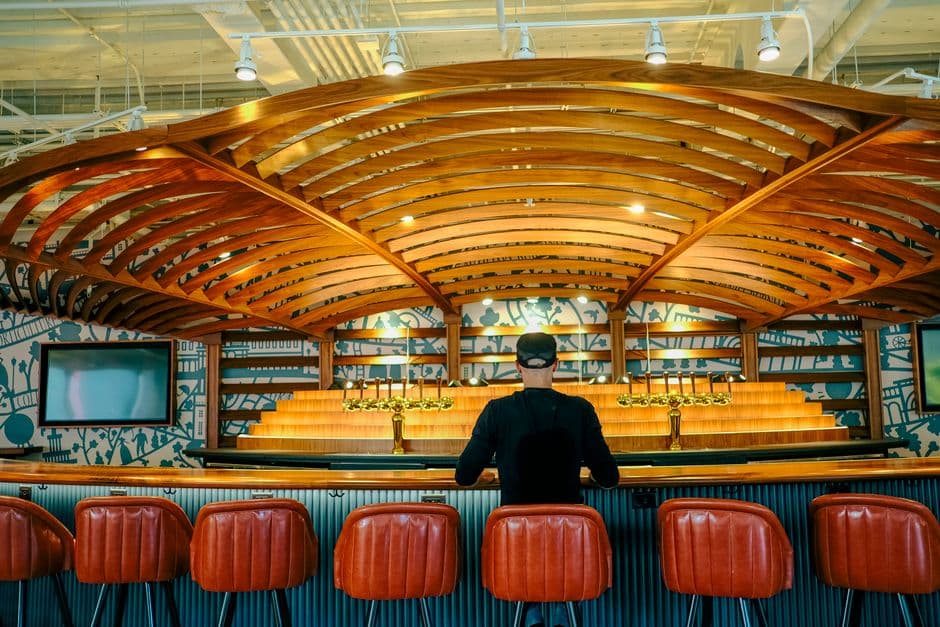
Which means your dinner is decided by what time you leave, not by what you booked. The working rule:
- Before 6pm: walk into anything. Genuinely anything. This is the window nobody uses and it is the single biggest advantage available to a visitor.
- 6pm to 7:30pm: the theatre rush. The worst possible time to be undecided anywhere south of Brewer Street.
- 7:30pm to 8:30pm: the theatres have swallowed the crowd and a second window opens. Underrated.
- After 9pm: fine again, but the walk-in counters start closing their queues before they close their doors, which is not the same time.
And the two-list trick, since we know the lists agree: pick three places on the same street rather than one across the neighborhood. You will eat at one of them within twenty minutes. Chase a single name and you can burn an hour crossing a place that takes ten minutes to cross.
Best restaurants in Soho, by street
The consensus picks, arranged the way you will meet them on foot rather than by rank. Booking policies change, so treat the last column as the expectation to arrive with rather than a guarantee.
| Street | Go for | The names | Expect |
|---|---|---|---|
| Dean Street | The densest run in Soho | Barrafina, Quo Vadis, The French House, Ducksoup, Sola, Crunch | Book Quo Vadis, queue for Barrafina |
| Denman Street | The pub everyone wants | The Devonshire, Kumori | Very hard to book, go early |
| Frith Street | Japanese, Sri Lankan, coffee history | Koya, Hoppers, Bar Italia | Walk-in, short waits |
| Greek Street | Wine, pastry, Italian | Noble Rot, Maison Bertaux, Osteria Vibrato | Book Noble Rot |
| Brewer Street | Fire cooking, the best-value big night | Kiln, Sushi Kyu | Kiln is walk-in only |
| Lexington Street | Counters and the romantic table | Bao, Rita's, Andrew Edmunds | Book Andrew Edmunds far ahead |
| Kingly Street and Kingly Court | Groups, pasta, no booking | Padella, Alta, Imad's Syrian Kitchen, Donia | Turn up, wait in the courtyard |
| Poland Street and Archer Street | Vegetarian and regional Italian | Bubala, Bocca di Lupo | Worth booking on a weekend |
Theatre timing, pre-theatre menus and when Soho is actually pleasant
Shaftesbury Avenue is Soho’s southern boundary and it is lined with theatres, which means the neighborhood has a rhythm most neighborhoods do not. Curtain-up is usually 7:30pm. Plan around it and Soho gets noticeably easier.
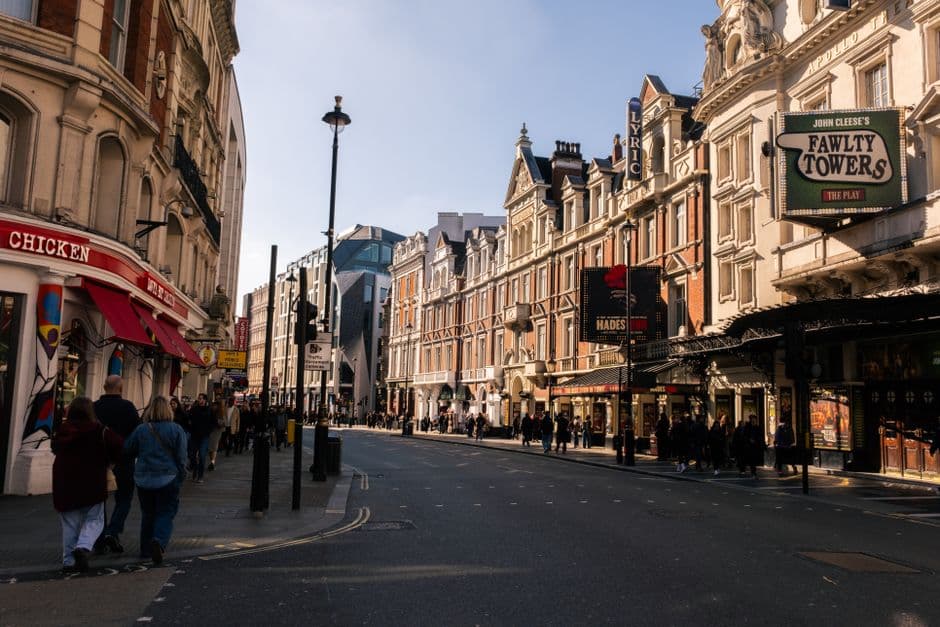
Pre-theatre menus are the best value in central London and they are aimed at people who need to be sitting in a seat by 7:25pm. Two or three courses, served fast, usually between 5pm and 6:30pm, at restaurants that charge considerably more two hours later. You do not need a theatre ticket to order one.
On which day: Monday and Tuesday are the good nights. Thursday through Saturday, Soho after 7pm is a crowd-management exercise, and the walk-in counters that make the neighborhood worth visiting are exactly the ones that suffer. If a weekend is all you have, eat early and drink late rather than the other way around.
Two things that are not restaurants but are the reason Soho eats the way it does. Berwick Street has held a market since the 1770s and is still the best mid-walk stop for something in your hand. And Chinatown begins immediately across Shaftesbury Avenue: technically not Soho, functionally part of any evening here, and the correct answer when everything on your list has a queue.
One day in Soho, walked in order
Everything below is within ten minutes of everything else, which is the entire point.
- 10am, Frith Street. Coffee standing up at Bar Italia. Read the plaque.
- 12pm, Berwick Street. The market, then a sandwich from Crunch on Dean Street if the queue is moving.
- 1pm, Frith Street again. Udon at Koya. It is fast, so this costs you forty minutes, not two hours.
- 4pm, Greek Street. Maison Bertaux, which has been doing this since the 1870s and does not care what year it is.
- 5:30pm, Brewer Street. Put your name down at Kiln before the theatre rush lands. This is the whole trick.
- 9pm, Dean Street. A drink at The French House, or Kingly Court if there are more than four of you.
Book Quo Vadis or Andrew Edmunds if you want one fixed point in the day. Everything else here rewards turning up at an unfashionable hour and being willing to eat at a counter. That is not a workaround for Soho. That is Soho.
Best restaurants in Soho: common questions
- What are the best restaurants in Soho, London?
- The guides agree unusually closely here, so there is a real consensus list: Barrafina and Quo Vadis on Dean Street, Kiln on Brewer Street, Koya and Hoppers on Frith Street, Bao and Andrew Edmunds on Lexington Street, Bocca di Lupo on Archer Street, Noble Rot on Greek Street and The Devonshire on Denman Street. At least 18 of the 26 restaurants the Infatuation names also appear on Time Out's list of 50, which is a far higher overlap than you get comparing rankings of whole cities. The more useful question in a neighborhood this small is which of them share a street.
- Where exactly is Soho in London, and how big is it?
- Soho has never been an administrative unit with formal boundaries, but the convention is that it sits inside four roads: Oxford Street to the north, Regent Street to the west, Shaftesbury Avenue to the south and Charing Cross Road to the east. That box is roughly 450 meters north to south and 800 meters east to west, so you can walk across the whole neighborhood in about ten minutes. The widely repeated claim that Soho is about one square mile does not match those boundaries, which enclose closer to a third of a square kilometer.
- Do you need to book restaurants in Soho?
- For some, and it is the wrong question for the rest. Several of Soho's best rooms take no bookings at all, including Barrafina, Kiln, Koya and Padella, so your dinner is decided by what time you arrive rather than what you reserved. Book the ones that do take reservations and are hard to get: Quo Vadis, Andrew Edmunds, Noble Rot and The Devonshire. For everything else, arriving before 6pm gets you into almost anything walk-in.
- What time should you eat in Soho?
- Before 6pm or between 7:30pm and 8:30pm. The 6pm to 7:30pm window is the theatre rush, because Shaftesbury Avenue runs along Soho's southern edge and curtain-up is usually 7:30pm, and it is the worst time to be undecided. Once the theatres fill, a second and much calmer window opens. Monday and Tuesday are noticeably easier nights than Thursday through Saturday.
- Is Chinatown part of Soho?
- Not under the usual boundaries. Chinatown centers on Gerrard Street, which sits just south of Shaftesbury Avenue, so it falls outside Soho proper even though the two run into each other and most people treat them as one evening. The line is blurry enough that guides cross it without noticing: Time Out's list of the best restaurants in Soho includes Darjeeling Express, which its own entry labels Chinatown.
- Which street in Soho has the best restaurants?
- Dean Street carries the densest run of the consensus picks, with Barrafina, Quo Vadis, The French House, Ducksoup, Sola and Crunch on one road. For the best single stretch to eat on right now, Brewer Street and Lexington Street one block apart are stronger, holding Kiln, Bao, Rita's and Andrew Edmunds. If you have a group and no booking, go to Kingly Court instead, where Alta, Imad's Syrian Kitchen and Donia are stacked in one courtyard building.
- What is a pre-theatre menu and can anyone order one?
- It is a shortened fixed price menu, usually two or three courses, served roughly between 5pm and 6:30pm so that theatregoers can be in their seats by 7:25pm. You do not need a theatre ticket to order one. Because Soho sits directly behind the Shaftesbury Avenue theatres, it has an unusual concentration of them, and they are among the best value meals in central London at restaurants that charge considerably more two hours later.
- Is Soho in London the same as SoHo in New York?
- No, and the two get confused constantly in search results. London's Soho is a West End neighborhood whose name comes from an old hunting cry recorded in the 1630s. New York's SoHo is an abbreviation of South of Houston Street and dates to the 1960s. If you are searching for restaurants, add the city, because a search for Soho restaurants alone will return a mix of both.
- What is the oldest restaurant or cafe in Soho?
- Maison Bertaux on Greek Street has been running as a patisserie since the 1870s and is the oldest of the places in this guide. Bar Italia at 22 Frith Street has been open since 1949 under the same family, and its building has a better claim to fame than its age: John Logie Baird gave the first public demonstration of television there on 26 January 1926, which makes 2026 its centenary. Quo Vadis on Dean Street was also founded in 1926.