
Best Restaurant in Ho Chi Minh City, Vietnam: Six Stars and an Address That No Longer Exists
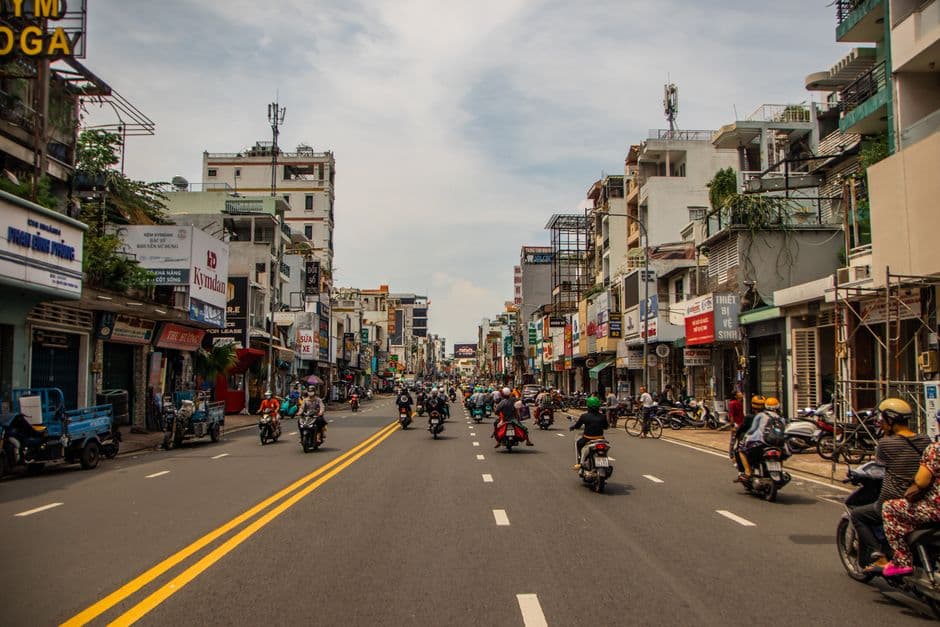
Every guide to the best restaurant in Ho Chi Minh City, Vietnam will tell you to eat in District 1. District 1 was abolished on 1 July 2025. It is not that the name fell out of fashion, or that the boundaries moved a little. The entire district tier of the city was dissolved, and the central area that everyone means by District 1 is now, officially, a ward called Saigon.
The direct answer first, because this is the part you probably came for. In the MICHELIN Guide Vietnam 2026, Ho Chi Minh City holds six restaurants with one star: Ănăn Saigon, Akuna, Long Trieu, CieL, Coco Dining and Upstairs, the last of those new in 2026. There is no two-star restaurant in the city, and no three-star restaurant anywhere in Vietnam. Eleven one-star restaurants is the whole of the country.
Everything after this is the part that actually helps: which six, what happened to the addresses, the one dish that is genuinely Saigon rather than borrowed from the north, and why the phrase you type into Google has the word Vietnam in it far more often than it needs to.
The six starred restaurants, and why Vietnam has no two-star kitchen at all
The MICHELIN Guide arrived in Vietnam in 2023, covering Hanoi and Ho Chi Minh City, and added Da Nang in 2024. The 2026 edition selects 193 restaurants across the three cities and awards eleven stars, all of them single stars. That last detail is the one worth holding on to: there is not a two-star restaurant in Vietnam, and there never has been.
This matters because of how star counts are usually read. A city with six one-star restaurants sounds like a city on the second rung. What it actually describes is a guide that is three years old in a country it has only just started mapping. Compare it with the cities that hold the most stars, where the guide has been running since before the Second World War and the density reflects eighty years of inspection rather than three.
| Restaurant | Cooking | First starred |
|---|---|---|
| Ănăn Saigon | Modern Saigonese, in an old wet market | 2023 |
| Akuna | Innovative, Australian-Vietnamese | 2024 |
| Long Trieu | Cantonese, in the Reverie hotel | 2024 |
| CieL | Innovative | 2025 |
| Coco Dining | Innovative | 2025 |
| Upstairs | Modern Vietnamese, four tables | 2026 |
Ănăn Saigon is the one to know if you only remember one. Peter Cuong Franklin cooks modern Saigonese food inside the Tôn Thất Đạm market building, and it has held its star every year since the guide came to Vietnam. Upstairs is the newcomer: four tables above a wine bar, modern Vietnamese, added in the 2026 edition.
The tier below the stars is where the city is genuinely strong, and it is the tier most star-counting misses. Cơm Tấm Ba Ghiền, a broken-rice stall in Phú Nhuận, carries a Bib Gourmand and is the only broken-rice specialist the guide lists anywhere.
District 1 does not exist, and every guide still sends you there
On 1 July 2025 Vietnam reorganized itself, cutting the country from 63 provinces and cities to 34. Ho Chi Minh City absorbed two neighbors, Bình Dương and Bà Rịa-Vũng Tàu, and at the same time the whole district tier inside the city was dissolved. The two-level structure that replaced it runs straight from the city to the ward, with 102 wards covering the area of the old city.
District 1 was divided into ten wards before the reform. The central part of it, the old Bến Nghé ward plus pieces of Nguyễn Thái Bình and Đa Kao, is now a single ward named Saigon. That is not a nickname or a revival of an old usage. It is the official name of the administrative unit containing the opera house, the cathedral and most of the restaurants in this guide.
Here is the practical part, and it is the opposite of what you might expect. Keep using District 1. Taxi drivers use it, restaurants print it, and Wikipedia notes that it is still colloquially referred to as the central business district. The word works perfectly well for finding dinner. What it no longer does is match anything on a government form, and that gap is worth knowing about before you try to match an address against an official source.
The reason this is worth a section rather than a footnote: a place name can stay in everyday use long after the thing it named has been abolished, and for about a year now every travel guide, every listing site and every map of this city has been describing a structure that no longer legally exists. A post-merger guide is genuinely useful here, because almost nothing else has caught up.
Saigon pho and Hanoi pho are different dishes, and the plate of herbs is the tell
We wrote about where to eat in Hanoi earlier this month, and the two cities are worth reading together, because the country's most famous dish is not the same object in both of them.
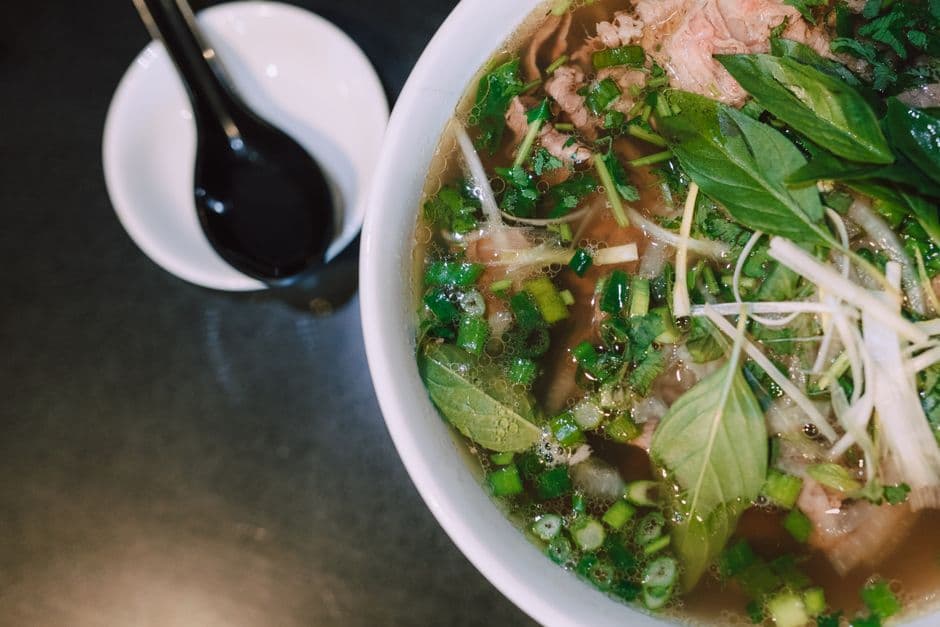
A bowl of Hanoi pho is austere on purpose: clear broth, rice noodles, beef or chicken, scallions, and not much else. A squeeze of lime or a spoon of garlic vinegar is acceptable. Herbs and hoisin are not, on the grounds that they blur the flavor of the broth.
Saigon does the opposite, deliberately. The broth is darker and sweeter, often built with rock sugar and daikon alongside the beef bones. And the bowl arrives with a separate plate: bean sprouts, Thai basil, sawtooth coriander, lime wedges, with hoisin and chili sauce in little dishes on the side. You build the bowl yourself.
This is the single most useful thing to know about eating pho in this city, because it inverts the usual advice. In Hanoi, a bowl served with a forest of garnish is a sign the kitchen is aiming at tourists. In Saigon, a bowl served without the herb plate is the thing to question. Same dish, opposite tell, four hundred miles apart.
Com tam is the dish that is actually from here, and the rice is broken on purpose
Pho is northern. Bánh mì is colonial. Cơm tấm is Saigon's own, and it is the thing to order if you want to eat something the city invented rather than adopted.
The name means broken rice, and it is literal. Tấm are the grains that fracture during milling and transport, and they were historically the cheap grade: a lower-value byproduct that farmers fed to animals because nobody wanted to buy it. By the 1930s the Mekong Delta was one of the major rice-exporting regions of French Indochina, and the economics were simple. The long whole grains were worth shipping overseas. The fractured ones stayed home and got eaten by the people who grew them.
Then the mechanism that makes this a dish rather than a hardship. Because the grains are smaller and irregular, they cook to a softer texture and take on flavor more readily than whole rice does. Saigon's laborers worked this out, and what started as the only rice they could afford became the rice the dish is specified with. Served properly it comes with a charcoal-grilled pork chop, pickled carrot and daikon, and a bowl of sweet-sour fish sauce to pour over the whole plate.
Cơm Tấm Ba Ghiền at 84 Đặng Văn Ngữ in Phú Nhuận has been doing it since the 1990s and holds a Bib Gourmand in the current guide. It is a twenty-minute ride out of the center and it is the one trip out of the old District 1 worth making on purpose.
The banh mi roll is not a small baguette, and the crust is the argument
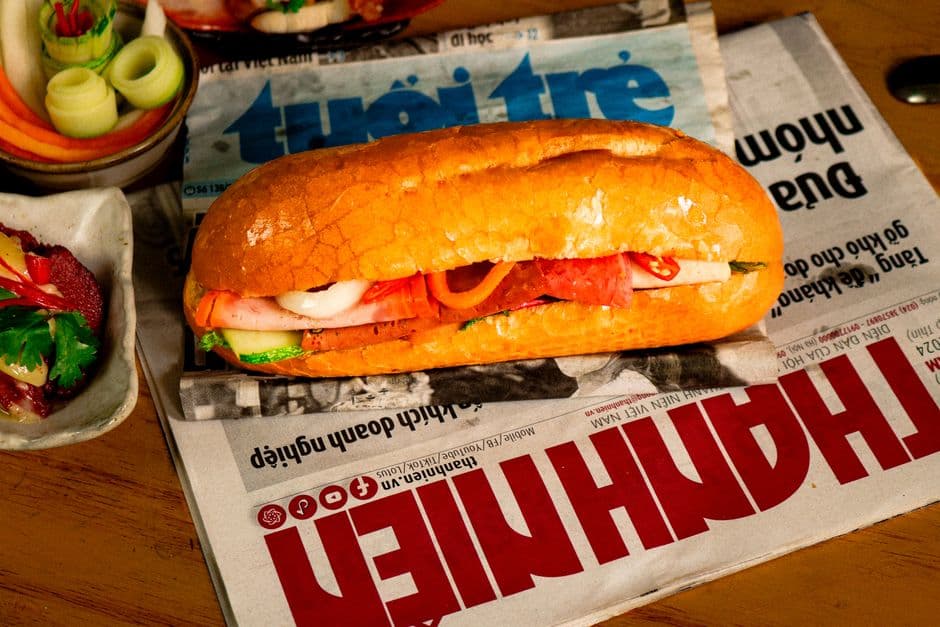
Pick up a bánh mì roll and it weighs almost nothing. That is the whole point of it, and it is the clearest single difference between a Vietnamese roll and the French baguette it descends from.
A French baguette is wheat flour, which means gluten, which means a chewy crumb and a thick crust you have to work at. The Vietnamese roll goes the other way: a thin crust that shatters when you bite it, and a crumb so open and hollow that the roll is mostly air. The filling sits in the cavity rather than squashing the bread.
The usual explanation is rice flour in the dough. Rice flour has no gluten, so there is no chew; the crust sets fast and thin in the oven and breaks cleanly. The economic story behind it is the same shape as the cơm tấm one, which is why the two go together: wheat was expensive and controlled under the colonial administration, so bakers cut it with what was local and cheap.
One honest caveat, because it is the kind of thing food writing repeats without checking. Plenty of modern bánh mì dough contains no rice flour at all, and bakers get the same thin crust and open crumb through hydration, fat and baking technique instead. The historical account is well supported. The claim that the roll in your hand today necessarily contains rice flour is not, and it varies by bakery.
Bánh Mì Huỳnh Hoa at 26 Lê Thị Riêng has been running since 1989 and is the standard reference, with a queue on the sidewalk most of the day. The rolls are loaded with pâté and cold cuts to the point where two hands are genuinely required.
Where to eat, by the areas people actually name
The ward names below are the current official ones where they are settled, with the district name everybody still says in brackets, because you will need both.
| Area | What it is | What to eat there |
|---|---|---|
| Saigon ward (old District 1 center) | Opera house, cathedral, the hotel dining rooms | Ănăn Saigon, Long Trieu, the bulk of the starred list |
| Bến Thành (old District 1) | Market district, dense and walkable | Bánh Mì Huỳnh Hoa on Lê Thị Riêng |
| Old District 3 | Residential, leafy, quieter streets | Bánh mì op la, the pan-fried egg version |
| Phú Nhuận | Out of the center, genuinely local | Cơm Tấm Ba Ghiền on Đặng Văn Ngữ |
| Old District 5, Chợ Lớn | The Chinese quarter, the oldest food in the city | Cantonese, noodle soups that are not pho |
If you are building a wider Southeast Asia trip, the Bangkok street food guide and the Chiang Mai list cover the two cities most often paired with this one, and all of our city lists sit on the destinations page.
Why you typed Vietnam into the search box when you did not need to
Here is something we noticed in the search data for this city, and it runs against the pattern we see almost everywhere else.
Most city names are ambiguous, and people add a country to fix it. Searches for restaurants in Vienna return an inn in Massachusetts. Searches for Naples return Florida, Athens returns Georgia, Dublin returns Ohio. In those cities the country qualifier is doing real work, and leaving it out gets you the wrong continent.
Ho Chi Minh City has none of that. Of the nineteen search phrases we have for this city, not one names a business in another country, and not one names another place with the same name. There is no Ho Chi Minh City, Ohio. The name is a four-word proper noun naming a specific person, and nobody has opened a suburban restaurant called it.
And yet more than a quarter of the search volume here carries the word Vietnam anyway, which is a much higher share than in cities where the qualifier is genuinely needed. The inversion is real: the country name gets added most often where it is needed least. The likeliest explanation is that it is doing something other than disambiguation, reassurance more than precision, the way people search for Tokyo Japan without any doubt about which Tokyo they mean.
Practically, it costs you nothing either way. The one qualifier that does change your results is Saigon, which people use interchangeably with the official name and which is now, as of last year, also the name of the central ward.
Best restaurant in Ho Chi Minh City: common questions
The questions we get asked most, answered with the edition and the date attached, because a restaurant answer that does not say which year it describes stops being useful within a season. All figures here were correct at the time of writing in September 2026, including the ward names, which changed more recently than anything else on this page.
Best restaurant in Ho Chi Minh City: common questions
- What is the best restaurant in Ho Chi Minh City, Vietnam?
- If you want the guide's answer, the MICHELIN Guide Vietnam 2026 gives Ho Chi Minh City six restaurants with one star: Anan Saigon, Akuna, Long Trieu, CieL, Coco Dining and Upstairs. Anan Saigon is the one with the longest record, having held its star every year since the guide first covered Vietnam in 2023, and it cooks modern Saigonese food inside the old Ton That Dam market building. Upstairs is the newest, a four-table room above a wine bar, added in the 2026 edition. Below the stars, Com Tam Ba Ghien in Phu Nhuan holds a Bib Gourmand and is the only broken-rice specialist the guide lists anywhere.
- How many Michelin star restaurants are in Ho Chi Minh City?
- Six, all with one star, in the MICHELIN Guide Vietnam 2026. There is no two-star restaurant in the city and no three-star restaurant anywhere in Vietnam. Across the whole country the 2026 guide awards eleven stars in total, spread across Hanoi, Ho Chi Minh City and Da Nang, from a selection of 193 restaurants. The guide is young here, having started in 2023 with Hanoi and Ho Chi Minh City and added Da Nang in 2024, so the star count reflects three years of inspection rather than the eighty-odd years behind the European cities it gets compared with.
- Does District 1 still exist in Ho Chi Minh City?
- No. On 1 July 2025 Vietnam reduced its provinces and cities from 63 to 34, and Ho Chi Minh City both absorbed the neighboring provinces of Binh Duong and Ba Ria-Vung Tau and dissolved its entire district tier. The city now runs on a two-level structure, city and ward, with 102 wards covering the area of the old city. The central part of the old District 1, which was Ben Nghe ward plus parts of Nguyen Thai Binh and Da Kao, is now officially a ward called Saigon. In practice everyone still says District 1, it is still printed on menus and understood by taxi drivers, and it remains a perfectly good way to describe where to eat. It just no longer matches an official address.
- What is the difference between Saigon pho and Hanoi pho?
- They are close to opposite versions of the same dish. Hanoi pho is deliberately austere: clear broth, rice noodles, beef or chicken and scallions, with lime or garlic vinegar acceptable but herbs and hoisin generally not, on the grounds that they blur the broth. Saigon pho has a darker, sweeter broth, often built with rock sugar and daikon alongside the beef bones, and it arrives with a separate plate of bean sprouts, Thai basil and sawtooth coriander, plus hoisin and chili sauce on the side, so you finish the bowl yourself. The useful consequence is that the tell inverts between the two cities: in Hanoi a heavily garnished bowl suggests a kitchen aiming at tourists, while in Saigon a bowl with no herb plate is the one to question.
- What is com tam and why is the rice broken?
- Com tam is broken rice, and Saigon's own dish rather than one it adopted. Tam are the grains that fracture during milling and transport, historically the cheap grade that was fed to animals because whole grains sold better. By the 1930s the Mekong Delta was a major rice-exporting region of French Indochina, so the long whole grains were shipped abroad and the fractured ones stayed for domestic use. The reason it became a dish rather than a hardship is textural: the smaller irregular grains cook softer and take on flavor more readily than whole rice. It is served with a charcoal-grilled pork chop, pickled carrot and daikon, and sweet-sour fish sauce poured over the plate. Com Tam Ba Ghien at 84 Dang Van Ngu in Phu Nhuan has been doing it since the 1990s and carries a Bib Gourmand.
- Why is a banh mi roll different from a French baguette?
- The crust and the crumb. A French baguette is wheat flour, so it has gluten, a chewy crumb and a thick crust. A Vietnamese roll has a thin crust that shatters when you bite it and a crumb so open that the roll is mostly air, which is why the filling sits in a cavity rather than compressing the bread. The usual explanation is rice flour in the dough, which contains no gluten, so the crust sets thin and fast and breaks cleanly, and the historical reason is that wheat was expensive under the colonial administration and bakers cut it with what was local. One caveat worth keeping: plenty of modern banh mi dough contains no rice flour at all, and bakers reach the same result through hydration, fat and technique, so the historical account is better supported than any claim about the specific roll in your hand.
- Do I need to add Vietnam when searching for restaurants in Ho Chi Minh City?
- No, and this city is unusual in that respect. Most city names are ambiguous enough that the country does real work: searches for Vienna return an inn in Massachusetts, Naples returns Florida, Athens returns Georgia and Dublin returns Ohio. Ho Chi Minh City has none of that, because the name is a four-word proper noun naming a specific person and no business elsewhere has taken it. Of the nineteen search phrases we have for the city, none names a business in another country and none names a same-named place. The curious part is that more than a quarter of the search volume carries the word Vietnam anyway, a higher share than in the cities where it is actually needed, which suggests the qualifier is doing something closer to reassurance than disambiguation. The one word that does change your results is Saigon, used interchangeably with the official name and now also the name of the central ward.