
Best Food in Amsterdam, Organized by Where It Came From
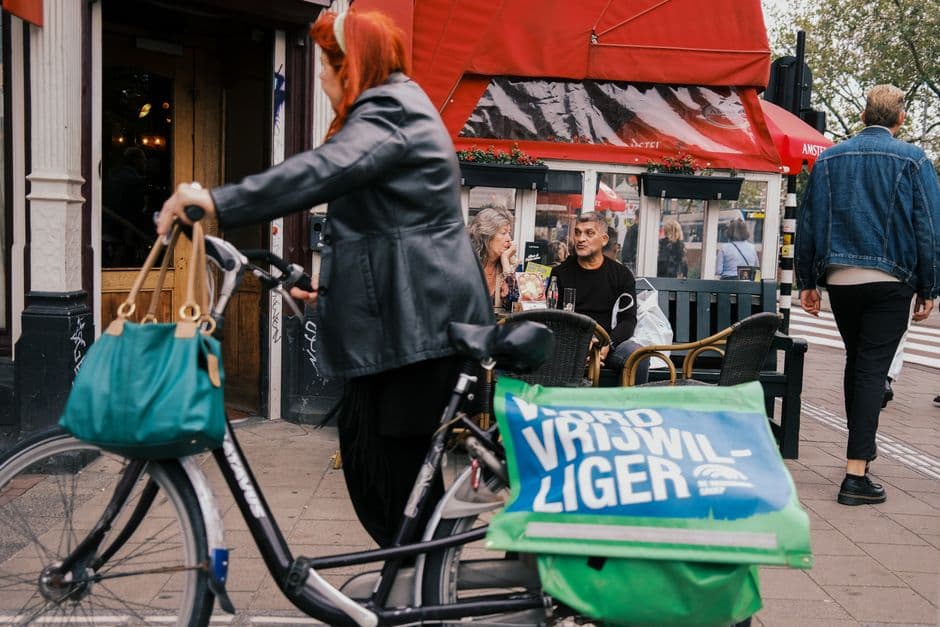
The best food in Amsterdam is mostly not Dutch food. That is not a criticism of Dutch cooking, and it is not a secret. It is the single most useful thing to understand before you book anything, because it changes what you should be searching for: not restaurants, but origins.
Amsterdam eats by migration far more than it eats by geography. The Indonesian, Surinamese, Turkish and Moroccan kitchens here are not a supporting cast to a Dutch main event. For anyone eating three meals a day for four days, they are the main event. Almost every guide to the city organizes itself by neighborhood anyway, which tells you where to walk and almost nothing about what to order when you arrive.
This guide is organized the other way around: by where the food came from. One section per origin, what to order in each, and the neighborhoods each one actually clusters in. It starts with a small piece of evidence about why the usual lists are not to be trusted on their own.
A restaurant that closed in 2025 is still being recommended in 2026
Kantjil & de Tijger, on Spuistraat in the center, was for years one of the Indonesian restaurants that every Amsterdam list named. It has been reported closed since September 2025.
Checked on 20 August 2026, here is the state of it:
- Its own domain, kantjil.nl, no longer resolves. Not a slow server, no DNS record at all.
- Its Yelp listing at Spuistraat 291 to 293 is marked permanently closed.
- HappyCow records it as reported closed in September 2025.
- An Amsterdam food tour company’s recommendations page, carrying a 2026 copyright line, still lists it among its top picks by name and street number.
Nobody is being dishonest. Restaurants close, and a page written once does not notice. But it is a clean illustration of the actual failure mode of restaurant lists: they are snapshots, they decay silently, and the more a place gets recommended the longer its ghost survives in search results. The half-life of a specific restaurant recommendation is shorter than the half-life of the page it sits on.
The practical rule that follows is boring and it will save you a wasted evening: check that a place is open on the day you plan to go, on a source that updates itself, not on the guide that recommended it. That is the whole reason the recommendations in this piece sit next to a live Google Maps list of Amsterdam restaurants rather than only inside this page. A map with a hundred pins shows you a closure. An article cannot.
The names below are places that were operating when this was written. Do the same check anyway.
Amsterdam cuisine is four cuisines, and only one of them is Dutch
The phrase “Amsterdam cuisine” does not describe one thing, and treating it as one is why visitors so often come home reporting that the food was fine. Four distinct kitchens are woven into daily eating here, and each arrived for a specific historical reason.
- Indonesian, through three and a half centuries of Dutch colonial rule in the Indonesian archipelago, which ended in 1945.
- Surinamese, through Suriname, a Dutch colony until 1975, and itself a compound cuisine carrying Hindustani, Javanese, Creole and Chinese cooking in one menu.
- Turkish and Moroccan, through the labor migration agreements of the 1960s and early 1970s, which is why the bakeries and butchers are concentrated in the neighborhoods built for workers rather than in the tourist center.
- Dutch, which in a restaurant context is smaller than you expect and is discussed honestly below.
The point of stating the mechanism rather than just the fact: it tells you where each one is. Colonial-era restaurant cuisines were established for a Dutch dining public, so Indonesian sit-down restaurants sit in the wealthier southern districts and along the canal belt. Migration-era food follows where people were housed, so Turkish and Moroccan food concentrates in Oost. Surinamese food sits in De Pijp and Oost, close to where the community settled after 1975. Nothing about that distribution is random, and once you see it you can plan a day of eating that does not have you crossing the city four times.
This is also, incidentally, the answer to why Indonesia keeps appearing in the rankings of the best countries for food while most people who have eaten Indonesian food ate it in the Netherlands.
Indonesian: the best Indonesian food in Amsterdam, and how to order it
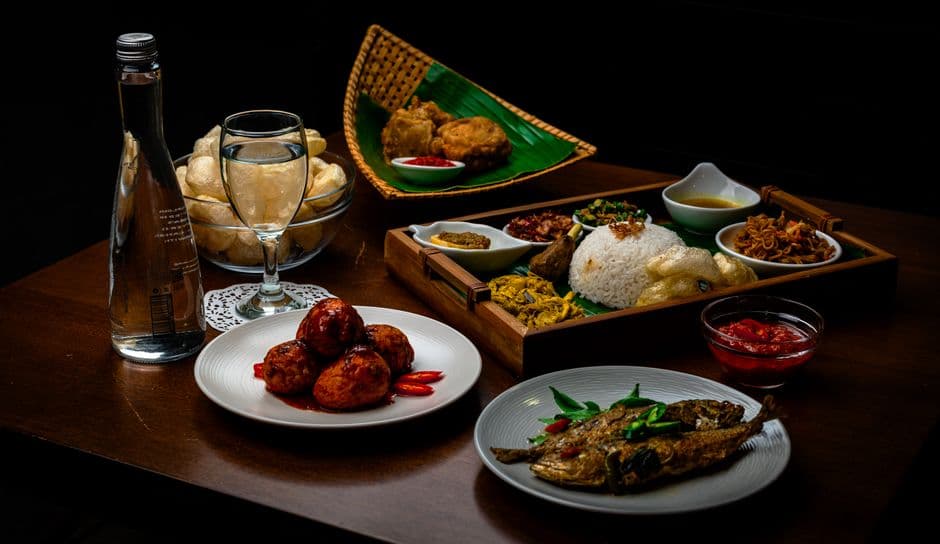
If you eat one thing in this city, make it this. Indonesian is the deepest of the four kitchens here and the one with the largest gap between what Amsterdam offers and what you can get at home.
What rijsttafel is, and whether you want it
Rijsttafel means rice table: a dozen or more small Indonesian dishes brought to the table at once, with rice. The dishes are Indonesian. The format is Dutch colonial, assembled in Java so that officials could be served a survey of the archipelago in one sitting, and it largely disappeared in Indonesia after independence while staying on in the Netherlands. We covered that history in the piece on the best countries for food, so the practical version is what matters here.
Rijsttafel is designed for two or more people and it is a commitment of two hours and, at the established restaurants, somewhere north of forty euros a head. If you are eating alone, or you want lunch rather than an event, order nasi rames instead: the same idea served as one composed plate, at a fraction of the price and the time.
Where to eat it
- Restaurant Blauw, Amstelveenseweg 158 to 160, in Oud-Zuid. The modern-room version of the rijsttafel and the one most often named by people who eat Indonesian food regularly. Book it.
- Sama Sebo, P.C. Hooftstraat 27, by the Museum Quarter. Opened in 1969 and describes itself as the oldest Indonesian specialty restaurant in the Netherlands, with the rijsttafel listed at 42.50 euros a head in August 2026. Worth knowing before you book: it is the most argued-about Indonesian restaurant in the city, and at least one long-standing Amsterdam food blog has written it off entirely. The institution and the meal are two different questions.
- A toko, meaning a small Indonesian or Surinamese grocery with a hot counter. This is where the price collapses and where a lot of the actual eating happens. See the Surinamese section below, because in practice the two cuisines share the same counters.
One ordering note that is worth more than any single restaurant name: if a menu offers both a rijsttafel and a short list of individual dishes, and you are new to this, the individual dishes are not the cautious choice. They are the way to find out what you like before committing two hours to twelve of them.
Surinamese: roti, saoto, and counters rather than restaurants
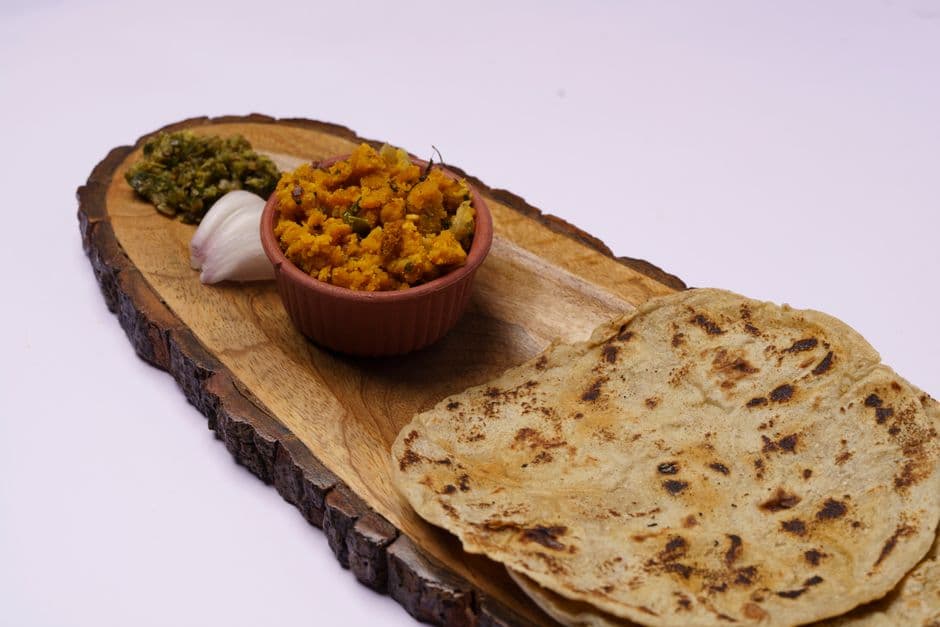
Surinamese food is the everyday food of Amsterdam in a way Indonesian restaurant food is not. It is fast, it is cheap, it is eaten standing up or carried home, and it is mostly sold from counters rather than dining rooms. If you have one lunch to spend, spend it here.
It is also not one cuisine. Suriname’s population carries Hindustani, Javanese, Creole, Chinese and Indigenous cooking, and a single Surinamese menu in Amsterdam will run all of them at once. That is why the same shop sells roti, nasi goreng, saoto soup and a Chinese-style noodle dish without any of it being fusion.
What to order
- Roti. A large soft flatbread with curried chicken, potato and long beans, eaten by hand. Order it with the bone in if you are given the choice. It is messier and it is better.
- Saoto soup. Clear chicken broth, bean sprouts, fried onion, egg, and a separate bowl of rice you add yourself. The Javanese-Surinamese dish, and the one to order if the weather is doing what Amsterdam weather does.
- Broodje pom. A sandwich of pom, a baked dish of grated pomtajer root and chicken. It looks unremarkable and it is the thing people who grew up here miss when they leave.
- Bara. Fried lentil-flour rings, eaten as a snack in twos and threes.
Where
- Warung Spang Makandra, on Gerard Doustraat in De Pijp, family-run since 1978, small, and it does not take reservations. Go off-peak or expect to wait.
- Tjin’s Toko, Eerste van der Helststraat 64, a few minutes from the Albert Cuyp market. A Surinamese and Indonesian grocery with a deli counter at the front, which is the pattern to look for everywhere: the shop is the restaurant.
- Roopram Roti, with counters in Oost and De Pijp, and a queue that is the review.
Two of those three are in De Pijp, which is the single most efficient neighborhood for this cuisine, and the third has a branch there. That is the payoff of organizing by origin: one afternoon, one district, three genuinely different meals.
Dutch food in Amsterdam: three things worth ordering, and one honest caveat
Here is the caveat first, because pretending otherwise is what makes people feel let down. Traditional Dutch cooking is largely home cooking, and the restaurant version of it is thin. Stamppot and erwtensoep are winter food made in domestic quantities. There are Dutch restaurants doing serious modern work with Dutch produce, and that is a real and growing thing, but it is a different search from “what should I eat in Amsterdam”.
What Dutch food is genuinely excellent at is the small format: the snack, the pastry, the thing eaten standing up at eleven in the morning. Three of them are worth planning around.
Kroket
A deep-fried roll of thick ragout, eaten either from a wall-mounted automat or as a broodje, meaning stuffed into a soft white roll with mustard. The reference point is Eetsalon Van Dobben on Korte Reguliersdwarsstraat, open since 28 June 1945 and selling the same croquette since the day it opened. Order a broodje kroket and a glass of milk, which is the local combination and sounds stranger than it tastes.
Appeltaart
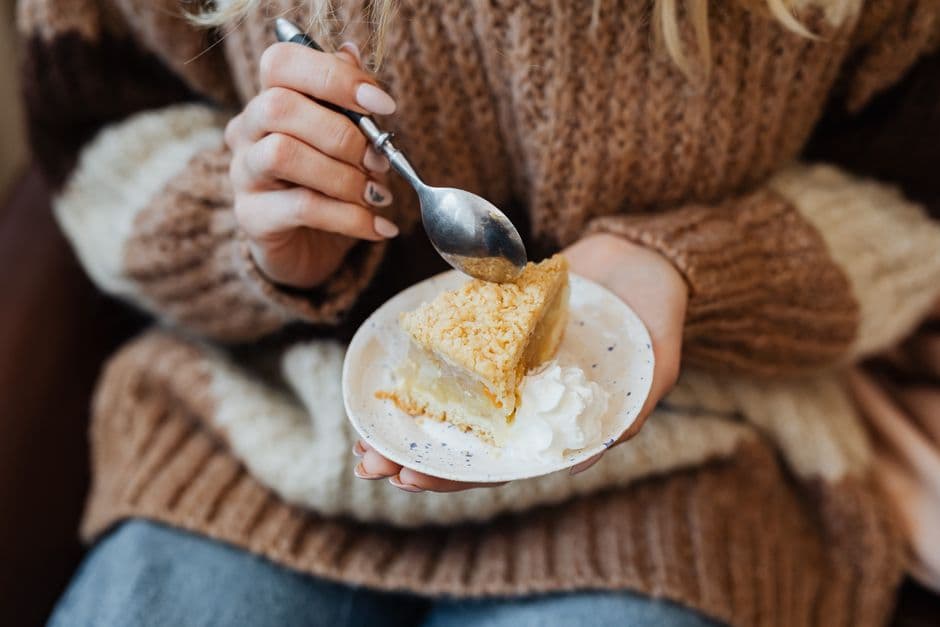
Dutch apple pie is a tall, dense, pastry-cased thing with cinnamon and often raisins, closer to a cake than to a pie, and it comes with unsweetened whipped cream. Winkel 43, on the corner of Noordermarkt 43 in the Jordaan, is the version everyone benchmarks against. Go on a Saturday when the Noordermarkt is running and treat the pie as the second reason for being there.
Pannenkoeken
Search for restaurant pancakes in Amsterdam and you will find dozens of places, so it is worth knowing what you are ordering. Dutch pannenkoeken are large and thin, closer to a crepe than to an American stack, served one to a plate, and they come sweet or savory: apple and bacon on the same pancake is a standard order, not a dare. Poffertjes are the separate thing: small puffy rounds served by the dozen with butter and icing sugar, sold from market stalls. Both are a full meal for the price of a starter.
If you want the traditional-Dutch-restaurant experience as well, it exists in the center and it is pleasant. Just do not let it be the meal you were most looking forward to.
Turkish, Moroccan and Middle Eastern: what the city eats on a Tuesday
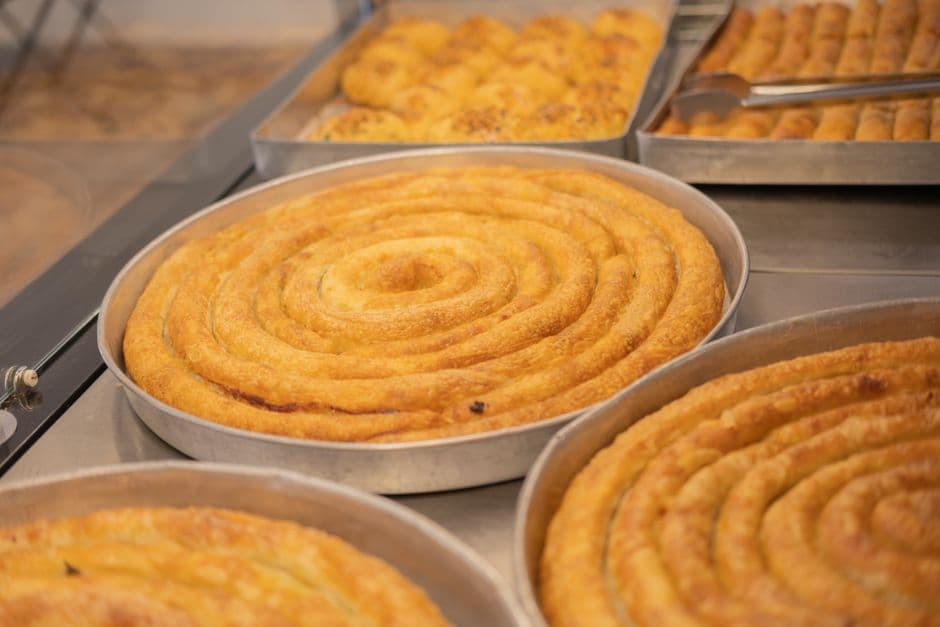
This is the least documented of the four in English-language guides and the one locals use most. It is concentrated in Oost, along and around Javastraat, and the pattern is bakeries and butchers rather than restaurants with tablecloths.
- Turkish bakeries for borek, which is layered pastry filled with cheese, spinach or minced meat, sold by weight and eaten immediately. Also for pide, and for bread that is better and cheaper than anything in the center.
- Grilled meat, either as a proper sit-down grill or as the late-night doner that every Dutch city runs on. The difference between a good one and a bad one is entirely whether the bread is fresh.
- Moroccan bakeries and butchers, for msemen, harira in the colder months, and the pastry counters that appear around religious holidays.
The efficient way into this is the Dappermarkt in Oost, an open-air street market running Monday to Saturday where Turkish, Moroccan, Surinamese and Dutch stalls sit next to each other on the same street. It is cheaper than the Albert Cuyp, it is not a tourist attraction, and it is the clearest single view of how this city actually eats that you can get in twenty minutes.
The best food places in Amsterdam when you cannot decide
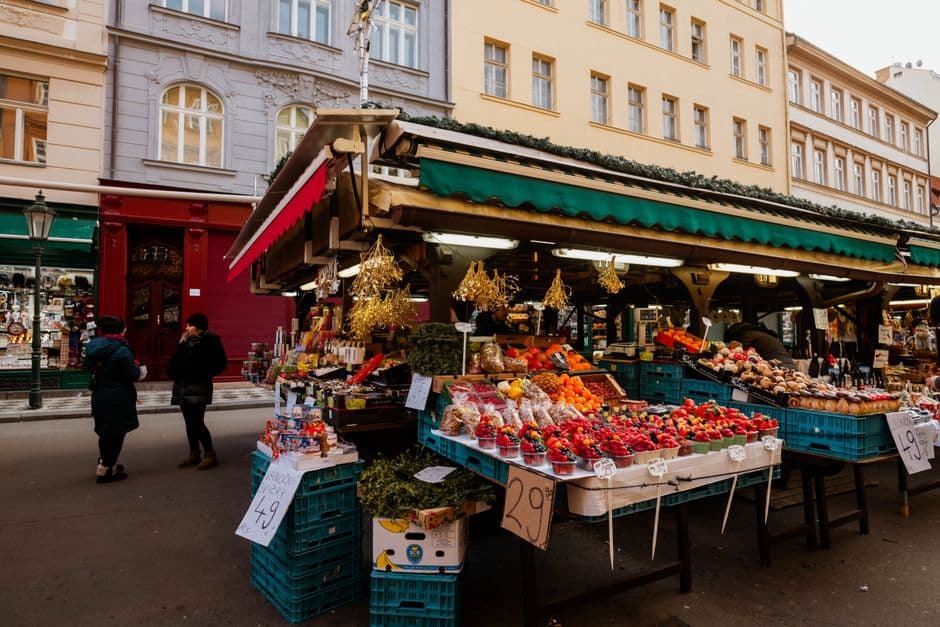
Three places let you eat across origins in one stop, which is useful on the first day, in bad weather, or with a group that cannot agree.
- Foodhallen, Bellamyplein 51, in the De Hallen complex in Oud-West. A permanent indoor food hall in a converted tram depot, with the original structure left visible, and around twenty independent counters under one roof. It is the polished version and it is priced accordingly, but it is the fastest way to try four kitchens in one evening.
- Albert Cuypmarkt, along Albert Cuypstraat in De Pijp. The big daily street market, six days a week. This is where the best Amsterdam street food actually is: stroopwafels pressed to order and handed over warm, raw herring with onion and pickle, poffertjes, and Surinamese counters a street away in either direction.
- Dappermarkt, in Oost, covered above. Less polished than either of the others and the most representative of the three.
On the herring: eat it at a stall, not in a restaurant, and eat it where there is a queue of people who are not photographing it. It is served either as a whole fillet you eat from the tail or chopped in a soft roll, and the roll is the easier introduction.
Where to eat in Amsterdam: plan the origin, then the neighborhood
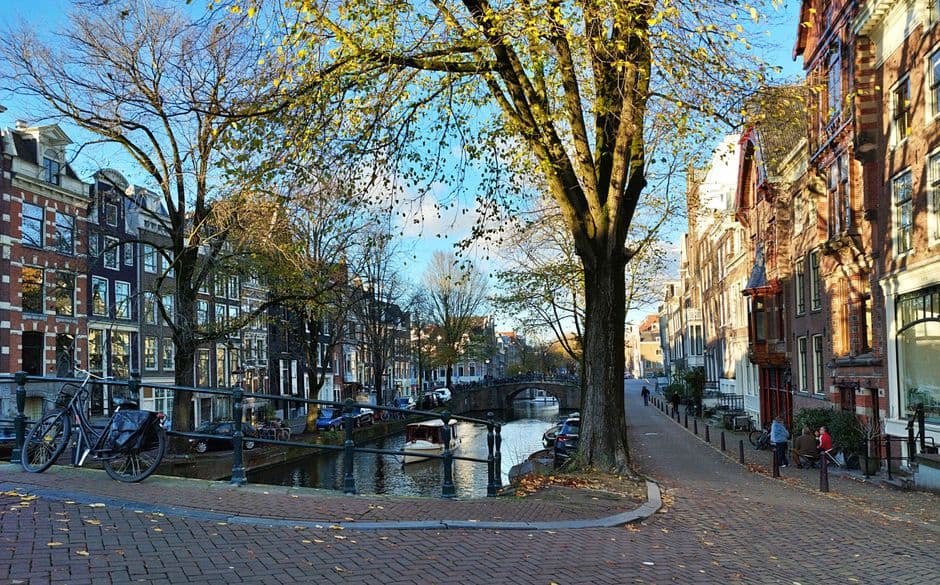
Most people plan a food trip backwards. They collect restaurant names from six different lists, book what still has tables, and then discover the bookings are forty minutes apart in three directions. The names were fine. The sequence was the problem.
Plan the origin first, then the neighborhood it sits in, then the specific place last, because the specific place is the part most likely to have changed. Here is the whole city on that logic:
| Origin | Where it clusters | Order first | Format |
|---|---|---|---|
| Indonesian | Oud-Zuid, Museum Quarter, the canal belt | Rijsttafel, or a single nasi rames if you are one person | Sit-down, book ahead |
| Surinamese | De Pijp and Oost | Roti with chicken, or saoto soup | Counter service, cash-fast, no reservations |
| Dutch | Centrum and the Jordaan | Kroket, appeltaart, pannenkoeken | Snack scale, not dinner scale |
| Turkish and Moroccan | Oost, along and around Javastraat | Borek, fresh bread, grilled meat | Bakeries and markets, daytime |
A four-day trip that uses this looks like: one afternoon in De Pijp for Surinamese counters and the Albert Cuyp market, one evening in Oud-Zuid for a proper Indonesian rijsttafel, one morning in Oost for the Dappermarkt and a Turkish bakery, and the Dutch snacks fitted around all of it, because they are ten-minute stops rather than meals. That is four distinct kitchens and roughly four neighborhoods, with no day spent crossing the city twice.
Two things it is worth being blunt about. First, good places to eat in Amsterdam are frequently small, and small places here do not take reservations, which means the queue is the booking system. Build slack into the plan rather than a schedule. Second, the center is the weakest part of the city for food and the strongest part for signage, and those two facts are related.
If you want to browse other cities the same way, the full set of destination maps is organized by city rather than by cuisine, which is the right unit once you have decided where you are going.
Best food in Amsterdam: common questions
- What food is Amsterdam known for?
- Amsterdam is known for four kitchens rather than one, and only one of them is Dutch. Indonesian food arrived through Dutch colonial rule in the Indonesian archipelago and is the city's deepest restaurant cuisine, usually eaten as a rijsttafel. Surinamese food arrived through Suriname, a Dutch colony until 1975, and is the city's everyday food: roti, saoto soup, broodje pom, sold from counters. Turkish and Moroccan food arrived through labor migration in the 1960s and 1970s and concentrates in Oost. Dutch food itself is at its best in small formats: the kroket, appeltaart, pannenkoeken, poffertjes and raw herring.
- What should I eat in Amsterdam if I only have one meal?
- An Indonesian rijsttafel, if you have two or more people and about two hours. It is a dozen or more small Indonesian dishes served at once with rice, it exists in Amsterdam in a form that largely disappeared in Indonesia after 1945, and it is the biggest gap between what this city offers and what you can get at home. If you are alone or want lunch instead, order nasi rames, which is the same idea on one plate, or go to a Surinamese counter for roti.
- Is Dutch food actually good?
- Dutch food is excellent at the small format and thin at restaurant scale, and that is the honest answer. Traditional dishes like stamppot and erwtensoep are winter home cooking made in domestic quantities. What is genuinely worth planning around is the snack and pastry tier: a broodje kroket from an old eetsalon, Dutch appeltaart with unsweetened cream, pannenkoeken, poffertjes from a market stall, and raw herring eaten standing up. Treat those as the Dutch contribution and you will not be disappointed.
- Which Amsterdam neighborhood is best for food?
- It depends on which cuisine, which is the point of organizing by origin. De Pijp is the most efficient for Surinamese food and has the Albert Cuyp market. Oud-Zuid and the Museum Quarter hold the established Indonesian restaurants. Oost, around Javastraat, is where the Turkish and Moroccan bakeries and butchers are, along with the Dappermarkt. Oud-West has the Foodhallen. The city center is the weakest area for food and the strongest for signage.
- What is rijsttafel and is it Indonesian or Dutch?
- Both, in different senses. The dishes are Indonesian. The format, a dozen or more of them served at once as a survey of the archipelago, was assembled under Dutch colonial administration in Java, and after Indonesian independence in 1945 it was largely rejected there while staying on in the Netherlands. So a rijsttafel in Amsterdam is an authentically Dutch-Indonesian institution rather than something you would be served in Jakarta.
- Do Amsterdam restaurants take reservations?
- The established Indonesian restaurants do and you should book them, especially at weekends. Most of the Surinamese counters and the small family-run places do not, so the queue is the booking system. Build slack into the plan rather than a fixed schedule. And check that any specific place is still open on the day you go: restaurant lists decay silently, and at least one widely recommended Amsterdam restaurant that closed in September 2025 was still being listed as a top pick in 2026.