
Best Countries for Food: What the Rankings Actually Show
The best countries for food, on the rankings most people quote, are Italy, Greece, Spain, Portugal, Japan, Turkey, France, China and Indonesia, with Peru and Mexico trading the last seat. That membership is stable. The order is not: two published readings of the same ranking, taken months apart, put nine of the same ten countries in the top ten and do not agree on the position of a single one of them.
This guide does three things. It shows the two readings side by side so you can see how little the numbers mean. It then goes to the only standing official designation that exists for a place and its food, UNESCO’s Creative City of Gastronomy, and shows that it has almost never gone to the city you would expect. And it ends with the way to use all of this, which is to stop choosing a country and start choosing a city.
Two readings of the same ranking, and not one country in the same place
The list quoted most often in this argument is the TasteAtlas ranking of national cuisines, an audience score built from ratings of traditional dishes. Below are two published readings of it. The first is from a travel guide published on 3 January 2026 and labeled 2025/26. The second is a food site’s reading of the same ranking, as it stood on 19 August 2026.
| Position | Read January 2026 | Read August 2026 |
|---|---|---|
| 1 | Italy | Greece |
| 2 | Greece | Italy |
| 3 | Peru | Mexico |
| 4 | Portugal | Spain |
| 5 | Spain | Portugal |
| 6 | Japan | Turkey |
| 7 | Turkey | Indonesia |
| 8 | China | France |
| 9 | France | Japan |
| 10 | Indonesia | China |
Nine countries out of ten appear in both. Not one of the nine holds the same position in both. Greece and Italy swap first and second. Spain and Portugal swap fourth and fifth. Japan falls from sixth to ninth, China from eighth to tenth, and Indonesia climbs from tenth to seventh. Peru is third in January and absent in August. Mexico is third in August and absent in January.
There is no scandal in that. An audience score moves as ratings accumulate, and two readings seven months apart are two snapshots rather than two mistakes. But the practical consequence for anyone planning a trip is worth stating plainly: the number printed next to a country is the least durable thing on the page. The set of countries survives. The ranking of them does not.
It is the same problem that shows up one level down, at city scale, where two major 2026 rankings of the best food cities in the world share only four cities across their top twenties.
The eleven countries that survive every version of the list

Treat the answer as a set rather than a ranking and it becomes stable and useful. Eleven countries appear across the readings above, and a third summary of the same underlying data, from World Population Review, names six of them as the highest average cuisine scores: Greece, Italy, Mexico, Turkey, Spain and Portugal. It introduces no country the other two readings had not already named.
Here is the set, with the thing each country is least arguable about and the city where you can actually eat it. The maps link to a ready-made Google Maps list for that city.
| Country | Least arguable strength | Where to eat it |
|---|---|---|
| Italy | Regional depth. The cooking changes every hundred kilometers and almost none of it travels. | Naples, Bologna |
| Greece | Vegetables, olive oil and grilled fish treated as the main event rather than the side. | Athens |
| Spain | Eating as a format. Pintxos and tapas make a whole evening out of small plates. | San Sebastian, Barcelona |
| Portugal | Salt cod, tinned fish and pastry, at prices no other Western European country matches. | Lisbon, Porto |
| Japan | Single-dish specialists. Shops that have made one thing for decades and nothing else. | Tokyo, Osaka |
| Turkey | Bread, kebab and the mezze table, plus the best breakfast spread of any country on this list. | Istanbul |
| France | Technique, and the bakery and cheese counter as everyday infrastructure. | Paris, Lyon |
| Peru | Ceviche, and the fusion cooking that came out of Japanese and Chinese migration. | Lima |
| Mexico | Corn, chiles and the mole traditions of the south. | Oaxaca |
| China | Eight major regional cuisines that share a name and very little else. | No PlaceSets map yet |
| Indonesia | Sambal, satay and rendang, and the widest spice range on the list. | No PlaceSets map yet |
Two of the eleven have no PlaceSets map, and that is written above rather than quietly dropped. It is a gap in what we cover, not a judgment about the food.
One official designation exists, and it does not go where you would guess
Every list above is somebody’s opinion, aggregated. There is exactly one standing institutional designation in the world that attaches to a place because of its food: UNESCO’s Creative Cities Network includes Gastronomy as one of its creative fields, alongside Music, Film, Literature, Design, Crafts and Folk Art, Media Arts and Architecture.
It is worth knowing which cities hold it, because the answer is close to the opposite of what the rankings would predict. Every row below was checked against UNESCO’s own city page for that city on 19 August 2026, not against a secondary list.
| Country | Its UNESCO Cities of Gastronomy | The city you expected |
|---|---|---|
| France | Rouen, and only Rouen, since 2021 | Paris. Or Lyon. |
| Italy | Alba, Bergamo, Parma | Rome, Naples, Bologna, Florence |
| Spain | Burgos and Denia since 2015, Zaragoza since 2025 | San Sebastian, Barcelona, Madrid |
| Japan | Tsuruoka since 2014, Usuki since 2021 | Tokyo. Or Osaka. |
| Turkey | Gaziantep, Hatay, Afyonkarahisar | Istanbul |
| Portugal | Santa Maria da Feira, Matosinhos | Lisbon, Porto |
| Mexico | Ensenada, Merida | Mexico City, Oaxaca |
| Peru | Arequipa | Lima |
| Greece | Thessaloniki | Athens |
| Thailand | Phuket, Phetchaburi, Songkhla | Bangkok |
| China | Chengdu, Shunde, Yangzhou, Macao and others | Beijing, Shanghai |
| United States | Tucson, San Antonio | New York, New Orleans |
| Canada | Kelowna, its first, in 2025 | Montreal, Toronto, Vancouver |
Read the last column. Not one country on that list gave the designation to its best known food city. France is the clearest case: it is the only French city to hold the designation, which Rouen’s own tourist board describes as a distinction unique in France. The country most people name first in this argument has exactly one UNESCO City of Gastronomy, and it is neither Paris nor Lyon.
Italy’s three run a joint gastronomic district between them: Alba, Bergamo and Parma. Spain’s are Burgos, Denia and, since 2025, Zaragoza. Japan’s are Tsuruoka and Usuki, two cities of roughly a hundred thousand and thirty thousand people. Peru, whose capital tops one of the two big city rankings outright, is represented by Arequipa.
One thing not to trust here is a total. UNESCO added 58 new member cities on 31 October 2025, taking the whole network past four hundred, and the public lists that aggregate the gastronomy field have not all caught up. Counts quoted online for this designation disagree with each other by more than ten, so this guide gives none. The pattern in the table survives the uncertainty. Adding a city to the list only ever adds another Alba, and never a Paris.
Why Paris, Rome and Tokyo are missing, in UNESCO’s own words
The explanation that circulates online is that cities like Paris and San Sebastian may not fully meet UNESCO’s criteria. That describes an event no source shows happening. UNESCO designates cities that apply to it and does not publish a roster of cities it turned down, so there is no assessment for Paris to have failed. The actual reasons are in the network’s own rules, and there are four of them.
A city gets one field, and one only. UNESCO’s application guidelines state that an applicant city can choose only one of the eight creative fields. That single rule accounts for most of the famous absences, because the famous food cities are already in the network under other labels. Checked against UNESCO’s own city pages on 19 August 2026:
- Rome is a City of Film.
- Bologna, whose name is on a meat sauce, is a City of Music.
- Barcelona is a City of Literature.
- Bangkok, Mexico City and Istanbul are Cities of Design.
- Beijing and Shanghai are Cities of Design too, which is why China’s designated food cities are Chengdu, Shunde, Yangzhou and Macao instead.
Each of those cities spent its one slot elsewhere, in most cases years before it would have occurred to anyone to apply for gastronomy. Rome cannot become a City of Gastronomy while it is a City of Film.
Some cities never joined at all. UNESCO publishes a page for every member city. On 19 August 2026 there was no such page for Paris, Tokyo, Athens or Lima in any field. They are not competing for gastronomy and losing. They are not in the network.
Countries are limited per round. For the 2025 call, UNESCO allowed a maximum of two applications from any one country, and they had to be in two different creative fields. Italy could not put both Naples and Florence forward for gastronomy in the same round even if it wanted to, because the two slots have to go to two different fields.
It was never a food ranking. The network was created in 2004 to help cities use culture and creativity as a lever for sustainable urban development, and it is tied explicitly to the UN Sustainable Development Goal on cities. A designation comes with a four-year action plan attached. Geographic diversity is a stated selection goal, which works actively against a third French or Japanese entry. Read that way, the pattern in the table above stops being strange. A mid-sized city with a food economy worth organizing around has every reason to apply, and Paris has almost none.
A country’s cuisine and the best place to eat it are not always the same country
Indonesia sits in the top ten of both readings above, and it is the one entry most travelers on this list will never book a flight for. The version of Indonesian food they are most likely to eat is served about eleven thousand kilometers away, in the Netherlands.
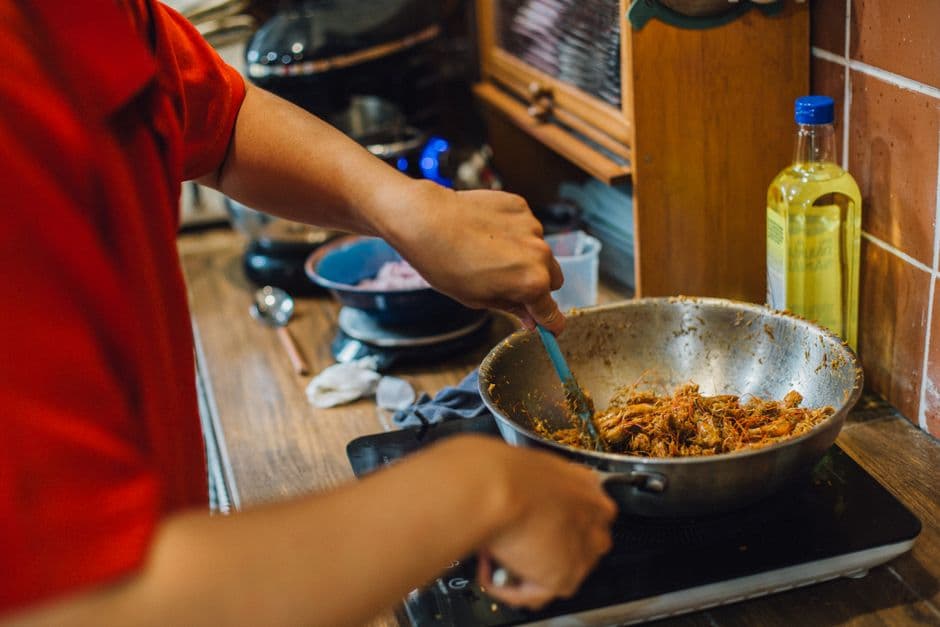
Rijsttafel, literally rice table, is a spread of a dozen or more small Indonesian dishes served at once. The dishes are Indonesian. The format is not: it was assembled by Dutch colonial officials in Java and Sumatra who wanted to display the range of the colony to guests, and who would eat that way when Indonesian families would eat one or two regional dishes at a sitting. After Indonesian independence in 1945 the rijsttafel was rejected along with other colonial customs, and it largely disappeared there. It stayed in the Netherlands, and eating it in Amsterdam is now a standard part of a trip.
That is not a footnote about one dish. It is the clearest single illustration of what these rankings do and do not measure. A cuisine ranking scores a canon of national dishes. It does not score how well you will eat in a given place, which depends on migration, on money, on which populations settled where, and on what a city’s restaurants actually cook. Those two questions have different answers often enough that treating a country ranking as a travel plan will send you to the wrong airport.
How to choose, if you are actually booking something
Country-level rankings are the wrong resolution for a decision. Nobody eats in Italy. They eat in about six streets in one Italian city, over four days. Pick by what you want the trip to feel like:
| If you want | Go to | Why this one |
|---|---|---|
| One perfect version of one thing | Naples | A whole city organized around a single dish it is not willing to change. |
| To eat standing up, all night, without booking | San Sebastian | Pintxos bars make a route out of dinner. No reservation, no sitting down. |
| Depth of choice at every price | Tokyo | Single-dish specialists at every level, from a counter with six seats upward. |
| The best value in Western Europe | Lisbon | Tascas still serve a full lunch for the price of a coffee elsewhere. |
| Breakfast to be the best meal of the day | Istanbul | The Turkish breakfast spread has no real competitor on this list. |
| Food that is genuinely unlike anything at home | Oaxaca | Mole, corn and chiles, in the region that defines all three. |
If a country you like appears nowhere on any of these lists, that is worth very little. The rankings measure a canon of traditional dishes. They do not measure whether you will have a good week.
Best countries for food: common questions
- Which country has the best food in the world?
- There is no stable answer, and the rankings themselves show why. Two published readings of the same TasteAtlas cuisine ranking, seven months apart, name nine of the same ten countries and do not agree on the position of a single one. Italy and Greece trade first place, Japan moves from sixth to ninth, and Peru and Mexico swap the third seat entirely. The useful answer is the set rather than the order: Italy, Greece, Spain, Portugal, Japan, Turkey, France, China, Indonesia, Peru and Mexico.
- Is there an official ranking of the best countries for food?
- No. Every ranking you will find is an audience score, an editorial pick or a survey, and no government or international body publishes one. The closest thing to an official recognition is UNESCO's Creative City of Gastronomy designation, and it is not a ranking. It is a development commitment with a four-year action plan attached, awarded to cities that apply for it.
- What is a UNESCO City of Gastronomy?
- It is one of the eight creative fields in UNESCO's Creative Cities Network, alongside Music, Film, Literature, Design, Crafts and Folk Art, Media Arts and Architecture. A city applies, with a letter of support from its country's National Commission for UNESCO, and commits to using its food culture as a lever for sustainable urban development. It is not an award for cooking, which is why the list looks nothing like a best-food ranking.
- Why is Paris not a UNESCO City of Gastronomy?
- Not because it failed an assessment. UNESCO designates cities that apply and does not publish a list of cities it turned down. As of 19 August 2026 UNESCO had no city page for Paris in any creative field, so Paris is not in the network at all. France's only City of Gastronomy is Rouen, designated in 2021.
- Which famous food cities are in the UNESCO network under a different field?
- Several, and each one used up its only slot doing it, because an applicant city can choose just one of the eight fields. Checked on UNESCO's own city pages on 19 August 2026: Rome is a City of Film, Bologna is a City of Music, Barcelona is a City of Literature, and Bangkok, Mexico City and Istanbul are Cities of Design. Rome cannot become a City of Gastronomy while it is a City of Film.
- Should I pick a country or a city for a food trip?
- A city. Country rankings score a canon of national dishes, not how well you will eat somewhere, and those two things come apart often. The clearest example is Indonesia, which sits in the top ten of the cuisine rankings while the version of Indonesian food most travelers will eat, the rijsttafel, is served in the Netherlands and largely disappeared from Indonesia after independence in 1945.