
Recommended Restaurants in Prague: The List Is the Easy Half
Most recommended restaurants in Prague are recommended correctly. The lists agree with each other more than they disagree, and the well known names really are good. What the lists leave out is the other half of the problem, which is that a Prague bill is assembled differently from an American or British one, and the difference is where visitors lose money and temper.
This guide does both halves. It names the restaurants, by kind and by neighborhood, and it explains the five specific mechanics that decide what you actually pay: per-weight pricing, the chalkboard lunch, the bread basket, the cover charge, and the tip prompt on the card terminal. None of the three highest ranking Prague food guides we read while writing this covers more than one of them.
The short version, if you read nothing else. Two streets off a sightseeing square, the same plate costs roughly half. A weekday lunch at the same kitchen costs a fraction of its dinner. Anything that arrives on the table without being ordered is probably billable. And the prices printed on a Czech menu already include VAT, so nothing should be added on top of them.
A Prague menu is priced in ways a US or UK menu is not
Three conventions on a Czech menu surprise visitors, and all three are normal rather than dishonest. Knowing them turns most of what gets reported as a Prague restaurant scam into an ordinary transaction.
Meat is often priced per 100 grams
A grilled ham stand on a sightseeing square will show a number like 125 Kč. That is the price for 100 grams, not for a portion. If nobody agrees the size first, the carver decides it, and a thick slab on a paper plate can arrive with a bill several times what the sign implied. The same convention appears on some restaurant menus for steaks and roasts, where it is printed clearly and causes no trouble because you are ordering a named dish.
The fix takes one sentence, said before anything is cut. Name the weight, or name the money. Sto gramů, prosím is one hundred grams, please. Saying you want two hundred crowns worth works just as well and is harder to misread.
The menu price includes VAT
Czech menu prices are gross prices. The receipt may itemize the tax for accounting reasons, but the tax is already inside the number you read. Nothing should be added on top in the American style. If a total arrives that is larger than the sum of the menu prices, the difference is a service item of some kind and it is reasonable to ask which one.
A cover charge is legal if the menu says so
Some restaurants, mostly in the heavily visited streets, charge a couvert per person, usually attached to bread and butter. This is allowed, and if it is printed on the menu there is nothing to dispute. The thing worth checking is the opposite case: a menu that states there is no cover charge, and a bill that carries one anyway. That is the version to query at the table rather than after you have paid.
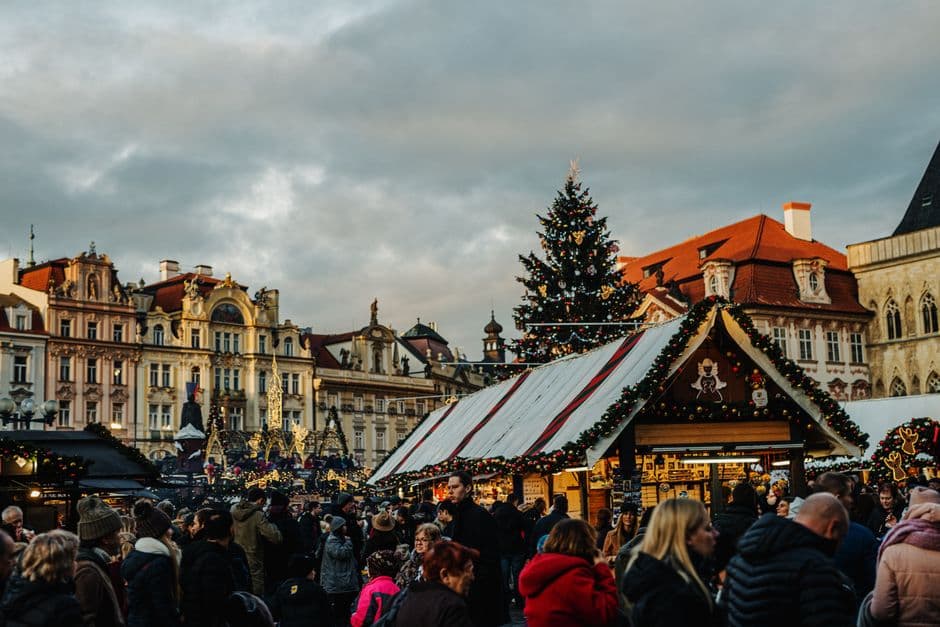
Old Town Square is the sharpest version of the price gradient. Sitting on the square is a real thing to buy and some people want it. What is worth knowing is that the premium is for the view, that it is large, and that it disappears within a two or three minute walk in almost any direction.
The chalkboard outside is a better price signal than the reviews inside
Czech restaurants run a weekday lunch service called the polední menu or denní menu, roughly 11:00 to 14:00, Monday to Friday. It is a fixed two or three course meal, usually soup and a main, written on a chalkboard by the door and often only in Czech. Hundreds of kitchens across the city do one, including kitchens that charge several times as much for the same cooking at dinner.
Current sources do not agree on the price, and it is more honest to report the disagreement than to average it. Three 2026 guides put a two course lunch at 130 to 170 Kč, at 130 to 200 Kč, and at 180 to 250 Kč. The spread is real, because it tracks the district: a Vinohrady or Žižkov pub sits at the bottom of that band and an Old Town kitchen with a chalkboard sits at the top. Either way the useful figure is not the number but the ratio, which is somewhere between a third and a half of what the same room charges after 18:00.
The chalkboard also works as a filter, which is the part visitors miss. A restaurant that bothers to write a daily lunch menu is selling to people who work nearby and come back on Thursday. A restaurant with a laminated menu in eight languages and a photograph of each dish is selling to people who will not be in the country next week. Neither is a moral judgment. They are different businesses with different repeat-custom pressures, and the chalkboard is the cheapest way to tell them apart from the street.
Where to eat traditional Czech food, from canteen to booked table
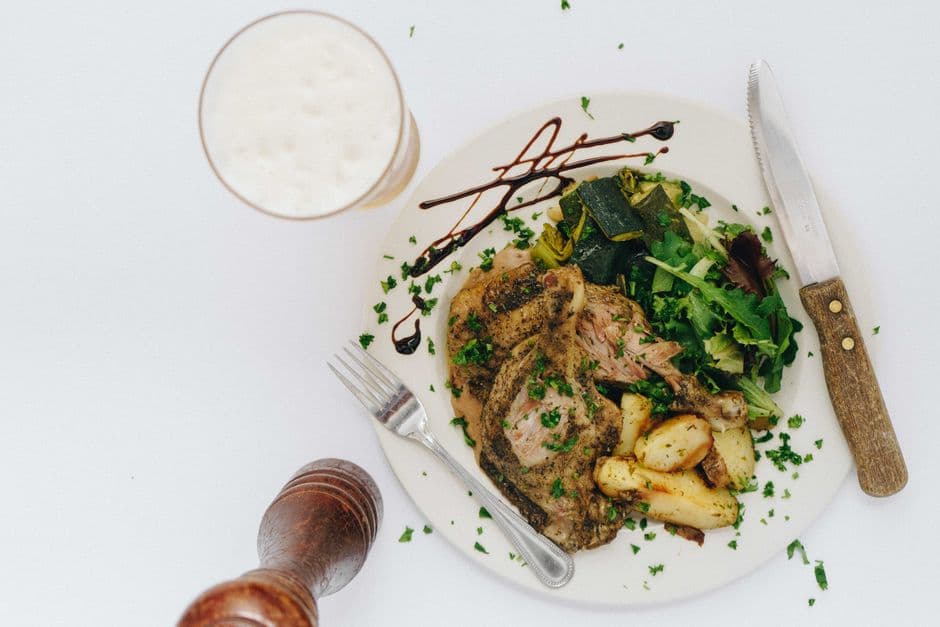
Traditional Czech cooking splits into three price tiers that are barely related to each other. There is the self-service canteen, where a plate of goulash costs less than a coffee on the square. There is the pub kitchen, which is where most of the good eating is. And there is the small number of rooms that treat Czech food as fine dining and charge accordingly.
The six below cover all three tiers and are named consistently across the guides we checked and our own Prague restaurants map.
| Restaurant | Area | What it is | How to get in |
|---|---|---|---|
| Lokál Dlouhá | Old Town | Tank Pilsner Urquell and Czech pub cooking at pub prices | Walk in early or book; it fills from 18:00 |
| Výčep | Vinohrady | A small kitchen that cures, bakes and butchers most of what it serves | Small room, book ahead |
| U Modré Kachničky | Malá Strana | Roast duck and game in a snug set of low rooms | Book; the most expensive room on this list |
| Havelská Koruna | Old Town, off Havelská market | Self-service canteen doing goulash, svíčková and schnitzel | No booking, no table service, cash-fast |
| Kantýna | New Town, Vinohradská | Butcher counter and canteen in one room; you order by the cut | No booking, pay at the end on a card you carry around |
| Naše Maso | Old Town, Dlouhá | Butcher shop with a standing counter; sausage, tartare, a dry-aged burger | Standing room; the sit-down table needs a reservation |
Two names you will meet constantly and should understand before you go. U Fleků has been brewing on its own site since 1499 and is the most visited beer hall in the city, which is reflected in the prices and the group seating; it is a genuine piece of Prague and it is not a local pub. The Strahov Monastery Brewery, up by the castle, is the same trade in a quieter setting. Both are worth an afternoon. Neither is where you eat on a Tuesday.
If you want one dish to orient the rest, make it svíčková: beef in a root vegetable cream sauce with bread dumplings, a spoon of cranberry and a curl of whipped cream. Czech kitchens are judged on it the way Italian ones are judged on carbonara, and a kitchen that does it well is unlikely to do anything else badly.
Order tank beer, and know what you are ordering
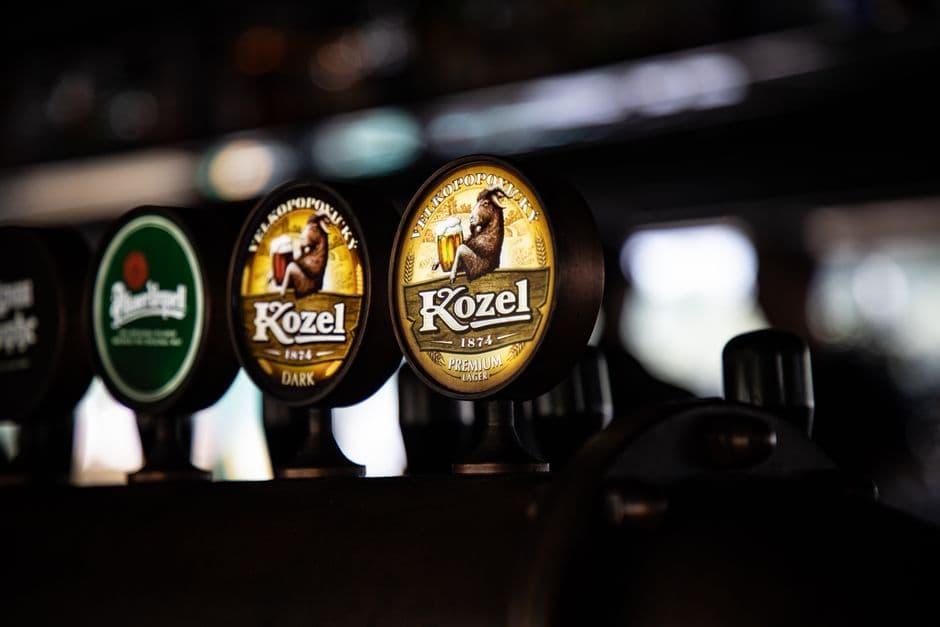
Tankové pivo, tank beer, is unpasteurized lager delivered from the brewery by tanker and pumped into sealed bladders inside pressurized tanks behind the bar. It never sees a keg and it is not heat treated, so it keeps a hop aroma that pasteurization flattens. Pilsner Urquell built the practice in the mid 1990s and allows only a limited number of high-turnover pubs to pour the unpasteurized version, because it has a short life once it lands.
Spotting it is easy. Pubs that have it advertise it, on a window sticker or a board reading tankové pivo, because it is the main thing they have to say about themselves. If there is no sign, ask. A pub that pours tank beer will answer immediately.
Two practical notes that are not about flavor. Beer is ordered by size in Czech pubs, and a velké is 0.5 liters while a malé is 0.3; asking for a beer without saying which gets you the large one in most rooms. And in traditional pubs the waiter will keep replacing an empty glass without being asked, marking each one on a paper slip on your table. That slip is the bill. Put a beer mat over your glass when you are finished, which is the local signal to stop.
Prague holds five Michelin stars, and the country's only two-star is outside the city
A lot of writing about Prague fine dining is out of date, because the ground moved recently. Until 2024 Czech restaurants were reviewed only as part of Michelin's Main Cities of Europe selection, and Prague carried two starred restaurants for years. On 11 December 2025, at a ceremony in Mariánské Lázně, Michelin published a guide dedicated to Czechia for the first time and reviewed the whole country.
That selection lists nine starred restaurants nationally: one with two stars and eight with one. Five of the one-star restaurants are in Prague, which is where the older number of two comes from and why it is now wrong.
| Restaurant | Stars | Where | Kitchen |
|---|---|---|---|
| Field | One | Prague, Old Town | Modern |
| La Degustation Bohême Bourgeoise | One | Prague, Old Town | Modern Czech, starred continuously since 2012 |
| Levitate | One | Prague, Vinohrady | Nordic technique, Asian seasoning |
| Štangl | One | Prague | Modern Czech |
| Casa de Carli | One | Prague | Northern Italian |
| Papilio | Two | Vysoký Újezd, about 20 minutes from Prague | Creative; the first two-star in the country |
The detail worth carrying is the last row. The only two-star restaurant in the Czech Republic is not in Prague, and three of the other one-stars are in Olomouc, Zlín and Hlohovec. A guide that covered only the capital could not have shown that, which is a useful reminder that a Michelin count measures where inspectors have been sent as much as where the cooking is. We wrote about that mechanism at length in the city with the most Michelin stars.
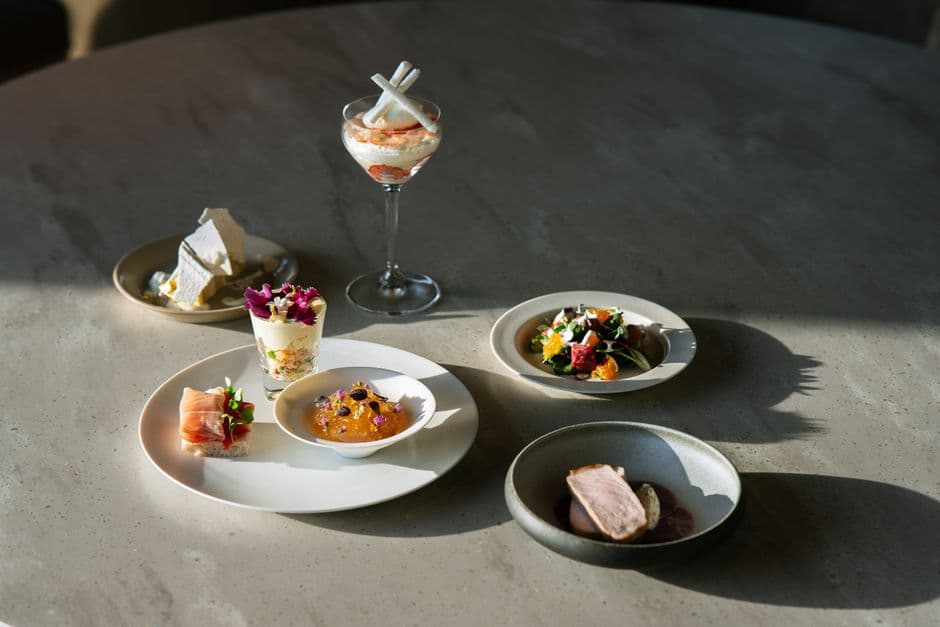
Below the stars, the same selection named eighteen Bib Gourmand restaurants, which is Michelin's label for good cooking at a moderate price and is the more useful list for most trips. And below that again sit the two rooms most Prague fine-dining lists have always named: Kampa Park on the river under Charles Bridge, and Terasa U Zlaté Studně on a roof terrace under the castle. Both trade partly on the view, both are booked well ahead, and neither holds a star.
The grand cafés are restaurants, and they keep different hours
Prague's café culture is not a coffee break, it is a set of nineteenth and early twentieth century rooms that serve full menus from breakfast onward. Café Louvre on Národní has been open since 1902 and served Kafka and Einstein. Café Slavia faces the National Theatre across the road and was the dissidents' room. Café Savoy in Smíchov does the most serious breakfast of the three.
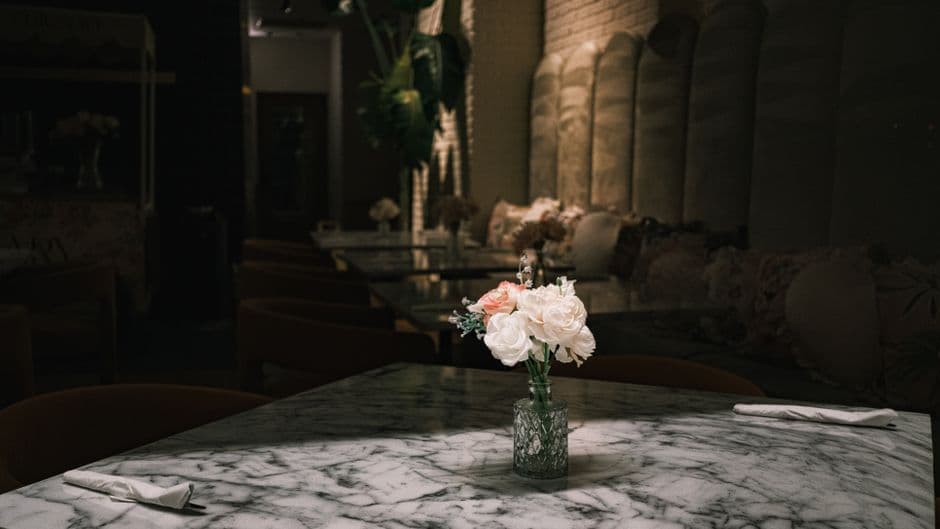
Two things follow from treating them as restaurants rather than cafés. They fill at breakfast and lunch rather than mid-afternoon, so the quiet hour is usually between 14:00 and 16:00. And several of them apply a cover charge, which is exactly the mechanic described at the top of this guide and is printed on the menu where it applies.
For counter-service eating in the middle of a day of walking, the butcher-counters do the job better than any café. Naše Maso on Dlouhá and Kantýna on Vinohradská both work as walk-in lunches that cost about what a lunch should cost, and both are a short walk from the places most visitors are already standing.
What arrives on the bill that you did not order
This is the section the other Prague guides skip, and it is worth more than any individual restaurant recommendation because it applies everywhere you eat.
| Line | What it is | What to do |
|---|---|---|
| Pečivo | A basket of bread rolls left on the table | A few crowns per piece, counted at the end by asking how many you ate |
| Couvert | A per-person cover charge, usually bread and butter | Legal if it is printed on the menu; query it if it is not |
| Sauces, olives, nuts | Placed on the table unasked in tourist-area restaurants | Send them back straight away if you do not want them |
| Meat priced per 100 g | Ham and grilled meat at market kiosks and some menus | Say the weight or the spend before anything is cut |
| Tip on the terminal | A prompt offering 5, 10, 15 or 20 percent | Say the total you want to pay before the card goes in |
The bread basket is an honor system, not a gift
In many Czech restaurants a basket of rolls arrives without being ordered, and at the end the waiter asks pečivo? and you say how many you ate. It is charged by the piece and the amount is small. The system only goes wrong when a visitor assumes the bread was free and disputes a correct line on the bill. The same principle covers sauces, olives, nuts and bottled water placed on the table unasked: if you do not want them, hand them back when they land rather than leaving them untouched and hoping.
Tipping is about ten percent, and you say the number
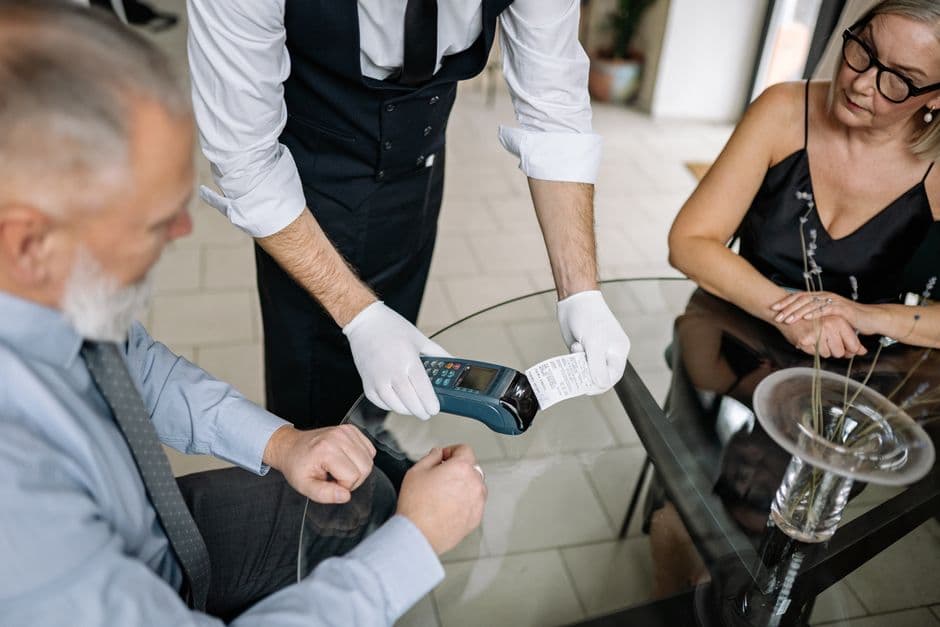
Ten percent is the working expectation for table service, and Czech practice is to round up rather than to calculate. Card terminals in Prague now nearly all carry a tip prompt, and the suggested percentages tend to start high. The local method is simpler and gets you the number you meant: tell the waiter the total you want to pay before the card goes in, and they enter it. Say four hundred and twenty and the terminal reads 420.
Two habits that cost nothing
- Read the bill at the table. Itemized bills are standard and errors are easiest to fix while the waiter is still holding the terminal.
- Pay in crowns. Card terminals and street exchange booths both offer to convert for you at their own rate, and declining that offer is always the cheaper choice.
Where to point yourself, by area
Prague is compact enough that neighborhood choice is about price and crowd rather than travel time. Everything below is inside twenty minutes of Old Town Square by tram.
| Area | What it is good for | Watch for |
|---|---|---|
| Old Town (Staré Město) | The starred kitchens, the butcher counters, the grand cafés | The square itself carries a large view premium |
| Malá Strana | Roast duck and game, riverside fine dining under the castle | Thin on cheap options; book the good rooms |
| Vinohrady | The best density of pub kitchens and lunch chalkboards | Small rooms fill fast on weekday evenings |
| Žižkov | Pubs, cheap plates, the lowest prices on this list | Less English on menus, which is usually a good sign |
| New Town (Nové Město) | Canteens, beer halls, the Národní café strip | Wenceslas Square itself is the second trap zone |
If Prague is one stop on a longer route, the food-first next city by train is Berlin at about four hours, and our Berlin restaurants map is built the same way as the Prague one. The full set is on the destinations page.
What we checked, and where the sources disagree
Two figures in this guide are contested and are reported as ranges rather than as facts. The lunch menu price band varies by roughly a hundred crowns between current guides, which we have quoted rather than averaged. And the Michelin count is stated against a named selection, the one revealed on 11 December 2025, because sources label that selection with two different years and the ceremony date is the part everyone agrees on.
The three sources worth reading directly: the MICHELIN Guide Czechia for the current selection, expats.cz on tank beer for how the tank system actually works, and Taste of Prague on tipping, written by people who take the payment every day.
Common questions
- What are the most recommended restaurants in Prague?
- For traditional Czech cooking at pub prices, Lokal Dlouha in the Old Town and Vycep in Vinohrady are named consistently across current guides. Havelska Koruna is the cheapest sit-down option, a self-service canteen off Havelska market. Nase Maso and Kantyna are butcher counters that work as walk-in lunches. U Modre Kachnicky in Mala Strana is the one to book for roast duck and game.
- How much does a meal cost in Prague?
- The single biggest lever is the weekday lunch menu, the poledni or denni menu, served roughly 11:00 to 14:00 Monday to Friday. Current 2026 guides put a two course lunch at anywhere from 130 to 250 CZK depending on the district, which is between a third and a half of what the same kitchen charges at dinner. The second lever is distance from a sightseeing square: two or three streets away, prices roughly halve.
- Do you tip in Prague restaurants?
- Yes. About ten percent is the working expectation for table service, and Czechs round up rather than calculate. Card terminals almost all carry a tip prompt now and the suggested percentages start high, so the local method is to tell the waiter the total you want to pay before the card goes in and let them enter that number.
- Is the bread on the table in Prague free?
- Usually not. A basket of rolls, pecivo, often arrives unordered and is charged by the piece on an honor system: at the end the waiter asks how many you ate. The amounts are small. Some restaurants instead charge a per-person couvert, which is legal when it is printed on the menu. Sauces, olives, nuts and bottled water placed on the table unasked are billable too, so hand back anything you do not want when it lands.
- Does Prague have Michelin-starred restaurants?
- Five, all with one star: Field, La Degustation Boheme Bourgeoise, Levitate, Stangl and Casa de Carli. Michelin published a guide dedicated to Czechia for the first time on 11 December 2025, which raised Prague's count from the two it had carried for years. The country's only two-star restaurant, Papilio, is not in Prague; it is in Vysoky Ujezd, about twenty minutes away.
- What is tank beer in Prague, and how do I find it?
- Tankove pivo is unpasteurized lager delivered from the brewery by tanker and held in sealed bladders inside pressurized tanks behind the bar, so it never sees a keg or a pasteurizer. Pilsner Urquell built the practice in the mid 1990s and permits it only in a limited number of high-turnover pubs. Pubs that pour it advertise it on a window sticker or a board reading tankove pivo, and if there is no sign you can simply ask.
- Is it cheaper to pay in crowns or in my own currency in Prague?
- Always in crowns. Card terminals and street exchange booths both offer to convert the amount for you at a rate they set, which is worse than your own bank's. Declining the offered conversion is the cheaper choice every time. Czech menu prices already include VAT, so nothing should be added on top of the printed number.