
The Best Restaurants in San Sebastián, Spain Are Counted Across a 25 Kilometer Radius
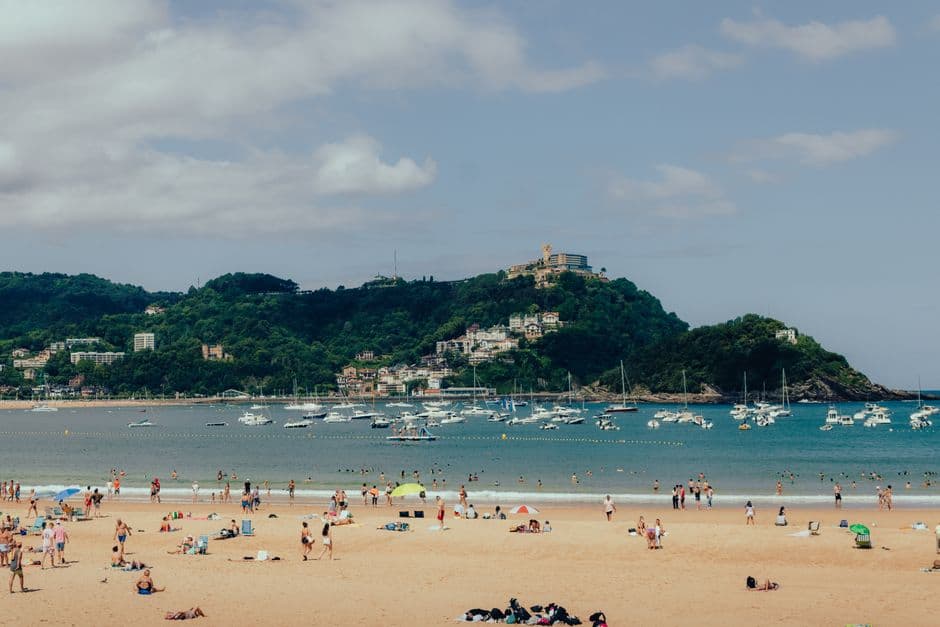
You will read one line about San Sebastián everywhere: it has the highest concentration of Michelin stars per head of population on earth. It is very close to true. It is also measured across a twenty five kilometer radius, which is a region rather than a city, and that single detail changes how you should plan a trip here more than any ranking of the best restaurants in San Sebastián, Spain will.
We counted. San Sebastián Turismo, the official city tourist board, publishes its own page of Michelin-starred restaurants and states that there are, in its words, 19 Michelin stars inside a twenty five kilometer radius of the city hall. Eleven restaurants share those nineteen stars. We checked each one against the municipality the MICHELIN Guide files it under.
Five of the eleven are not in San Sebastián. They account for eight of the nineteen stars. That includes one of the three-star restaurants. None of the three highest ranking English language guides to eating here that we read while writing this mentions it at all.
The point is not that the city is cheating. It is that a list is the wrong instrument for this particular town, and if you plan from one you will end up booking two dinners that are forty minutes apart in opposite directions. Here is the actual geography, then what to do about it.
Eight of the nineteen stars San Sebastián advertises are in other towns
The claim on the tourist board's page is precise and it is worth reading closely, because the precision is where the trick lives. The stars are counted within a radius drawn from the city hall. A radius of twenty five kilometers from a city hall covers a great deal of Gipuzkoa. It reaches a fishing village on the coast, a market town inland, a border town on the French side of the bay, and a light industrial suburb best known for a racecourse.
Every one of those places has a starred restaurant in it, and every one of those stars is being counted as San Sebastián's. Nobody is lying. Gipuzkoa really is one of the most decorated eating regions in the world, and the density claim survives even if you tighten the circle. But "the city with the most stars per person" and "the region within half an hour's drive of the city" are different statements, and only one of them tells you whether you need a car.
If you want the version of this argument played out across every city on earth rather than one, we did the counting exercise in our piece on which city actually has the most Michelin stars, where the same boundary problem decides the answer.
Every starred restaurant the city claims, sorted by the town it is really in
This is the tourist board's own list, one row per restaurant, with the municipality taken from the MICHELIN Guide rather than from the marketing. The last column is the one that matters when you are holding a phone at 7pm.
| Restaurant | Stars | Municipality | In San Sebastián? |
|---|---|---|---|
| Arzak | 3 | Donostia / San Sebastián | Yes, about 3 km east of the old town |
| Akelarre | 3 | Donostia / San Sebastián | Yes, but near the top of Monte Igueldo |
| Martín Berasategui | 3 | Lasarte-Oria | No |
| Amelia by Paulo Airaudo | 2 | Donostia / San Sebastián | Yes, central, by La Concha |
| Mugaritz | 2 | Errenteria | No |
| Ibai | 1 | Donostia / San Sebastián | Yes, central |
| Itzuli | 1 | Donostia / San Sebastián | Yes, but on Monte Igueldo |
| Kokotxa | 1 | Donostia / San Sebastián | Yes, inside the Parte Vieja |
| Alameda | 1 | Hondarribia | No |
| Ama | 1 | Tolosa | No |
| Elkano | 1 | Getaria | No |
Six restaurants and eleven stars inside the city. Five restaurants and eight stars outside it. Martín Berasategui, the third of the region's three three-star kitchens, is in Lasarte-Oria, which is a separate town with its own mayor. Elkano, the restaurant with more search traffic attached to it than anything in San Sebastián except Arzak, is in Getaria, roughly twenty five kilometers west along the coast.
One honest note before you use that table as a checklist. Star counts move every year and the tourist board's page and the third party round-ups do not always update in the same week. When we cross-checked this list, one widely shared local guide put the area total at sixteen stars across eight restaurants while the tourist board said nineteen across eleven. We went with the restaurant-by-restaurant check against MICHELIN's own municipality pages, and we are telling you the two numbers disagreed rather than picking the prettier one.
The city boundary is not the thing that costs you a taxi
Here is where the story gets more useful than a gotcha. Being inside San Sebastián does not mean being within walking distance of anything, and being outside it does not mean being far.
Akelarre has three stars and is unambiguously in San Sebastián. It is also most of the way up Monte Igueldo, the green headland you can see closing off the western end of La Concha in every photograph of the city. Itzuli, which took its first star recently, is on the same hillside. Neither is a walk. Both are a drive, and the drive is up a winding road that taxis charge for accordingly.
Martín Berasategui is not in San Sebastián at all, and the tourist board puts it seven kilometers from the city. In practice the two journeys are close to interchangeable. We found published drive times for Akelarre ranging from ten minutes to twenty, and for Martín Berasategui a flat fifteen. Nobody is measuring these consistently, which is itself worth knowing before you build an evening around one of them.
The rule that survives all of it:
- Walkable from the Parte Vieja: Kokotxa, Ibai and Amelia. Three of the eleven.
- Short taxi, still in the city: Arzak, about three kilometers east. Akelarre and Itzuli, up Igueldo.
- A trip, and you should treat it as one: Martín Berasategui, Mugaritz, Alameda, Ama and Elkano. Different town, different day.
None of those five towns is a hardship. Hondarribia and Getaria are both places people go for the afternoon anyway. The mistake is not going; the mistake is discovering at 6pm that dinner is in a different municipality.
Only three starred restaurants are in the San Sebastián you can walk
If your holiday is four nights in the old town without a car, the honest answer to "what are the best restaurants in San Sebastián" is a list of three, and then a very long list of bars. The three:
- Kokotxa, one star, in a quiet corner of the Parte Vieja near the basilica. The only starred kitchen actually inside the old town, which makes it the one that fits a normal evening without any logistics at all.
- Ibai, one star, central, and a genuinely strange proposition: a basement dining room built around produce and a small number of covers. This is the restaurant behind the searches for "restaurant Ibai San Sebastián" that people run without realizing it holds a star.
- Amelia by Paulo Airaudo, two stars, a short walk along the bay. The most ambitious cooking you can reach on foot from the old town.
Arzak deserves its own line because it is the name most people arrive with. It has held three stars since 1989, it is where New Basque Cuisine was largely invented, and it is about three kilometers east of the old town on the road out toward the French border. That is a forty minute walk or a short cab, so it belongs to the city in a way Lasarte-Oria does not, but it is not a place you wander into after drinks.
Elkano is the test case for whether leaving town is worth it
People search for "restaurant Elkano San Sebastián" hundreds of times a month. Elkano is not in San Sebastián. It is in Getaria, a fishing village about twenty five kilometers west, and it is the clearest example in Spain of a restaurant that is worth the drive for exactly one reason.
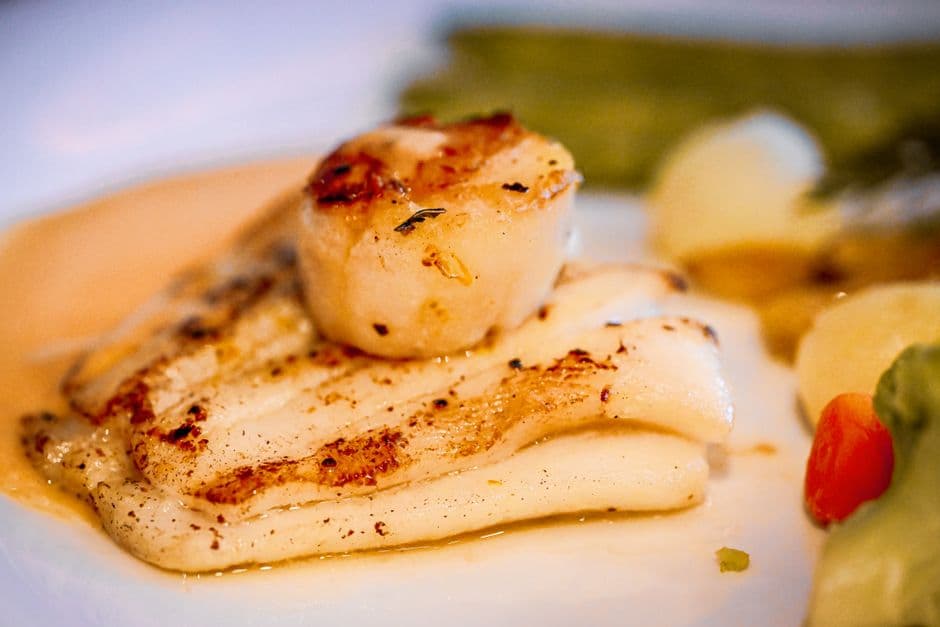
Elkano grills whole turbot over charcoal, outdoors, and then serves the fish in parts on the theory that the cheek, the collar, the skin and the loin are four different foods. That is the entire proposition. It has one star, which undersells it, and it sits high on the World's 50 Best list, which oversells it in a different direction. It is a fish restaurant in a fishing town, run at an obsessive level.
The reason it makes the point better than the others: nothing about Elkano can be reproduced inside San Sebastián, because the thing being sold is proximity to a specific fleet. Compare that with a starred tasting menu in Lasarte-Oria, which is a magnificent evening and is not made magnificent by Lasarte-Oria. If you are only leaving the city once, leave it for the thing that could only happen where it is.
Getaria is also a straightforward day out on its own terms, with a harbor, a Balenciaga museum and txakoli vineyards on the hillsides above the town. Build the lunch into the day rather than treating it as a night-time expedition and the twenty five kilometers stops being a cost.
The booking calendar decides more of this than the ranking does
A ranked list implies the constraint is quality. In San Sebastián the constraint is the calendar, and it is unusually severe because several of these kitchens close for months at a time.
Mugaritz is the extreme case. It shuts for a creativity season, reported as roughly mid-January to the first half of April, and closes again in December for research. Its reservations for the whole April-to-December run are released once, in February, and the prime weekend tables are gone within a day. A restaurant that is closed for a quarter of the year and sells the rest of it in a single morning is not something you slot in when you get there.
For the rest, two to three months ahead is the consistent advice across sources, and more than that between May and October. Booking windows and closure dates both change, so treat every date here as a prompt to check the restaurant's own page rather than as a fact you can rely on in eight months.
The practical consequence is a sequencing rule. Book the one starred meal you genuinely want first, and only then decide which nights are free for everything else. Doing it the other way around is how people end up eating the third choice on the wrong side of the province.
The best food in San Sebastián is mostly not in a restaurant
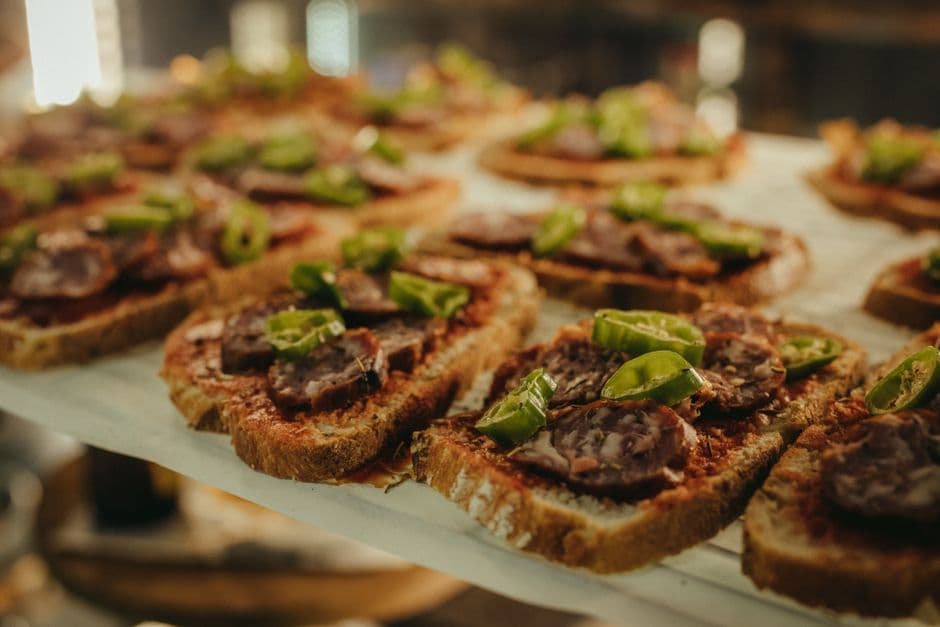
Everything above concerns eleven rooms. The city has a few hundred bars, and the pintxo counters in the Parte Vieja are what people actually remember. This is not a budget consolation prize. Several of these bars are better at one specific thing than any tasting menu is at anything.
The mechanics, if you have not done it: you order at the bar, standing, usually one item and one drink, and then you leave and do it again somewhere else. Two or three plates in one bar is the beginner error. The cold pintxos sit on the counter and you can point. The good stuff is generally cooked to order and written on a board behind the bar, often in Basque.
| Bar | Where | What to order | The thing to know |
|---|---|---|---|
| La Cuchara de San Telmo | Parte Vieja, behind the San Telmo museum | Veal cheek braised in red wine | No table, no seat, no menu on the counter. Order at the hatch and eat standing |
| Bar Néstor | Arrandegi Kalea, Parte Vieja | Tortilla, tomato salad, chuletón | One tortilla at lunch and one at dinner, on a written list. See below |
| Borda Berri | Fermín Calbetón, Parte Vieja | Idiazábal cheese risotto, beef cheek | Cooked to order, so it is slower than the counters around it. That is the point |
| Ganbara | San Jerónimo, Parte Vieja | The mushroom plate with an egg yolk | The counter upstairs and the restaurant downstairs are priced very differently |
| Casa Urola | Fermín Calbetón, Parte Vieja | Whatever is on the seasonal board | Bar downstairs, proper dining room upstairs. Book the upstairs, walk into the bar |
| Antonio Bar | Bergara Kalea, Centro | Salt cod tortilla | A Bib Gourmand doing market cooking at bar prices. Ten minutes from the old town |
| Bar Bergara | Gros, across the river | The Txalupa, a baked mushroom and prawn gratin | Gros is where you go when the Parte Vieja is three deep at the counter |
| Topa Sukalderia | Gros, across the river | Basque and Latin American crossover, tacos included | Run by the Mugaritz team. The cheapest way to eat their thinking |
All eight are pinned on our San Sebastián restaurants map alongside the starred rooms, which is the fastest way to see the point this whole piece is making: the bars cluster into about four walkable streets, and the stars do not cluster at all.
Bar Néstor and the list, which is the whole town in miniature
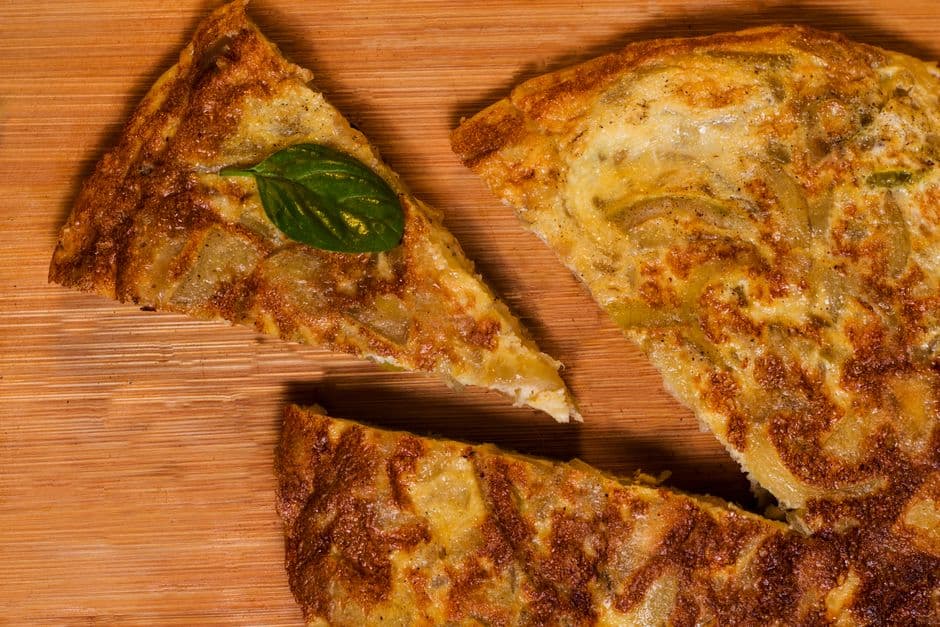
Bar Néstor is a small room in the old town that makes, by widespread report, two tortillas a day. One at lunch and one at dinner. To get a slice you turn up around half an hour before service, often while the shutter is still half down, and put your name and the number of slices on a written list. Each tortilla is reported to yield roughly sixteen or seventeen slices, and it is one slice per person.
We are hedging that with "reported" deliberately: it is the kind of arrangement that is real, is well documented by people who have done it, and could change next season without anyone updating a guide. Treat the shape as reliable and the numbers as approximate.
The reason to know about it is not the omelette. It is that this is the same lesson the star map teaches, at the scale of one bar. The binding constraint in this city is almost never quality and almost always access: a list to sign, a season that is closed, a town you have to drive to. Solve access first and the eating takes care of itself.
How to plan four nights here without renting a car
Assume you are staying in or near the Parte Vieja, which most people are, and that you would rather not drive after wine. This works:
- Night one, no plan. Walk the Parte Vieja, one pintxo per bar, starting at La Cuchara de San Telmo and drifting along Fermín Calbetón. You are calibrating, not eating.
- Night two, the starred meal you booked in advance. If it is Kokotxa, Ibai or Amelia you walk. If it is Arzak or Akelarre, budget for a taxi in both directions and do not schedule anything after it.
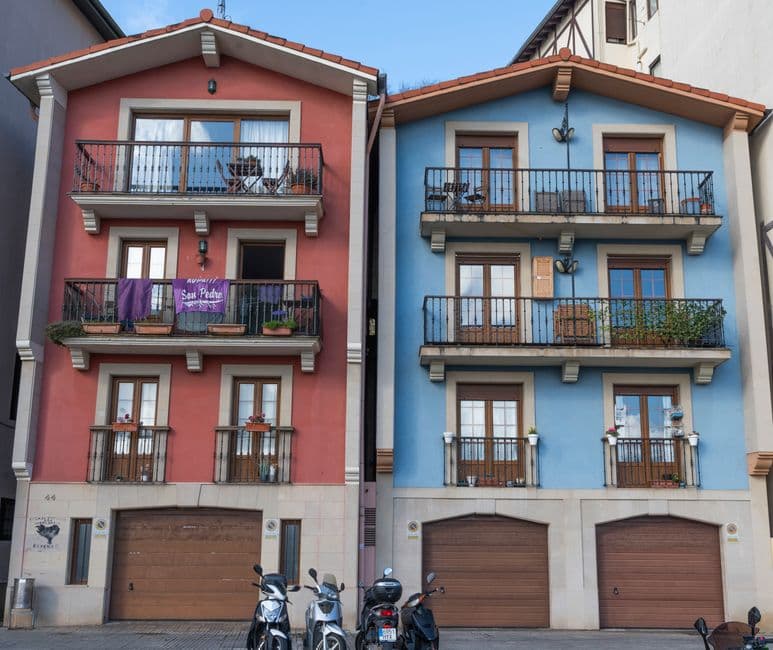
- Day three, leave town on purpose. Getaria for lunch at Elkano, or Hondarribia for Alameda and the painted houses. Daylight, a bus or a short drive, and back for a quiet evening.
- Night four, cross the river to Gros. Bar Bergara and Topa Sukalderia, fewer visitors per square meter, and a beach to walk off.
That gives you one great restaurant, one worthwhile trip out, and two nights of the thing the city is genuinely unmatched at, with no car and no evening ruined by a forty minute transfer.
If San Sebastián is one stop on a longer Spanish route, the two obvious continuations are covered the same way this city is: the Barcelona restaurants map and the Madrid restaurants map. The full set is on the destinations page.
What we checked, and where the sources still disagree
Three things here are contested and we would rather flag them than round them off. The area star total is reported as both nineteen across eleven restaurants and sixteen across eight, depending on the source and how recently it was updated. The drive times to Akelarre range from ten to twenty minutes across published guides. And Bar Néstor's tortilla arrangement is documented by many visitors and by no official source at all.
One thing we want to be accurate about regarding our own finding. The observation that a given restaurant sits outside the city is not new: at least one guide we read notes in passing that a place it recommends is "not technically in San Sebastián." What we have not found anywhere is the count. Nobody appears to have taken the city's own list of starred restaurants and added up how many of them are in other towns. That number, eight stars of nineteen, is the part we are contributing.
Worth reading directly: San Sebastián Turismo's own Michelin stars page for the nineteen-stars-in-twenty-five-kilometers claim in its original wording, the MICHELIN Guide's entry for Arzak as an example of how the guide files each restaurant under a specific municipality, and Mugaritz's own FAQ for its closure season and release date, which is the single most schedule-breaking fact in the region.
Go and eat the veal cheek. Just check which town it is in first, which is a sentence that should not be necessary about a city guide and, in San Sebastián, entirely is.
Common questions
- What are the best restaurants in San Sebastián, Spain?
- If you mean restaurants actually inside the city, the starred list is short: Arzak and Akelarre with three stars each, Amelia by Paulo Airaudo with two, and Ibai, Itzuli and Kokotxa with one each. Only Kokotxa, Ibai and Amelia are within walking distance of the old town. Arzak is about three kilometers east and Akelarre and Itzuli are up Monte Igueldo, so all three need a taxi. Beyond those, the best eating in San Sebastián is in the pintxo bars of the Parte Vieja, not in restaurants at all.
- How many Michelin star restaurants are there in San Sebastián?
- It depends entirely on where you draw the line, which is the problem. San Sebastián Turismo, the official tourist board, states there are 19 Michelin stars within a 25 kilometer radius of the city hall, shared by eleven restaurants. Checked against the municipality the MICHELIN Guide files each one under, six of those restaurants with eleven stars between them are inside San Sebastián, and five with eight stars are in other towns. Some third party guides report the area total as sixteen stars across eight restaurants instead, so the number you see depends on the source and how recently it was updated.
- Is Martín Berasategui in San Sebastián?
- No. Martín Berasategui's three-star restaurant is in Lasarte-Oria, a separate town roughly seven kilometers from San Sebastián, and the MICHELIN Guide files it there rather than under Donostia / San Sebastián. It gets counted as a San Sebastián restaurant because the city measures its star density across a 25 kilometer radius. The drive is short, around fifteen minutes by most published accounts, but it is a different municipality and you will need a taxi or a car in both directions.
- Where is Elkano, and is it worth the trip from San Sebastián?
- Elkano is in Getaria, a fishing village about 25 kilometers west of San Sebastián along the coast, despite the large number of people who search for it as a San Sebastián restaurant. It holds one Michelin star and is built around whole turbot grilled over charcoal and served in parts. It is the one trip out we would argue for without hesitation, because the thing it does depends on being in a fishing town with its own fleet, which is not reproducible inside the city. Go for lunch and make a day of Getaria rather than treating it as an evening expedition.
- How far in advance do you need to book restaurants in San Sebastián?
- Two to three months for the starred restaurants is the consistent advice, and longer between May and October. Mugaritz is the outlier and needs its own plan: it closes for a creativity season reported as roughly mid-January to early April, closes again in December, and releases reservations for the entire April to December run once in February, with prime tables gone within about a day. Pintxo bars take no bookings at all. Check each restaurant's own page, because closure dates and release windows move.
- Do you need a car to eat well in San Sebastián?
- No, but you need one to eat at about half of the restaurants the city advertises. Three starred restaurants are walkable from the Parte Vieja, three more are a short taxi within the city, and five are in separate towns. A car-free trip that spends its evenings on pintxos in the old town and Gros, uses a taxi once for a starred dinner, and takes a bus out to Getaria or Hondarribia in daylight covers everything worth covering.
- What is the deal with the tortilla list at Bar Néstor?
- Bar Néstor in the Parte Vieja makes two tortillas a day by widespread report, one for lunch and one for dinner, and you sign a written list about half an hour before service to claim a slice. Each tortilla yields roughly sixteen or seventeen slices and it is one slice per person, so the list closes fast. No official source documents this arrangement, so treat the shape as reliable and the exact numbers as approximate. Néstor is also known for its chuletón and a single tomato salad.