
Best Restaurants in Barcelona: Where the City Actually Eats
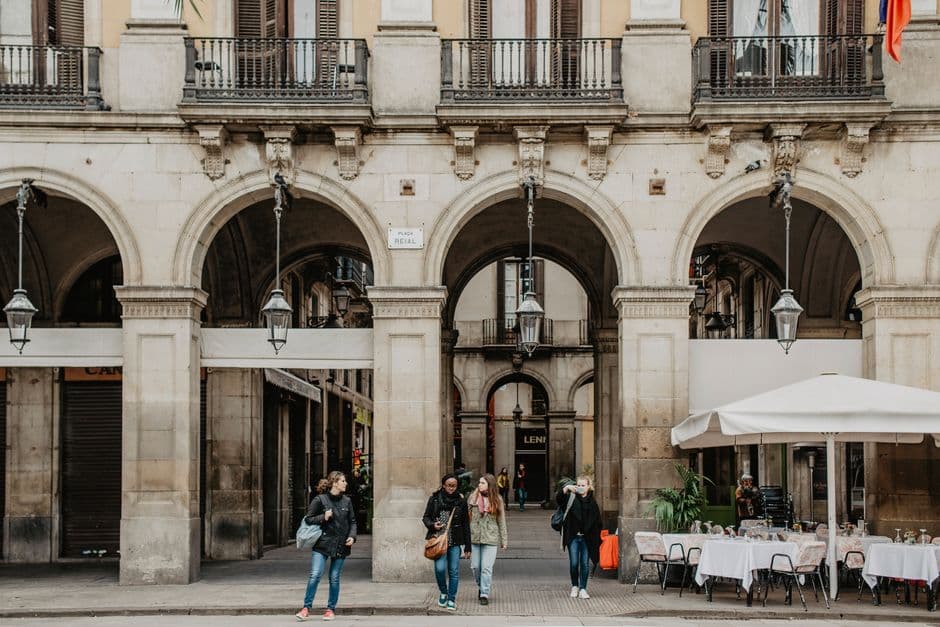
Finding the best restaurants in Barcelona is a question about neighborhoods, not a list of names. Gracia, Sants, Les Corts and Sant Andreu were separate towns until the city swallowed them in 1897, and they still eat like separate towns. Learn which one does what and you can eat superbly for 15 euros or seriously for 300, without ever ending up in front of a photograph of paella.
The bad meals in this city are not hidden. They are on La Rambla and the seafront, with laminated menus in five languages and someone outside inviting you in. Everything below is the other Barcelona: which neighborhood is for what, where to eat in it, what to order once you are sitting down, and the two local habits that most visitors never find out about.
Five rules that decide whether you eat well in Barcelona
These matter more than any restaurant name. Get them right and even a random choice tends to work out.
Lunch is the big meal, dinner is the expensive one. Lunch runs from about 1:30pm to 4pm and it is when the city eats properly and cheaply. Kitchens reopen for dinner around 9pm and fill between 9:30pm and 10:30pm. A dining room that is full at 7:30pm is full of visitors, which tells you who the kitchen is cooking for.
Distance from La Rambla is a price and quality signal. Two or three streets back from any famous square, the same dish costs a third less and is cooked by someone who expects you to come back. This is not folklore, it is the single most reliable rule in the city.
Paella is not from here. It is Valencian. Ordering it in Barcelona is not a crime, but it is ordering the wrong city’s dish, and it is the item most likely to arrive from a freezer.
Photographs on the menu mean no. So do plastic display dishes, a sign promising sangria and paella for 12 euros, and any terrace with a person whose job is to stop you walking past.
Book the tasting menus, walk into everything else. The three-star rooms take reservations months ahead. The classic standing bars take none at all. Almost everything in between wants a day or two of notice, and that is the whole reservation problem solved.
| Neighborhood | What it is for | Dinner per head |
|---|---|---|
| Barri Gotic and El Born | Tapas, vermut, the oldest dining rooms in the city | 25 to 45 euros |
| Barceloneta | Rice cooked to order, seafood, a long lunch by the water | 30 to 55 euros |
| Poble-sec and Sant Antoni | Pintxo bars, market food, the best value dinner in the city | 20 to 35 euros |
| Gracia | Neighborhood restaurants and dinner on a square | 25 to 40 euros |
| Eixample | Tasting menus, vermut bars, the Michelin tables | 40 to 350 euros |
| El Raval | La Boqueria, cheap lunches, the most international food | 15 to 30 euros |
El Born and the Gothic Quarter are for tapas, vermut and the oldest rooms in the city
These two neighborhoods contain both the worst and the best eating in Barcelona, sometimes on the same street. The main drags are a tourist economy. The lanes behind them are where the city kept its museum pieces, and several of them are still genuinely good.
Can Culleretes in the Gothic Quarter has been serving food since 1786, which makes it one of the oldest restaurants in Spain and the oldest in Catalonia. It is old-fashioned Catalan cooking in tiled rooms hung with photographs, and it is honest. Go at lunch. Els Quatre Gats, the 1897 tavern where a nineteen year old Picasso designed the menu, is worth a coffee and a look at the room and is not where I would eat dinner. Being famous for art history is not the same as being famous for cooking.
In El Born, Cal Pep is the one to plan around. It is a counter, you sit where there is a stool, there is a menu you should ignore, and the cooks push plates at you until you say stop. Prawns, clams, the tortilla. No reservations at the bar, so arrive when it opens or eat late. El Xampanyet, a few minutes away and open since 1929, is the same idea with anchovies and house cava, standing up, shoulder to shoulder.
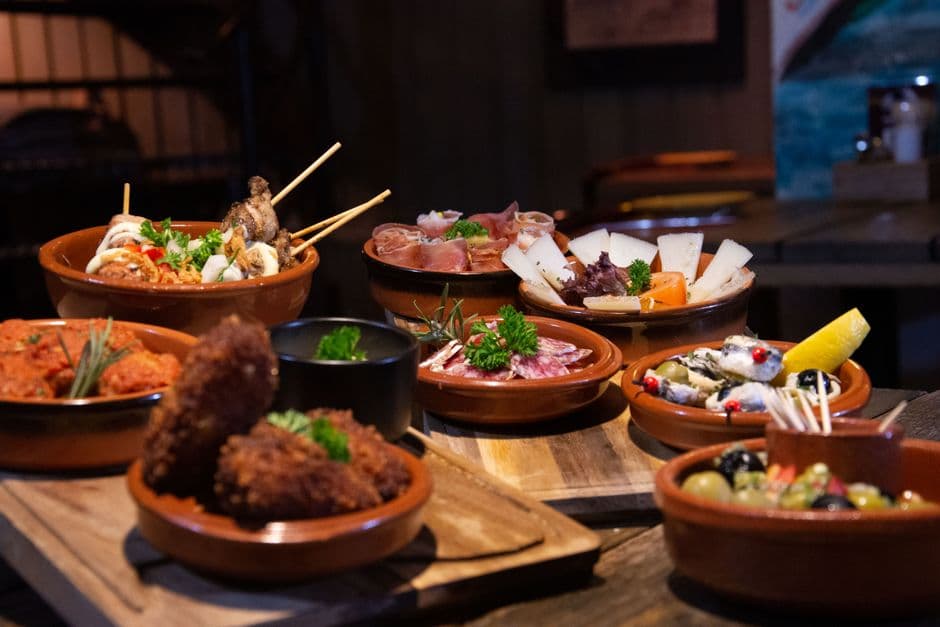
One habit worth stealing while you are here: the vermut. On Saturday and Sunday around noon, Barcelona drinks red vermouth on ice with a splash of soda, an olive and a slice of orange, and eats conservas with it. Tinned mussels, cockles, anchovies. It is a whole meal that most visitors walk straight past on their way to lunch.
Barceloneta is for rice, and the rice you want is probably not paella
Barceloneta was a fishermen’s quarter and it still does seafood better than anywhere else in the city. It also contains the highest concentration of bad value in Barcelona, because it has a beach and a seafront promenade, and every restaurant with a sea view knows exactly how little it needs to try.
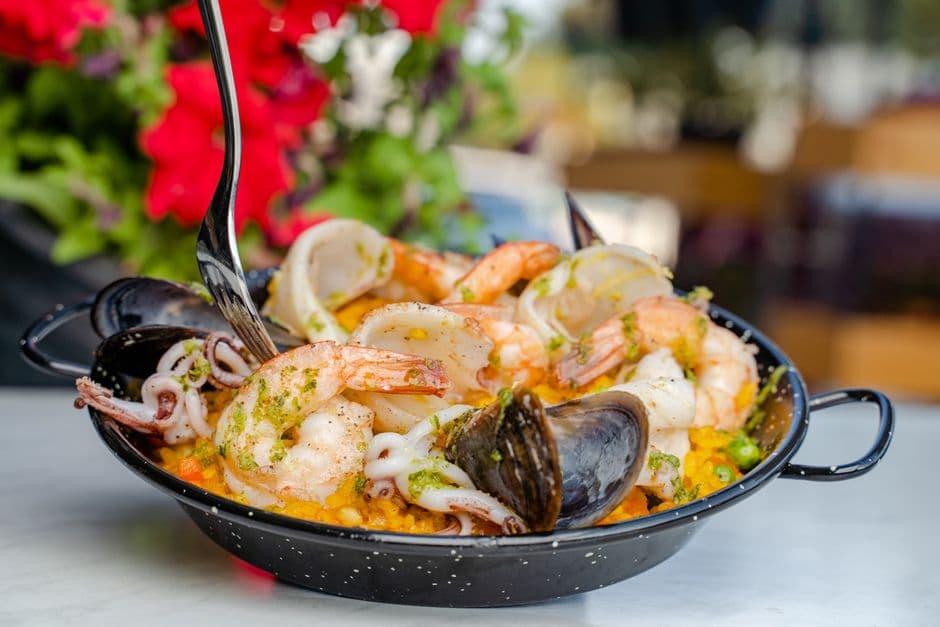
So be specific about what you are ordering. Paella is from Valencia, where it is a Sunday dish of rabbit, chicken and beans, and where it has its own protected traditions and its own list of restaurants worth the trip. What Catalonia cooks is different and better here: arros negre, stained black with squid ink and served with aioli; arros a la cassola, cooked in an earthenware pot rather than a flat pan; and fideua, which swaps the rice for short toasted noodles and came out of exactly these streets.
The test is simple. A real rice dish is cooked to order, it takes around twenty minutes, and it is sold for two people minimum. Anything available instantly, by the plate, for one, under a heat lamp, is not a rice dish. It is a photograph of one.
Can Sole has been cooking rice on Carrer Sant Carles since 1903 and is the safe classic. La Cova Fumada, a doorway with no sign on Carrer del Baluard, is the opposite: a 1944 bodega with marble tables, no menu you can rely on, and the original bomba, a fried potato ball stuffed with meat and topped with aioli and hot sauce. It was invented in that room. Cash, lunch only, expect to share a table.
Poble-sec and Sant Antoni are where the tapas got interesting
If you only have one evening and you want it to be good rather than famous, spend it here. These two neighborhoods sit either side of Avinguda del Paral·lel, they are ten minutes from the old town, and they are where Barcelona’s cooking actually moved in the last fifteen years.
Carrer de Blai in Poble-sec is a pedestrian street of pintxo bars where you take what you want off the counter, keep the toothpicks, and pay by the stick at the end. Pintxos are a Basque import rather than a Catalan tradition, and if you want the original version of this you want San Sebastian, where the bars invented it. In Poble-sec they cost 1.50 to 2.50 euros each, which makes dinner a matter of counting.
Two streets away, Quimet & Quimet has been open since 1914 and is the most concentrated 20 minutes of eating in Barcelona. There are no tables and no kitchen. What there is is a wall of bottles and a family building montaditos to order out of tinned conservas: salmon with truffled honey, cockles, tuna belly. Twelve people fill it. Go at 7pm, before the queue.
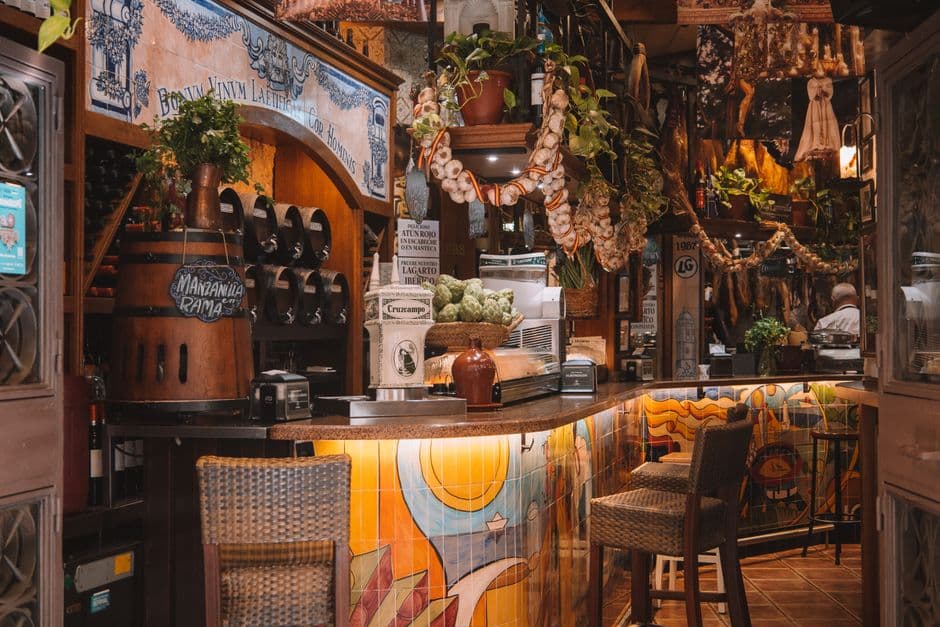
Sant Antoni is the newer half of the story. Its covered market reopened in 2018 after nine years of restoration, and the streets around it now hold the highest density of modern tapas kitchens and natural wine bars in the city, along with Enigma, Albert Adria’s avant-garde restaurant, which came back in June 2022 and took a second Michelin star in the 2026 guide, announced in November 2025. His old tapas theater Tickets, a few minutes away on the Paral·lel, never reopened after the pandemic, which does not stop several thousand people a month from searching for it.
Gracia is where you go to stop being a tourist for an evening
Gracia was an independent town until 1897 and it has never fully accepted the outcome. The grid stops, the streets narrow, and the neighborhood is organized around a series of squares that fill with people eating outdoors from about 9pm. There is no monument here, which is exactly why it works.
Eat around Placa de la Vila de Gracia or Placa del Sol and you will be surrounded by residents. Bodega Quimet, a corner bodega on Carrer de Vic, is the neighborhood in one room: vermouth from the barrel, conservas, anchovies and no ceremony at all. For a sit-down dinner, La Pubilla near the Mercat de la Llibertat does serious Catalan market cooking at lunch and is booked out by people who live three streets away.
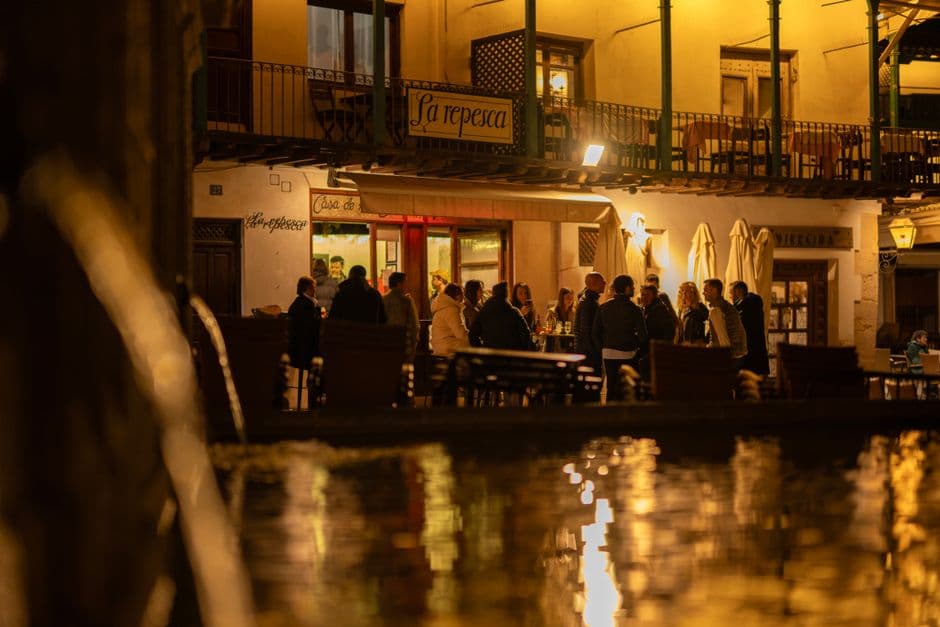
The trade is straightforward. You give up the Gothic streets and the sea, and you get a dinner where nobody is trying to sell you anything. Take the metro to Fontana or Joanic and walk.
Eixample has the tasting menus, and the Michelin star restaurants in Barcelona are cheapest at lunch
Barcelona has four restaurants with three Michelin stars, which is a remarkable number for a city of 1.6 million people: Disfrutar and Lasarte in Eixample, ABaC up in Sarria-Sant Gervasi, and Cocina Hermanos Torres in Les Corts, which the Torres twins built inside a converted tire workshop with the kitchen in the middle of the dining room. The full current list is on the Michelin Guide.
Disfrutar is the one people plan trips around. It was opened by Mateu Casanas, Oriol Castro and Eduard Xatruch, three former head chefs of elBulli, and it was named the world’s best restaurant by The World’s 50 Best in 2024. The tasting menu is around 315 euros before wine and the booking window opens roughly a year out. That is the actual barrier, not the money.
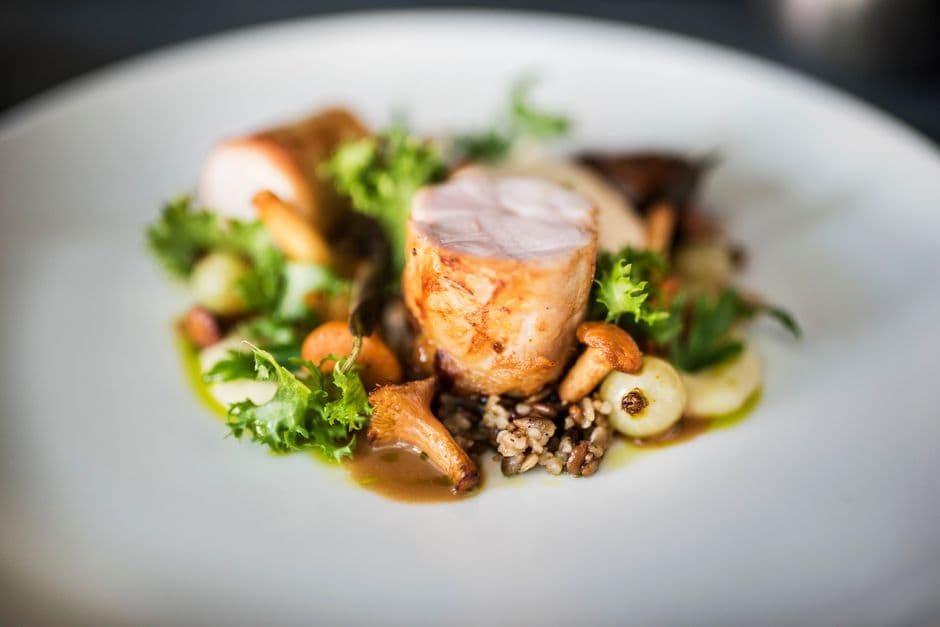
The useful part of Eixample is everything underneath that. The neighborhood is full of kitchens with one star or a Bib Gourmand where a midday menu costs a fraction of the same room at night, and where getting a table next week is realistic. If a starred restaurant serves lunch, that is almost always the cheapest way into that kitchen. Ask for the menu de migdia and read on.
Order the menu del dia, the fixed price lunch Spain wrote into law in 1965
This is the single best-value meal in Barcelona and most visitors never order it, because it is written on a chalkboard in Catalan or Spanish and not on the menu handed to you in English.
The menu del dia is a weekday lunch, served roughly 1:30pm to 4pm: a first course, a second course, dessert or coffee, bread, and a drink that can be a glass of wine or a whole small bottle, for one price. In Barcelona that price is usually 13 to 18 euros. The same cooking a la carte at dinner costs double.
The reason it exists is stranger than the food. It was not a folk tradition. It was a piece of tourism policy: in March 1965 Franco’s Ministry of Information and Tourism, under Manuel Fraga, made a fixed-price menu turistico compulsory for Spanish restaurants, and specified it in detail, down to the bread and a third of a bottle of wine. Spain had gone from under 3 million visitors a year to over 11 million in six years, and the state wanted a predictable, cheap, legible meal for all of them. The Local has the full history.
It is no longer required by law. It survived anyway, because Spaniards adopted it, dropped the word turistico, and turned it into the ordinary working lunch of the country. Which produces the joke at the center of eating in this city: the meal invented for foreigners is now the one almost only locals order.
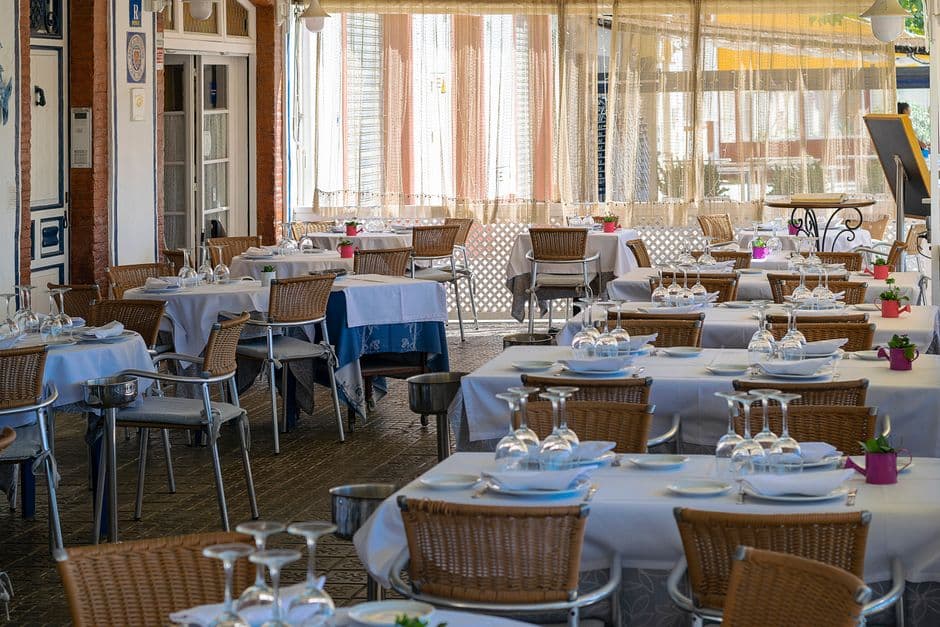
How to use it: look for a chalkboard or a printed A4 sheet by the door on a weekday, ignore any restaurant that only shows you a laminated card, and do not expect it on weekends. It is the cheapest way to eat in a good kitchen anywhere in the city.
The city keeps an official list of its oldest bars, and it is the best trap filter you have
Here is something nobody puts in a Barcelona food guide. Barcelona City Council maintains a heritage catalogue of the city’s establiments emblematics, the shops, bars and restaurants judged historically significant enough to protect. It was approved in 2016 as part of a special plan for urban quality, and it grades premises: E1 for establishments of great interest, E2 for establishments of interest, E3 for elements of landscape interest.
The catalogue exists because rents were emptying the old center of the businesses that made it worth visiting. It protects the room: the facade, the fittings, the sign, the name. Food and drink entries include Can Culleretes, Els Quatre Gats, Bar del Pi, Bar Marsella, Casa Alfonso and the 1851 nut roaster Casa Gispert. The council publishes the programme through its commerce department.
Why it is useful to you: it is a filter that no restaurant can buy its way onto. A review score can be gamed and a guidebook can be out of date, but a municipal heritage listing is a statement that this business has been in this room for a very long time. In a city where the main risk is eating somewhere that opened last year to sell sangria to people who will never return, that is a genuinely different signal.
Two honest caveats. Protection covers the premises, not the cooking, so a listed bar can still serve you a mediocre plate. And listing has not saved every business on it. Use it as one filter among several, not as a recommendation list.
What to eat in Barcelona, dish by dish
Order Catalan, not generic Spanish. The two cuisines overlap and the differences are where the good eating is.
- Pa amb tomaquet. Bread rubbed with tomato, olive oil and salt. It arrives with everything and it is the base of the whole cuisine, not a garnish.
- Bomba. The Barceloneta potato ball with meat inside, aioli and hot sauce on top. Invented at La Cova Fumada.
- Escalivada. Peppers, eggplant and onion roasted over embers until collapsed, dressed with oil. Often served with anchovies.
- Esqueixada. Raw salt cod shredded with tomato, onion and olives. A summer dish and the best thing to order in heat.
- Arros negre and fideua. The two rice-pan dishes that actually belong to this coast. Both take twenty minutes and both come with aioli.
- Suquet de peix. Fishermen’s stew of white fish and potato in an almond and garlic broth. The Barceloneta dish to order when it is cold.
- Botifarra amb mongetes. Catalan sausage with white beans. Plain, enormous, and the standard cheap lunch second course.
- Calcots. Charred long spring onions dipped in romesco, eaten with a bib. Strictly a season: roughly January to March, mostly outside the city.
- Crema catalana. Custard under a burnt sugar crust, flavored with citrus and cinnamon rather than vanilla. Not creme brulee, and older.
The tourist trap test, in one sentence
If a place is selling paella, sangria and a photograph of both within sight of a monument, you are the customer, not the guest. Walk three streets inland and the same 20 euros buys a completely different evening.
Dinner times, booking, tipping and what a meal actually costs
The practical layer catches out more visitors than the restaurant choice does.
| What | How it works here |
|---|---|
| Lunch | 1:30pm to 4pm, the main meal, the menu del dia window |
| Dinner | Kitchens from about 8:30pm, busy 9:30pm to 10:30pm |
| Booking | Months for three-star rooms, a day or two for most, never for the classic standing bars |
| Tipping | Service is included. Round up or leave about five percent after a good meal |
| Paying | Cards are accepted almost everywhere, but the oldest bodegas are still cash |
| Bread | It is usually charged, a euro or two a head, and that is normal and legal |
| August | Many family-run places close for two or three weeks. Check before you walk across town |
Rough budgets per person, with a drink: a menu del dia lunch 13 to 18 euros, a tapas dinner 25 to 40, a rice lunch by the water 30 to 55, a modern Catalan dinner 40 to 60, and the three-star tasting menus from around 300 before pairings. Barcelona is no longer cheap, but the gap between the tourist price and the local price is one of the widest in Western Europe, and it is entirely under your control.
Where to eat in Barcelona over three days, in order
Day one. Land, drop your bag, walk to Poble-sec and eat your way along Carrer de Blai by the toothpick. Finish at Quimet & Quimet before the queue builds. It is a cheap, low-commitment first night and it recalibrates what you think tapas costs.
Day two. Morning in the Gothic Quarter and El Born, with a mid-morning stop at a bodega for vermut and conservas. Lunch at Cal Pep standing at the counter. Afternoon off. Dinner in Gracia on a square, booked, at 9:30pm.
Day three. Boqueria early, before the tour groups, and eat at a counter at the back rather than a stall at the front. A long rice lunch in Barceloneta, ordered as arros negre or fideua and shared, around 2:30pm. If you have booked something serious months ago, tonight is the night. If not, find a chalkboard in Sant Antoni.
A fourth day is for the calcots if it is February, and for a starred kitchen at lunch if it is not.
Eat lunch like it matters, treat distance from La Rambla as a quality score, order the rice this coast actually cooks, and read the chalkboard rather than the laminated card. Do that and Barcelona is a much better food city than its reputation as a beach destination suggests.
Going somewhere else on the same trip? There are hand-checked lists for every city we cover, and the rule travels with you: the view costs you the meal.
Best restaurants in Barcelona: common questions
- What are the best restaurants in Barcelona?
- It depends on what you want the meal to do, so this guide answers it three ways. At the top of the city, Disfrutar, Lasarte, ABaC and Cocina Hermanos Torres hold three Michelin stars, and Disfrutar was named the world's best restaurant by The World's 50 Best in 2024. For the classics, Can Culleretes has been serving since 1786, and Cal Pep and El Xampanyet in El Born are the tapas counters worth planning a day around. For the version residents actually eat, Quimet & Quimet in Poble-sec and the small kitchens of Gracia and Sant Antoni. The honest answer is that your best meal here is more likely to be a 15 euro menu del dia than anything with a star.
- Where do locals eat in Barcelona?
- Mostly outside the old center. Gracia, Sant Antoni, Poble-sec and Sants are where residents book their own dinners, and the bars on and around Carrer de Blai fill with locals long before they fill with visitors. In the Gothic Quarter and El Born the rule is distance: two or three streets back from any square with a view, the prices drop and the cooking improves.
- What food is Barcelona known for?
- Catalan cooking rather than generic Spanish. Pa amb tomaquet, escalivada, esqueixada, botifarra with white beans, suquet de peix, arros negre, fideua, and crema catalana. The city's own tapas invention is the bomba, a fried potato ball with meat inside and aioli on top, from La Cova Fumada in Barceloneta.
- Is the paella in Barcelona any good?
- Some of it, but paella is Valencian, not Catalan, and the versions sold near La Rambla are usually reheated. The Catalan rice dishes are arros negre, cooked with squid ink, arros a la cassola, and fideua, which uses short noodles instead of rice. A real rice dish is cooked to order, takes about twenty minutes, and is normally sold for a minimum of two people.
- Do you need reservations for restaurants in Barcelona?
- For the three-star tasting menus, yes, and months ahead. Disfrutar releases seats roughly a year in advance. For popular mid-range kitchens a day or two is usually enough. Classic standing bars such as Quimet & Quimet and Cal Pep take no bookings at all, so you go early, go late, or queue.
- What time do restaurants open for dinner in Barcelona?
- Kitchens generally open for dinner around 8:30pm or 9pm and fill between 9:30pm and 10:30pm. Lunch runs from about 1:30pm to 4pm and is the bigger meal of the day. A restaurant serving a full dining room at 7pm is serving visitors, which is a useful thing to notice.
- How much does it cost to eat out in Barcelona?
- A weekday menu del dia is roughly 13 to 18 euros for three courses with bread and a drink. A tapas dinner runs 25 to 40 euros a head with wine, a rice lunch by the water 30 to 55, and a modern Catalan dinner 40 to 60. The four three-star tasting menus start around 300 euros before pairings.
- Which neighborhood is best for food in Barcelona?
- Sant Antoni and Poble-sec if you want one answer. They sit next to each other, they have the market, the pintxo bars of Carrer de Blai and a run of modern tapas kitchens, and the prices are still local. Gracia is the better choice for a relaxed sit-down dinner, and Eixample holds the tasting menus.
- Do you tip in restaurants in Barcelona?
- Lightly or not at all. Service is included in the price and nobody is working for tips. Rounding up the bill or leaving five percent after a good meal is normal and generous. American-sized tipping is not expected and can be awkward.